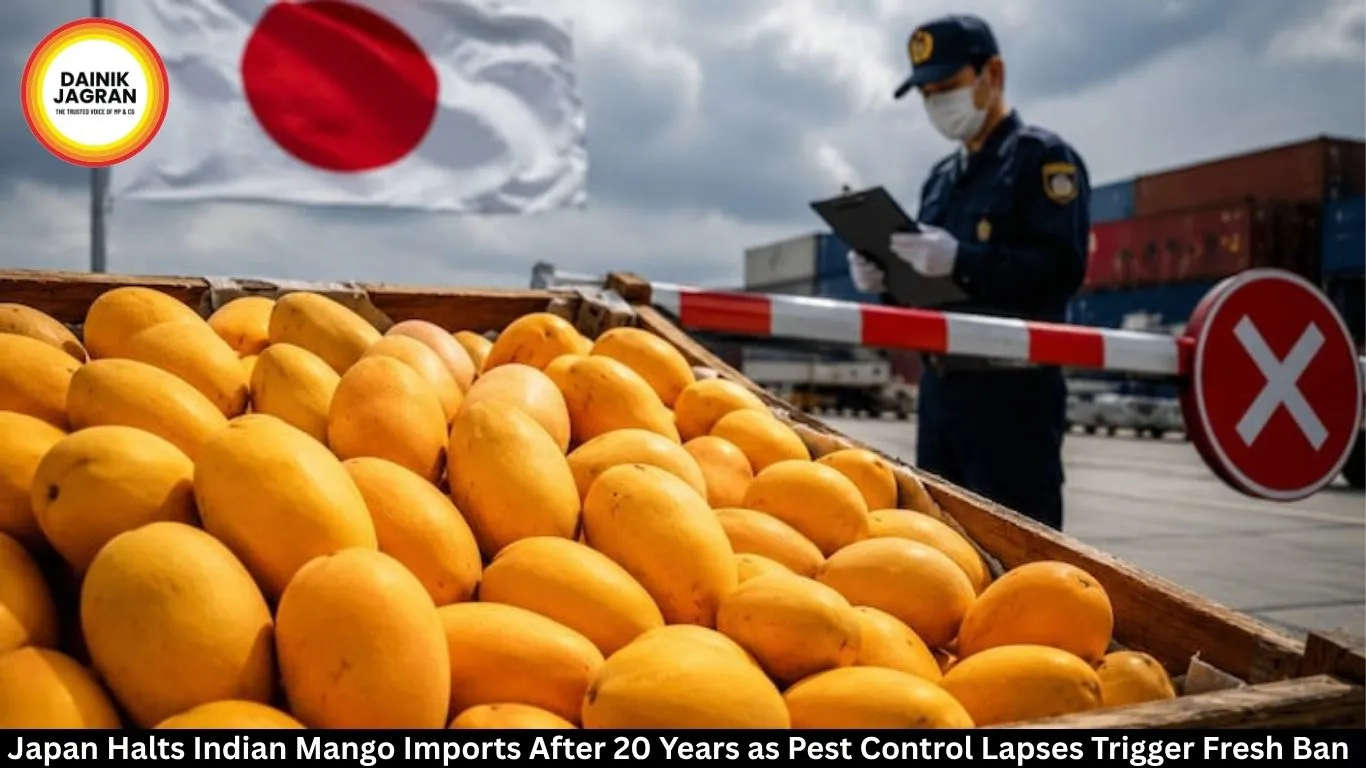
Japan Halts Indian Mango Imports After 20 Years
Digital Desk
Japan bans Indian mangoes over pest control lapses at VHT facilities. Exporters face double blow from West Asia crisis and crop damage. Premium varieties affected.
Exporters face double blow as West Asia crisis disrupts shipping routes and container availability
For the first time in two decades, Japan has stopped importing mangoes from India after inspection teams found serious irregularities at vapour heat treatment facilities in Uttar Pradesh. The suspension, which took effect in late March, has left exporters scrambling just as the peak season was getting underway.
Japanese authorities flagged operational deficiencies at a treatment plant in Rehmanpur during inspections conducted earlier this year. The Yokohama Plant Protection Association subsequently issued a notice stating that mango shipments carrying Indian inspection certificates issued after March 25 would no longer be accepted at Japanese ports.
What inspectors found
The Japanese team reportedly identified shortcomings in fumigation procedures, disinfection systems, and overall pest-control measures at the facility. Vapour heat treatment, a non-chemical process that uses hot and humid air to eliminate fruit flies and other pests, is a mandatory requirement for mangoes bound for Japan.
Sources familiar with the matter said documentation standards and compliance records also raised concerns among the inspection team.
Premium varieties now off Japanese shelves
The ban means several premium Indian mango varieties will not reach Japanese consumers this season. These include Alphonso, Kesar, Langra, Banganapalli, Chausa, and Malika — mangoes grown across Maharashtra, Gujarat, Uttar Pradesh, Andhra Pradesh, and West Bengal that had built a steady following in Japan over the past two decades.
Japan had previously banned Indian mangoes in 1986 over fruit fly concerns, a restriction that remained in place until 2006. The market reopened only after India conducted scientific studies and strengthened its pest-control systems to meet Japanese phytosanitary standards.
Exporters already bleeding from West Asia crisis
The timing has proved particularly painful for traders. Indian mango exporters are already struggling with disrupted shipping routes and rising freight costs triggered by the ongoing conflict in West Asia.
Refrigerated containers, essential for transporting perishable mangoes, have become scarce and expensive. Industry representatives estimate that overall mango exports have already fallen by 20 to 30 per cent this season.
One exporter told media outlets that while Japan is not India's largest market, losing access this year feels especially harsh because domestic demand has also weakened.
Climate adds to farmers' misery
The trouble does not end at the port. Mango growers in Maharashtra's Alphonso-growing belt have suffered severe crop losses due to extreme heat and abnormal weather patterns linked to El Niño. Government-backed surveys in some regions estimate crop damage at 85 to 90 per cent.
Farmers are now dealing with reduced harvests and restricted export access simultaneously, squeezing incomes from both ends.
What happens next
Exporters and industry bodies say discussions with Japanese authorities are already underway. India may need to tighten monitoring of VHT facilities, upgrade inspection systems, and improve documentation practices to regain Japan's trust.
But many traders fear this year's export season — which runs primarily from April to June — may already be lost. For now, Japanese shelves will remain empty of Indian mangoes, and exporters are staring at one of their toughest seasons in recent memory.

--------
🚨 Beat the News Rush – Join Now!
Get breaking alerts, hot exclusives, and game-changing stories instantly on your phone. No delays, no fluff – just the edge you need. ⚡
Tap to join:
🟢 WhatsApp Channel: Dainik Jagran MP CG
Crave more?
🅕 Facebook: Dainik Jagran MP CG English
🅧 Twitter (X): Dainik Jagran MP CG
🅘 Instagram: Dainik Jagran MP CG
Share the fire – keep your crew ahead! 🗞️🔥
Japan Halts Indian Mango Imports After 20 Years
Digital Desk
Exporters face double blow as West Asia crisis disrupts shipping routes and container availability
For the first time in two decades, Japan has stopped importing mangoes from India after inspection teams found serious irregularities at vapour heat treatment facilities in Uttar Pradesh. The suspension, which took effect in late March, has left exporters scrambling just as the peak season was getting underway.
Japanese authorities flagged operational deficiencies at a treatment plant in Rehmanpur during inspections conducted earlier this year. The Yokohama Plant Protection Association subsequently issued a notice stating that mango shipments carrying Indian inspection certificates issued after March 25 would no longer be accepted at Japanese ports.
What inspectors found
The Japanese team reportedly identified shortcomings in fumigation procedures, disinfection systems, and overall pest-control measures at the facility. Vapour heat treatment, a non-chemical process that uses hot and humid air to eliminate fruit flies and other pests, is a mandatory requirement for mangoes bound for Japan.
Sources familiar with the matter said documentation standards and compliance records also raised concerns among the inspection team.
Premium varieties now off Japanese shelves
The ban means several premium Indian mango varieties will not reach Japanese consumers this season. These include Alphonso, Kesar, Langra, Banganapalli, Chausa, and Malika — mangoes grown across Maharashtra, Gujarat, Uttar Pradesh, Andhra Pradesh, and West Bengal that had built a steady following in Japan over the past two decades.
Japan had previously banned Indian mangoes in 1986 over fruit fly concerns, a restriction that remained in place until 2006. The market reopened only after India conducted scientific studies and strengthened its pest-control systems to meet Japanese phytosanitary standards.
Exporters already bleeding from West Asia crisis
The timing has proved particularly painful for traders. Indian mango exporters are already struggling with disrupted shipping routes and rising freight costs triggered by the ongoing conflict in West Asia.
Refrigerated containers, essential for transporting perishable mangoes, have become scarce and expensive. Industry representatives estimate that overall mango exports have already fallen by 20 to 30 per cent this season.
One exporter told media outlets that while Japan is not India's largest market, losing access this year feels especially harsh because domestic demand has also weakened.
Climate adds to farmers' misery
The trouble does not end at the port. Mango growers in Maharashtra's Alphonso-growing belt have suffered severe crop losses due to extreme heat and abnormal weather patterns linked to El Niño. Government-backed surveys in some regions estimate crop damage at 85 to 90 per cent.
Farmers are now dealing with reduced harvests and restricted export access simultaneously, squeezing incomes from both ends.
What happens next
Exporters and industry bodies say discussions with Japanese authorities are already underway. India may need to tighten monitoring of VHT facilities, upgrade inspection systems, and improve documentation practices to regain Japan's trust.
But many traders fear this year's export season — which runs primarily from April to June — may already be lost. For now, Japanese shelves will remain empty of Indian mangoes, and exporters are staring at one of their toughest seasons in recent memory.