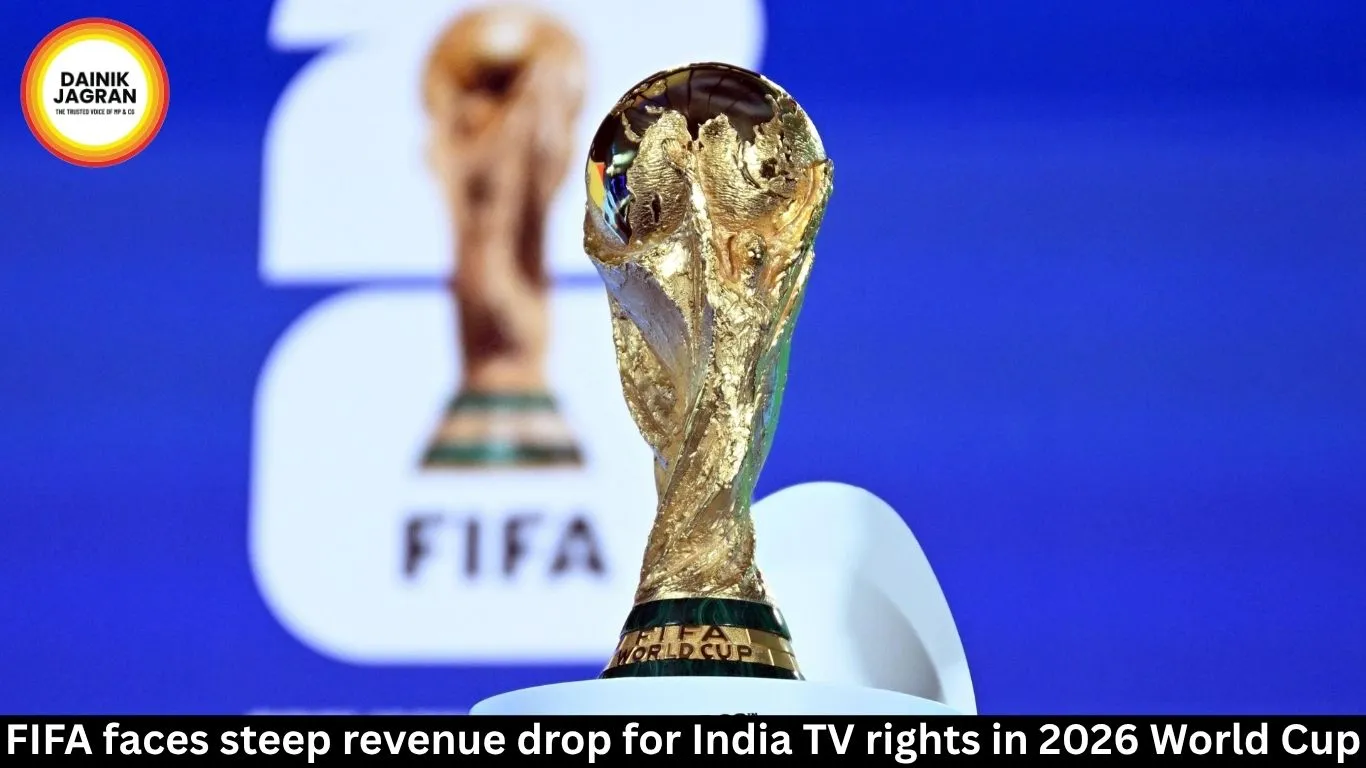
FIFA faces fall in India TV rights revenue
Digital Desk
FIFA may get much less from India TV rights for the 2026 World Cup as broadcasters pull back over time-zone and ad revenue concerns.
FIFA revenue hit at lead
FIFA is likely to get significantly lower returns from the sale of India TV rights for the 2026 World Cup after major broadcasters scaled back bids, according to industry sources and documents reviewed by Reuters and other outlets. The drop comes as media houses weigh the late-night, early-morning broadcast window for matches in North America and reassess advertising prospects.
Bidders thin out
Initial demands from FIFA reportedly sought about $100 million (roughly ₹955 crore) for a bundled television and streaming package for India, then later fell to a floor of around $60 million (₹573 crore). Sources familiar with broadcaster negotiations said offers on the table ended up near $20 million (about ₹191 crore) before bidders withdrew. JioStar — a large media group — exited the race after a final offer, leaving Zee Entertainment Enterprises as the principal bidder currently engaged in talks.
Why offers dropped
Media analysts said the time-zone mismatch is the primary deterrent. Matches hosted in the United States, Canada and Mexico will often kick off in the early hours in India, undermining live viewership figures and reducing the appeal of peak-time ad inventory. “Late-night fixtures translate to lower real-time audiences and muted ad revenue, which directly hits the valuation,” an industry analyst familiar with the talks said on condition of anonymity.
Zee's strategy
Zee has indicated interest in using the tournament to expand its sports footprint and is planning new sports channels under the brand ‘Unite8 Sports’, according to people briefed on the matter. Industry executives said Zee is seeking a deal at a much lower price than FIFA’s initial expectations, aiming for a package that leaves room for subscription and digital monetisation given the time-shifted viewing behaviour.
Broadcasting context
In 2022, Viacom18 — now a Reliance-Disney joint venture — paid about $62 million (around ₹592 crore) for Indian broadcasting rights and streamed matches on Sports18 and JioCinema. The sharp softening of bids this cycle could mean FIFA receives roughly one-third of that amount, industry figures estimate, although final numbers will depend on whether Zee closes a deal and on the exact scope of rights (TV, streaming, highlights, sublicensing).
Ticketing row complicates optics
The rights debate comes amid wider controversy surrounding FIFA’s ticketing for the 2026 World Cup. Investigations by US state authorities, including in New York and California, were reported after fans and consumer groups accused FIFA of using dynamic pricing and creating a new “Front Category” that allegedly displaced early buyers. Ticket prices have soared — the cheapest public tickets start around $120 (about ₹11,460) while best-category final match seats climbed to as high as $10,990 (about ₹10.49 lakh) after dynamic pricing adjustments. The ticketing uproar has cast a shadow over FIFA’s wider commercial approach to the tournament.
Impact on viewers and advertisers
For Indian broadcasters and advertisers, the calculus is changing. Brands typically pay premiums for live events that guarantee mass, appointment viewing. With matches airing at inconvenient hours, advertisers may demand steep discounts or opt for targeted digital buys instead. That in turn reduces the pool of revenue a broadcaster can recoup, pressuring bid prices downward.
What’s next
Negotiations between FIFA and Zee were ongoing at the time of filing. If Zee signs a low-cost deal, FIFA’s India take will shrink markedly compared with 2022, forcing the governing body to rely more on other markets to meet revenue forecasts. Media houses are also weighing sublicensing or time-shifted streaming packages as backup monetisation strategies.
Broader significance
A reduced payout from India — one of the world’s largest football markets by viewership potential — would be notable for global sports rights trends, signalling how time zones and changing consumption patterns are reshaping the economics of mega-events.

--------
🚨 Beat the News Rush – Join Now!
Get breaking alerts, hot exclusives, and game-changing stories instantly on your phone. No delays, no fluff – just the edge you need. ⚡
Tap to join:
🟢 WhatsApp Channel: Dainik Jagran MP CG
Crave more?
🅕 Facebook: Dainik Jagran MP CG English
🅧 Twitter (X): Dainik Jagran MP CG
🅘 Instagram: Dainik Jagran MP CG
Share the fire – keep your crew ahead! 🗞️🔥
FIFA faces fall in India TV rights revenue
Digital Desk
FIFA revenue hit at lead
FIFA is likely to get significantly lower returns from the sale of India TV rights for the 2026 World Cup after major broadcasters scaled back bids, according to industry sources and documents reviewed by Reuters and other outlets. The drop comes as media houses weigh the late-night, early-morning broadcast window for matches in North America and reassess advertising prospects.
Bidders thin out
Initial demands from FIFA reportedly sought about $100 million (roughly ₹955 crore) for a bundled television and streaming package for India, then later fell to a floor of around $60 million (₹573 crore). Sources familiar with broadcaster negotiations said offers on the table ended up near $20 million (about ₹191 crore) before bidders withdrew. JioStar — a large media group — exited the race after a final offer, leaving Zee Entertainment Enterprises as the principal bidder currently engaged in talks.
Why offers dropped
Media analysts said the time-zone mismatch is the primary deterrent. Matches hosted in the United States, Canada and Mexico will often kick off in the early hours in India, undermining live viewership figures and reducing the appeal of peak-time ad inventory. “Late-night fixtures translate to lower real-time audiences and muted ad revenue, which directly hits the valuation,” an industry analyst familiar with the talks said on condition of anonymity.
Zee's strategy
Zee has indicated interest in using the tournament to expand its sports footprint and is planning new sports channels under the brand ‘Unite8 Sports’, according to people briefed on the matter. Industry executives said Zee is seeking a deal at a much lower price than FIFA’s initial expectations, aiming for a package that leaves room for subscription and digital monetisation given the time-shifted viewing behaviour.
Broadcasting context
In 2022, Viacom18 — now a Reliance-Disney joint venture — paid about $62 million (around ₹592 crore) for Indian broadcasting rights and streamed matches on Sports18 and JioCinema. The sharp softening of bids this cycle could mean FIFA receives roughly one-third of that amount, industry figures estimate, although final numbers will depend on whether Zee closes a deal and on the exact scope of rights (TV, streaming, highlights, sublicensing).
Ticketing row complicates optics
The rights debate comes amid wider controversy surrounding FIFA’s ticketing for the 2026 World Cup. Investigations by US state authorities, including in New York and California, were reported after fans and consumer groups accused FIFA of using dynamic pricing and creating a new “Front Category” that allegedly displaced early buyers. Ticket prices have soared — the cheapest public tickets start around $120 (about ₹11,460) while best-category final match seats climbed to as high as $10,990 (about ₹10.49 lakh) after dynamic pricing adjustments. The ticketing uproar has cast a shadow over FIFA’s wider commercial approach to the tournament.
Impact on viewers and advertisers
For Indian broadcasters and advertisers, the calculus is changing. Brands typically pay premiums for live events that guarantee mass, appointment viewing. With matches airing at inconvenient hours, advertisers may demand steep discounts or opt for targeted digital buys instead. That in turn reduces the pool of revenue a broadcaster can recoup, pressuring bid prices downward.
What’s next
Negotiations between FIFA and Zee were ongoing at the time of filing. If Zee signs a low-cost deal, FIFA’s India take will shrink markedly compared with 2022, forcing the governing body to rely more on other markets to meet revenue forecasts. Media houses are also weighing sublicensing or time-shifted streaming packages as backup monetisation strategies.
Broader significance
A reduced payout from India — one of the world’s largest football markets by viewership potential — would be notable for global sports rights trends, signalling how time zones and changing consumption patterns are reshaping the economics of mega-events.