Trump Pauses Project Freedom in Strait of Hormuz Amid Iran Talks

Digital Desk

 Trump Pauses Project Freedom in Strait of Hormuz Amid Iran Talks

 US President Trump suspends Strait of Hormuz evacuation operation citing progress in Iran agreement as Iranian FM Araghchi holds talks in Beijing. Oil prices ease amid diplomatic push.

Trump Pauses Hormuz Operation as Iran Seeks China Support 

US President Donald Trump halts Project Freedom amid reported progress in talks with Tehran, even as Iran's Foreign Minister arrives in Beijing for crucial discussions on the ongoing Strait of Hormuz standoff.

Strait of Hormuz Tensions Ease Temporarily

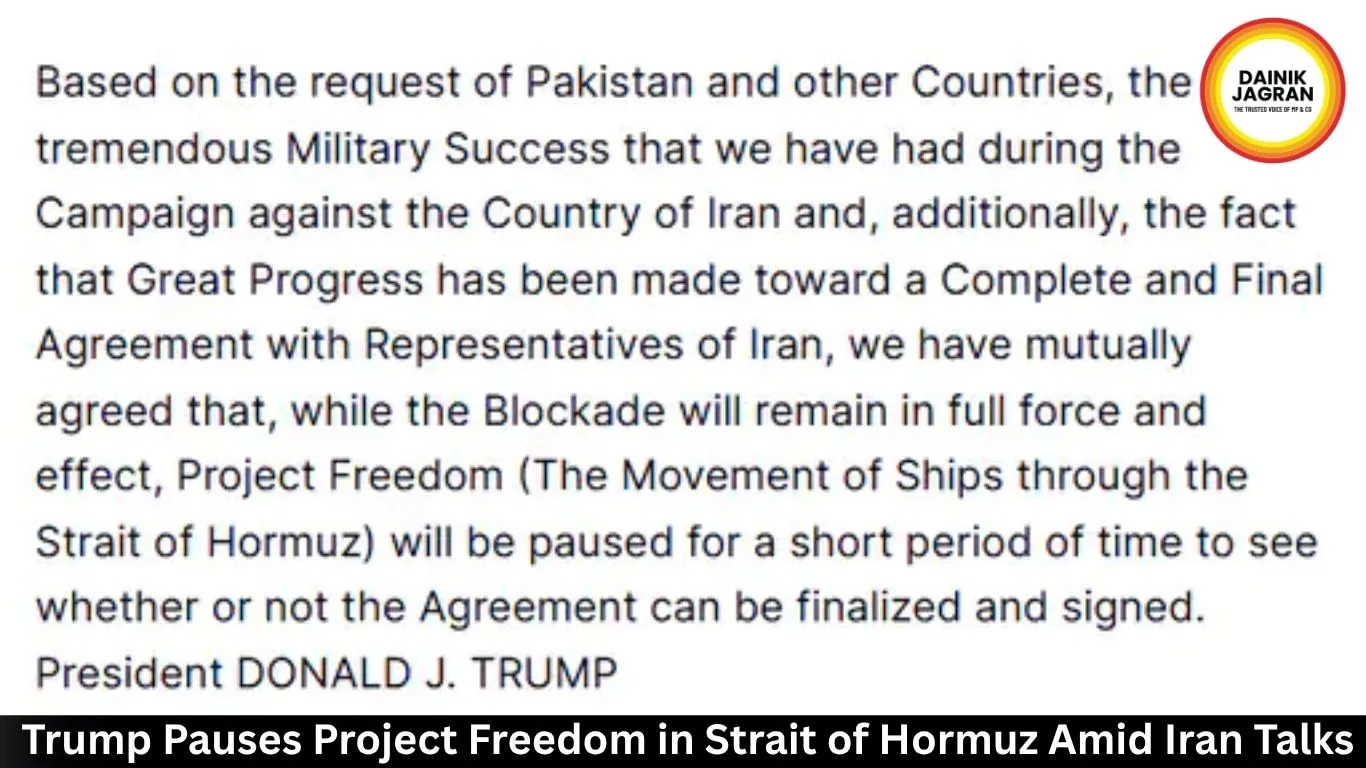
US President Donald Trump announced on Tuesday evening the temporary suspension of the US military’s “Project Freedom” operation aimed at safely evacuating stranded ships from the Strait of Hormuz. Citing “great progress” towards a potential agreement with Iran, Trump said the pause would last for a short period to allow diplomatic efforts to advance.

The operation, launched just days earlier on May 4, had seen limited success, with reports indicating only a few ships managed safe passage amid Iranian resistance. The US Navy’s USS George H.W. Bush had been deployed as part of the effort, but clashes persisted in the vital waterway.

Iranian Diplomacy Shifts to Beijing

In a parallel development, Iranian Foreign Minister Abbas Araghchi arrived in Beijing on Wednesday as head of a high-level delegation. He is scheduled to hold talks with Chinese Foreign Minister Wang Yi on bilateral relations as well as pressing regional and international issues.

This marks Araghchi’s first visit to China since the escalation of hostilities. Analysts see the trip as an attempt by Tehran to bolster diplomatic and economic backing from its key partner, which continues to import significant Iranian oil despite pressures.

Oil Markets React Positively

Oil prices eased for a second straight day on hopes of de-escalation. Brent crude fell around 1.4 per cent to near $108 per barrel, while WTI crude dipped similarly to about $100.77, according to market updates. The pause in operations and signals of dialogue helped ease immediate supply fears, though the US blockade of Iranian ports remains firmly in place.

Background of the Crisis

The Strait of Hormuz, through which nearly a fifth of global oil passes, has been at the centre of escalating tensions. Iran had declared control over the route earlier in March and restricted access to its adversaries. A fragile ceasefire was announced in April, but differences persisted, particularly over Israeli actions in Lebanon and other regional fronts.

Project Freedom was positioned by Washington as a humanitarian and security measure to free trapped commercial vessels rather than a combat operation. However, Iranian forces reportedly confronted US efforts, leading to exchanges of fire. Local authorities on Iran’s Qeshm Island also reported confronting reconnaissance drones recently.

Regional Ripple Effects

The crisis has had wider consequences. The UAE faced fresh missile and drone attacks from Iran, which it said were successfully intercepted. India expressed strong concern over injuries to its citizens in the Fujairah area and called for an immediate end to violence against civilians.

Iraq, heavily reliant on oil exports, offered discounted crude at around ₹3,100 per barrel delivered via its tankers, highlighting the economic strain on producers. Australia, meanwhile, announced a massive $7.2 billion fuel reserve plan to safeguard against future global shocks.

Inside Israel, a survey by the Israel Democracy Institute indicated that a majority of respondents, particularly Jewish Israelis, oppose ending the conflict with Iran under current conditions, citing national security concerns.

US Policy and Domestic Voices

US Secretary of State Marco Rubio stated that the broader war against Iran, referred to as Operation Epic Fury, had achieved its objectives and was over. However, the naval blockade continues as leverage. Some US lawmakers, including Raja Krishnamoorthi, have criticised the administration’s characterisation of the situation.

Iranian President Masoud Pezeshkian reiterated that Tehran would not submit to unilateral demands under a “maximum pressure” policy. Iran has also warned the UAE against allowing its territory to be used for actions against Iranian interests.

What Lies Ahead

The coming days will be critical as diplomatic tracks in Beijing and elsewhere run parallel to the maintained US blockade. While Trump’s pause offers a window for negotiations, the underlying disputes over the Strait of Hormuz and broader regional security remain unresolved.

Shipping companies and energy markets will be watching closely for any concrete breakthroughs. For now, the temporary halt in Project Freedom provides cautious relief to global oil supply concerns, but the situation in the Strait of Hormuz remains fragile.
 

--------

🚨 Beat the News Rush – Join Now!

Get breaking alerts, hot exclusives, and game-changing stories instantly on your phone. No delays, no fluff – just the edge you need. ⚔

Tap to join:Ā 

🟢 WhatsApp Channel: Dainik Jagran MP CG

Crave more?

šŸ…• Facebook: Dainik Jagran MP CG English

šŸ…§ Twitter (X): Dainik Jagran MP CG

šŸ…˜ Instagram: Dainik Jagran MP CG

Share the fire – keep your crew ahead! šŸ—žļøšŸ”„

english.dainikjagranmpcg.com
06 May 2026 By Abhishek Joshi

Trump Pauses Project Freedom in Strait of Hormuz Amid Iran Talks

Digital Desk

Trump Pauses Hormuz Operation as Iran Seeks China Support 

US President Donald Trump halts Project Freedom amid reported progress in talks with Tehran, even as Iran's Foreign Minister arrives in Beijing for crucial discussions on the ongoing Strait of Hormuz standoff.

Strait of Hormuz Tensions Ease Temporarily

US President Donald Trump announced on Tuesday evening the temporary suspension of the US military’s “Project Freedom” operation aimed at safely evacuating stranded ships from the Strait of Hormuz. Citing “great progress” towards a potential agreement with Iran, Trump said the pause would last for a short period to allow diplomatic efforts to advance.

The operation, launched just days earlier on May 4, had seen limited success, with reports indicating only a few ships managed safe passage amid Iranian resistance. The US Navy’s USS George H.W. Bush had been deployed as part of the effort, but clashes persisted in the vital waterway.

Iranian Diplomacy Shifts to Beijing

In a parallel development, Iranian Foreign Minister Abbas Araghchi arrived in Beijing on Wednesday as head of a high-level delegation. He is scheduled to hold talks with Chinese Foreign Minister Wang Yi on bilateral relations as well as pressing regional and international issues.

This marks Araghchi’s first visit to China since the escalation of hostilities. Analysts see the trip as an attempt by Tehran to bolster diplomatic and economic backing from its key partner, which continues to import significant Iranian oil despite pressures.

Oil Markets React Positively

Oil prices eased for a second straight day on hopes of de-escalation. Brent crude fell around 1.4 per cent to near $108 per barrel, while WTI crude dipped similarly to about $100.77, according to market updates. The pause in operations and signals of dialogue helped ease immediate supply fears, though the US blockade of Iranian ports remains firmly in place.

Background of the Crisis

The Strait of Hormuz, through which nearly a fifth of global oil passes, has been at the centre of escalating tensions. Iran had declared control over the route earlier in March and restricted access to its adversaries. A fragile ceasefire was announced in April, but differences persisted, particularly over Israeli actions in Lebanon and other regional fronts.

Project Freedom was positioned by Washington as a humanitarian and security measure to free trapped commercial vessels rather than a combat operation. However, Iranian forces reportedly confronted US efforts, leading to exchanges of fire. Local authorities on Iran’s Qeshm Island also reported confronting reconnaissance drones recently.

Regional Ripple Effects

The crisis has had wider consequences. The UAE faced fresh missile and drone attacks from Iran, which it said were successfully intercepted. India expressed strong concern over injuries to its citizens in the Fujairah area and called for an immediate end to violence against civilians.

Iraq, heavily reliant on oil exports, offered discounted crude at around ₹3,100 per barrel delivered via its tankers, highlighting the economic strain on producers. Australia, meanwhile, announced a massive $7.2 billion fuel reserve plan to safeguard against future global shocks.

Inside Israel, a survey by the Israel Democracy Institute indicated that a majority of respondents, particularly Jewish Israelis, oppose ending the conflict with Iran under current conditions, citing national security concerns.

US Policy and Domestic Voices

US Secretary of State Marco Rubio stated that the broader war against Iran, referred to as Operation Epic Fury, had achieved its objectives and was over. However, the naval blockade continues as leverage. Some US lawmakers, including Raja Krishnamoorthi, have criticised the administration’s characterisation of the situation.

Iranian President Masoud Pezeshkian reiterated that Tehran would not submit to unilateral demands under a “maximum pressure” policy. Iran has also warned the UAE against allowing its territory to be used for actions against Iranian interests.

What Lies Ahead

The coming days will be critical as diplomatic tracks in Beijing and elsewhere run parallel to the maintained US blockade. While Trump’s pause offers a window for negotiations, the underlying disputes over the Strait of Hormuz and broader regional security remain unresolved.

Shipping companies and energy markets will be watching closely for any concrete breakthroughs. For now, the temporary halt in Project Freedom provides cautious relief to global oil supply concerns, but the situation in the Strait of Hormuz remains fragile.
 

https://english.dainikjagranmpcg.com/special-news/-trump-pauses-project-freedom-in-strait-of-hormuz-amid/article-17828

Latest News