Plane Crash: Conflicting Accounts Emerge
The Islamic Resistance in Iraq, a coalition of several Iran-backed groups, released a statement saying its fighters "used air defence systems to defend our sovereignty and airspace" to bring down the American refuelling aircraft .
However, US Central Command offered a different account, confirming an incident involving two US aircraft occurred in friendly airspace during "Operation Epic Fury"—the American military campaign against Iran. One aircraft crashed in western Iraq, while the other landed safely in Israel .
A US official speaking on condition of anonymity told Reuters the downed KC-135 may have carried up to six crew members, with search and rescue operations currently underway . The Pentagon has preliminarily ruled out both enemy fire and friendly fire as causes, though investigations continue .
The KC-135 Stratotanker, built by Boeing in the 1950s and 1960s, remains the backbone of the US Air Force's aerial refuelling fleet—critical for sustaining combat aircraft operations without landing .
Mojtaba Khamenei: Conflicting Reports on Supreme Leader's Condition
Adding to the regional turmoil, questions persist about the health of Iran's newly appointed Supreme Leader, Mojtaba Khamenei, who has not been seen publicly since assuming power following his father's death in the February 28 strikes that triggered the current war .
British media outlet The Sun reported, citing sources, that Khamenei is in a coma after being seriously wounded in the February 28 attack, allegedly losing at least one leg and suffering damage to his stomach and liver . The report claimed he is receiving intensive care at Tehran's Sina University Hospital under heavy security.
However, Iranian officials have vigorously denied these claims. Yousef Pezeshkian, son of Iranian President Masoud Pezeshkian and a government adviser, stated on Telegram that after checking with contacts, Khamenei is "safe and sound" .
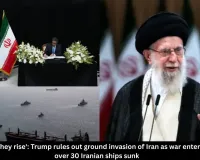
On Thursday, Iranian state television broadcast what it described as Khamenei's first written statement—read by a news anchor without the leader appearing on camera—vowing that Iran would not back down and would continue blocking the Strait of Hormuz .
President Donald Trump, in an interview , offered his assessment: "I think he probably is alive. I think he is damaged, but I think he's probably alive in some form, you know" .
The Israel Defence Forces has seized on the uncertainty, posting on X: "Where is Mojtaba? He is 'talking' to the people, but why can't his face be seen? What is he trying to hide?"
Oil Markets: US Grants 30-Day Waiver for Russian Purchases
In a significant economic development, the United States Treasury Department issued a temporary licence Thursday authorising countries to purchase Russian oil currently stranded at sea—a move designed to stabilise global energy markets shaken by the Middle East conflict .
Treasury Secretary Scott Bessent explained the measure on X: "To increase the global reach of existing supply, @USTreasury is providing a temporary authorisation to permit countries to purchase Russian oil currently stranded at sea" .
The licence applies only to crude oil and petroleum products loaded onto vessels as of March 12 and remains in force until midnight Washington time on April 11 . Bessent emphasised the measure "will not provide significant financial benefit to the Russian government, which derives the majority of its energy revenue from taxes assessed at the point of extraction" .
The decision follows a similar 30-day waiver granted to India on March 5, allowing New Delhi to continue purchasing Russian oil amid heavy sanctions related to the Ukraine war .
Regional Fallout: Dubai Struck, Israel Prepares Lebanon Invasion
The conflict's geographic reach expanded Friday as an AFP correspondent reported explosions and smoke over central Dubai. The Dubai Media Office later confirmed falling debris after an aerial attack was "successfully" intercepted, causing "a minor incident on the facade of a building" with no injuries reported .
Meanwhile, Israel has ordered a ground military operation in Lebanon following continued rocket and missile attacks from Hezbollah forces along the border . Prime Minister Benjamin Netanyahu stated the step is necessary for national security, with the military authorised to cross the border and destroy Hezbollah bases in southern Lebanon .
The Israeli military reported dozens injured Friday after missiles hit the northern village of Zarzir near Nazareth, with 58 people treated for injuries including shrapnel wounds and glass cuts .
Saudi Arabia's Defence Ministry announced its air defences intercepted 28 drones that breached the kingdom's airspace, with additional interceptions reported in central and eastern regions .
What Happens Next
With the conflict entering its third week and no ceasefire in sight, several factors will shape coming days:
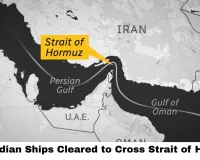
- Strait of Hormuz: Iran's UN Ambassador reiterated Tehran has the right to "preserve peace and security" in the waterway through which a quarter of the world's seaborne oil normally passes
- Military operations: US and Israeli officials indicate at least two more weeks of strikes are planned
- Humanitarian impact: The UN reports over 1,300 Iranian civilians killed and nearly 10,000 civilian sites destroyed since February 28
As Iranian Parliament Speaker Mohammad Bagher Ghalibaf posted on X following the US plane crash: "American families deserve to know why Trump is sacrificing their sons and daughters to advance Netanyahu's expansionist delusions" .



.jpg)
.jpg)
.jpg)