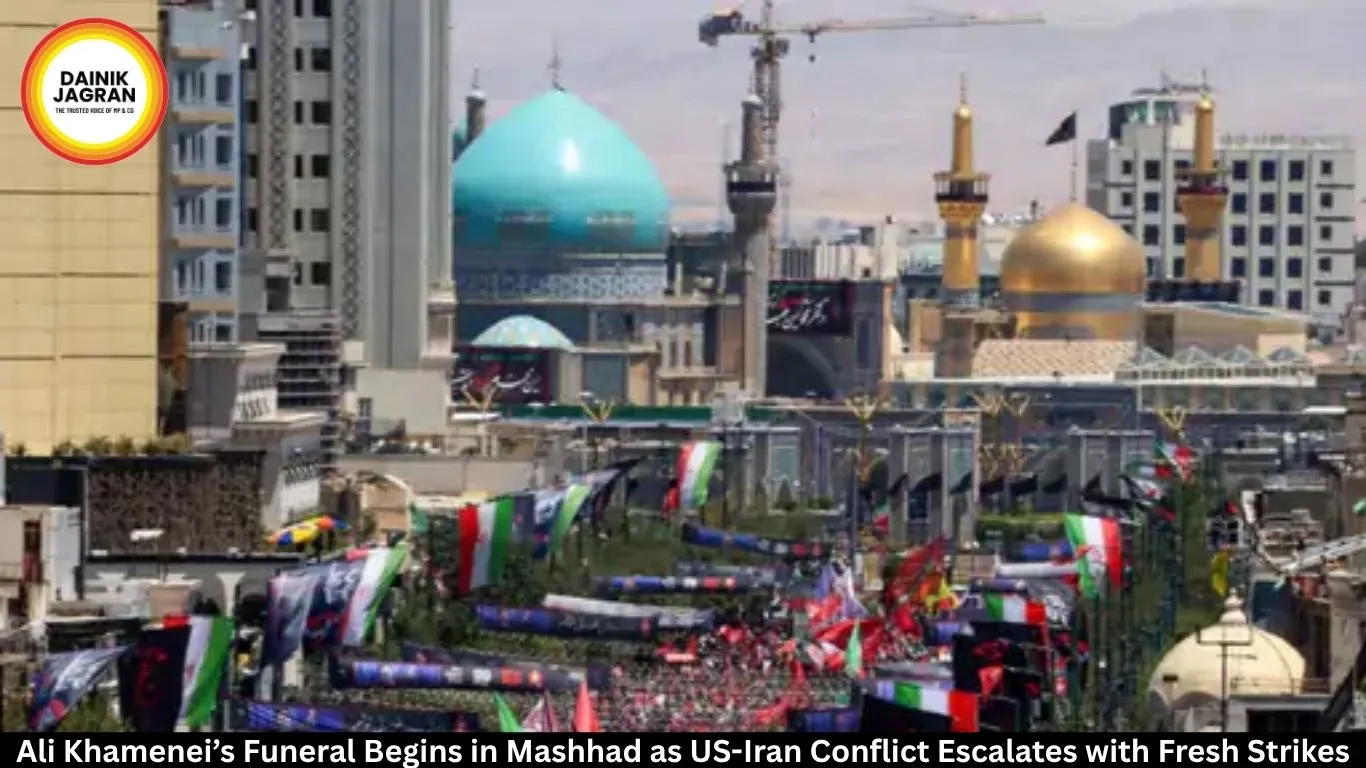
Ali Khamenei Funeral Begins in Mashhad as US and Iran Exchange Fresh Military Strikes

Digital Desk

Ali Khamenei Funeral Begins in Mashhad as US and Iran Exchange Fresh Military Strikes

Ali Khamenei's funeral has begun in Mashhad as Iran and the US exchange fresh military strikes across the Gulf. Washington targets 90 Iranian sites while Tehran claims attacks on US-linked bases.

The funeral of Iran's former Supreme Leader Ali Khamenei began in the holy city of Mashhad on Thursday, drawing thousands of mourners amid an intensifying military confrontation between Iran and the United States. Khamenei is expected to be buried near the revered Imam Reza Shrine following funeral prayers and a procession.

The funeral is taking place as the conflict between Washington and Tehran continues to escalate. Iranian authorities claimed they launched missile and drone attacks on US-linked military facilities across the Gulf, while the United States carried out a second consecutive day of large-scale airstrikes targeting Iranian military infrastructure.

According to Iran's military, its latest operation targeted a Patriot missile defence system in Kuwait, an early warning satellite antenna in Qatar, and fuel storage facilities used by the US military in Bahrain. Officials said a large number of drones were deployed during the coordinated attacks.

US Conducts Fresh Airstrikes

The US Central Command (CENTCOM) said American forces struck around 90 Iranian military targets, including air defence systems, missile and drone storage facilities, surveillance installations, naval assets and logistics infrastructure. The operation followed an earlier wave of strikes on more than 80 Iranian military sites.

Iranian authorities reported that recent US strikes killed at least three people in Ahvaz, while another attack on the coastal city of Sirik reportedly claimed three lives and left 15 others injured. Tehran also accused Washington of targeting railway bridges and civilian infrastructure, calling the attacks a violation of international law and a "war crime."

Iran Responds Across the Gulf

Iran's Islamic Revolutionary Guard Corps (IRGC) claimed responsibility for missile and drone attacks on dozens of US-linked military installations in Bahrain and Kuwait. Jordan confirmed that Iranian missiles entered its airspace before being intercepted, triggering air raid sirens across several regions. The US Embassy in Jordan advised American citizens to seek immediate shelter amid the developing threat.

Kuwait's Defence Ministry said its air defence systems intercepted three ballistic missiles, one cruise missile and ten drones. Debris from the interceptions reportedly injured one civilian, who remains in stable condition.

Fresh explosions were also reported in Bandar Abbas and Bushehr, although Iranian officials denied reports that the Bushehr nuclear power plant or Kharg Island had been directly targeted.

Trump Says Trust with Iran Is Gone

US President Donald Trump said Iran was interested in reaching a diplomatic agreement but insisted he no longer trusted Tehran to honour any future commitments. Trump also declared that the previous ceasefire understanding between the two countries had effectively ended following Iranian attacks on commercial shipping in the Strait of Hormuz.

Meanwhile, Iranian President Masoud Pezeshkian rejected calls to respond to Trump's remarks with similar rhetoric, saying Iran would continue defending its national interests without resorting to personal insults.

Maritime Security Concerns Rise

The conflict has further disrupted maritime traffic in the Strait of Hormuz. According to international reports, nearly 6,000 seafarers remain stranded in and around the strategic waterway as security risks continue to grow.

An Indian-flagged crude oil tanker carrying approximately two million barrels of Kuwaiti oil reportedly reversed course near the Strait amid heightened tensions, highlighting growing concerns over the safety of global energy shipments.

Security Tightened for Funeral

Security has been significantly strengthened across Mashhad ahead of Khamenei's burial. Large crowds carrying red flags symbolising revenge gathered near the Imam Reza Shrine as funeral processions commenced.

Iranian media reported that Khamenei's body was flown from Iraq after funeral ceremonies in the holy cities of Najaf and Karbala before arriving in Mashhad for the final rites. Speculation continues over whether Iran's new Supreme Leader, Mojtaba Khamenei, will make his first public appearance during the private burial ceremony.

The rapidly escalating military exchanges have intensified fears of a wider regional conflict, with diplomatic efforts appearing increasingly uncertain as both Washington and Tehran continue to exchange military strikes.


--------

🚨 Beat the News Rush – Join Now!

Get breaking alerts, hot exclusives, and game-changing stories instantly on your phone. No delays, no fluff – just the edge you need. ⚡

Tap to join: 

🟢 WhatsApp Channel: Dainik Jagran MP CG

Crave more?

🅕 Facebook: Dainik Jagran MP CG English

🅧 Twitter (X): Dainik Jagran MP CG

🅘 Instagram: Dainik Jagran MP CG

Share the fire – keep your crew ahead! 🗞️🔥

english.dainikjagranmpcg.com
09 Jul 2026 By Abhishek Joshi

Ali Khamenei Funeral Begins in Mashhad as US and Iran Exchange Fresh Military Strikes

Digital Desk

The funeral of Iran's former Supreme Leader Ali Khamenei began in the holy city of Mashhad on Thursday, drawing thousands of mourners amid an intensifying military confrontation between Iran and the United States. Khamenei is expected to be buried near the revered Imam Reza Shrine following funeral prayers and a procession.

The funeral is taking place as the conflict between Washington and Tehran continues to escalate. Iranian authorities claimed they launched missile and drone attacks on US-linked military facilities across the Gulf, while the United States carried out a second consecutive day of large-scale airstrikes targeting Iranian military infrastructure.

According to Iran's military, its latest operation targeted a Patriot missile defence system in Kuwait, an early warning satellite antenna in Qatar, and fuel storage facilities used by the US military in Bahrain. Officials said a large number of drones were deployed during the coordinated attacks.

US Conducts Fresh Airstrikes

The US Central Command (CENTCOM) said American forces struck around 90 Iranian military targets, including air defence systems, missile and drone storage facilities, surveillance installations, naval assets and logistics infrastructure. The operation followed an earlier wave of strikes on more than 80 Iranian military sites.

Iranian authorities reported that recent US strikes killed at least three people in Ahvaz, while another attack on the coastal city of Sirik reportedly claimed three lives and left 15 others injured. Tehran also accused Washington of targeting railway bridges and civilian infrastructure, calling the attacks a violation of international law and a "war crime."

Iran Responds Across the Gulf

Iran's Islamic Revolutionary Guard Corps (IRGC) claimed responsibility for missile and drone attacks on dozens of US-linked military installations in Bahrain and Kuwait. Jordan confirmed that Iranian missiles entered its airspace before being intercepted, triggering air raid sirens across several regions. The US Embassy in Jordan advised American citizens to seek immediate shelter amid the developing threat.

Kuwait's Defence Ministry said its air defence systems intercepted three ballistic missiles, one cruise missile and ten drones. Debris from the interceptions reportedly injured one civilian, who remains in stable condition.

Fresh explosions were also reported in Bandar Abbas and Bushehr, although Iranian officials denied reports that the Bushehr nuclear power plant or Kharg Island had been directly targeted.

Trump Says Trust with Iran Is Gone

US President Donald Trump said Iran was interested in reaching a diplomatic agreement but insisted he no longer trusted Tehran to honour any future commitments. Trump also declared that the previous ceasefire understanding between the two countries had effectively ended following Iranian attacks on commercial shipping in the Strait of Hormuz.

Meanwhile, Iranian President Masoud Pezeshkian rejected calls to respond to Trump's remarks with similar rhetoric, saying Iran would continue defending its national interests without resorting to personal insults.

Maritime Security Concerns Rise

The conflict has further disrupted maritime traffic in the Strait of Hormuz. According to international reports, nearly 6,000 seafarers remain stranded in and around the strategic waterway as security risks continue to grow.

An Indian-flagged crude oil tanker carrying approximately two million barrels of Kuwaiti oil reportedly reversed course near the Strait amid heightened tensions, highlighting growing concerns over the safety of global energy shipments.

Security Tightened for Funeral

Security has been significantly strengthened across Mashhad ahead of Khamenei's burial. Large crowds carrying red flags symbolising revenge gathered near the Imam Reza Shrine as funeral processions commenced.

Iranian media reported that Khamenei's body was flown from Iraq after funeral ceremonies in the holy cities of Najaf and Karbala before arriving in Mashhad for the final rites. Speculation continues over whether Iran's new Supreme Leader, Mojtaba Khamenei, will make his first public appearance during the private burial ceremony.

The rapidly escalating military exchanges have intensified fears of a wider regional conflict, with diplomatic efforts appearing increasingly uncertain as both Washington and Tehran continue to exchange military strikes.


https://english.dainikjagranmpcg.com/special-news/ali-khamenei-funeral-begins-in-mashhad-as-us-and-iran/article-21557

Trending News