
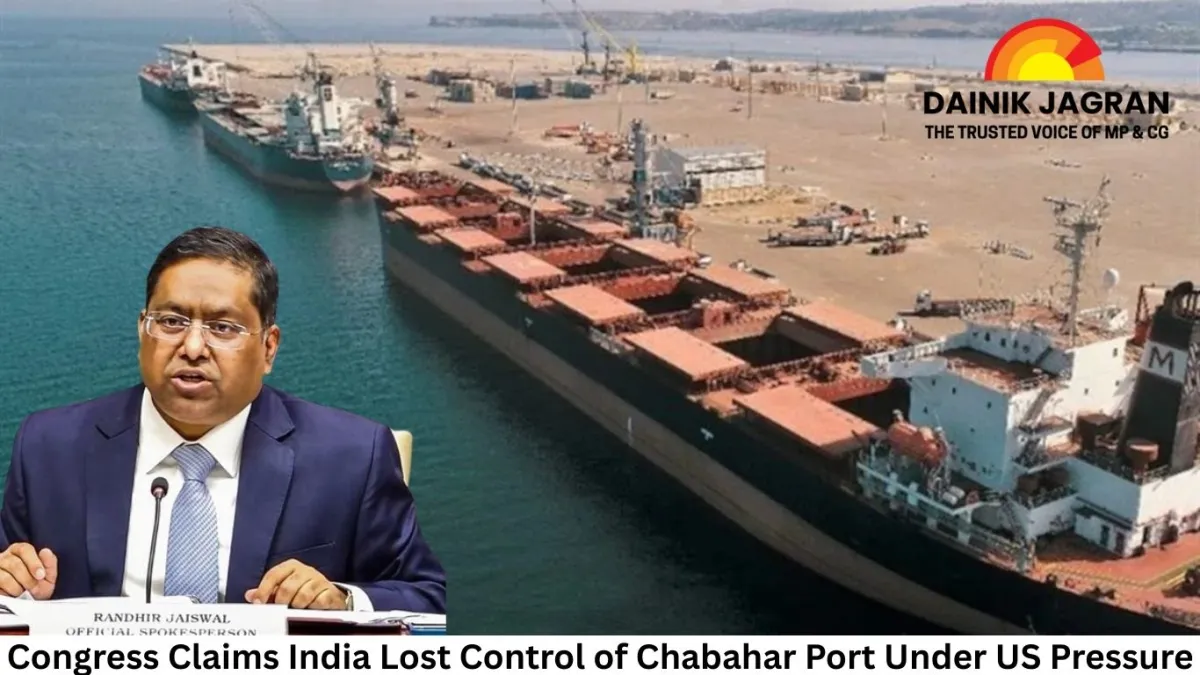

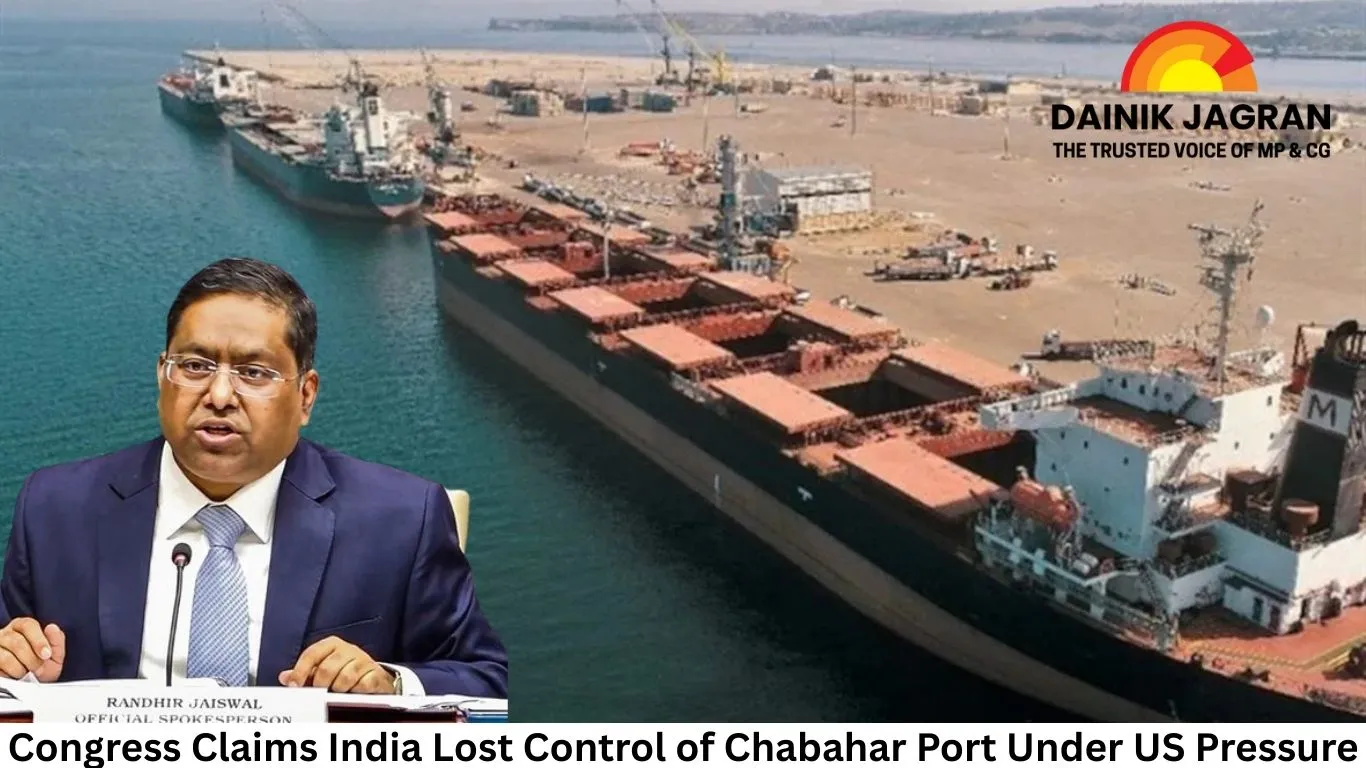
Congress Claims India Lost Control of Chabahar Port Under US Pressure; Government Rejects Allegation
Digital Desk
In a post on social media, the Congress said the Modi government had invested $120 million of public money in the port but “wasted it under pressure from former US President Donald Trump.” The opposition party alleged that New Delhi had compromised India’s strategic interests by yielding to Washington’s Iran policy.
Responding to the claim, MEA spokesperson Randhir Jaiswal said India’s plans related to Chabahar Port remain on track. “The exemption for Chabahar continues. We are in discussions with the United States to ensure that operations and development work proceed smoothly,” he said.
India currently operates at Chabahar under a special sanctions waiver granted by the US, despite broader restrictions on Iran. The latest exemption, extended in October 2025, is valid until April 26, 2026. Jaiswal said the US Treasury Department had issued formal guidelines for this exemption on October 28 last year, and India is engaging with US authorities within that framework.
The Chabahar Port has long been viewed as a critical strategic and economic asset for India. Located on Iran’s southeastern coast, it provides New Delhi with direct access to Afghanistan and Central Asia without transiting through Pakistan. The port is also seen as a counterbalance to Pakistan’s Gwadar Port, which is being developed with Chinese support under the China-Pakistan Economic Corridor.
The US has maintained sanctions on Iran as part of its “maximum pressure” policy, aimed at curbing Tehran’s nuclear programme and regional influence. Although Washington briefly withdrew the Chabahar waiver in September 2025, it restored the exemption a month later for six months, citing the port’s role in regional connectivity and humanitarian supplies.
India’s involvement in Chabahar dates back to 2003, with momentum building in 2016 when Prime Minister Modi signed a trilateral agreement with Iran and Afghanistan. India committed financial assistance for port terminals and related infrastructure, with the project being implemented through Indian Ports Global Limited.
Jaiswal also addressed questions on recent US measures, including a 25 percent tariff announced on trade with Iran, saying New Delhi is closely monitoring developments. He noted that India-Iran trade stood at about $1.6 billion in the last fiscal year, accounting for only 0.15 percent of India’s total global trade.
The MEA maintained that Chabahar remains a key pillar of India’s regional connectivity strategy and denied suggestions that control or influence over the port has been relinquished.
.jpg)




