


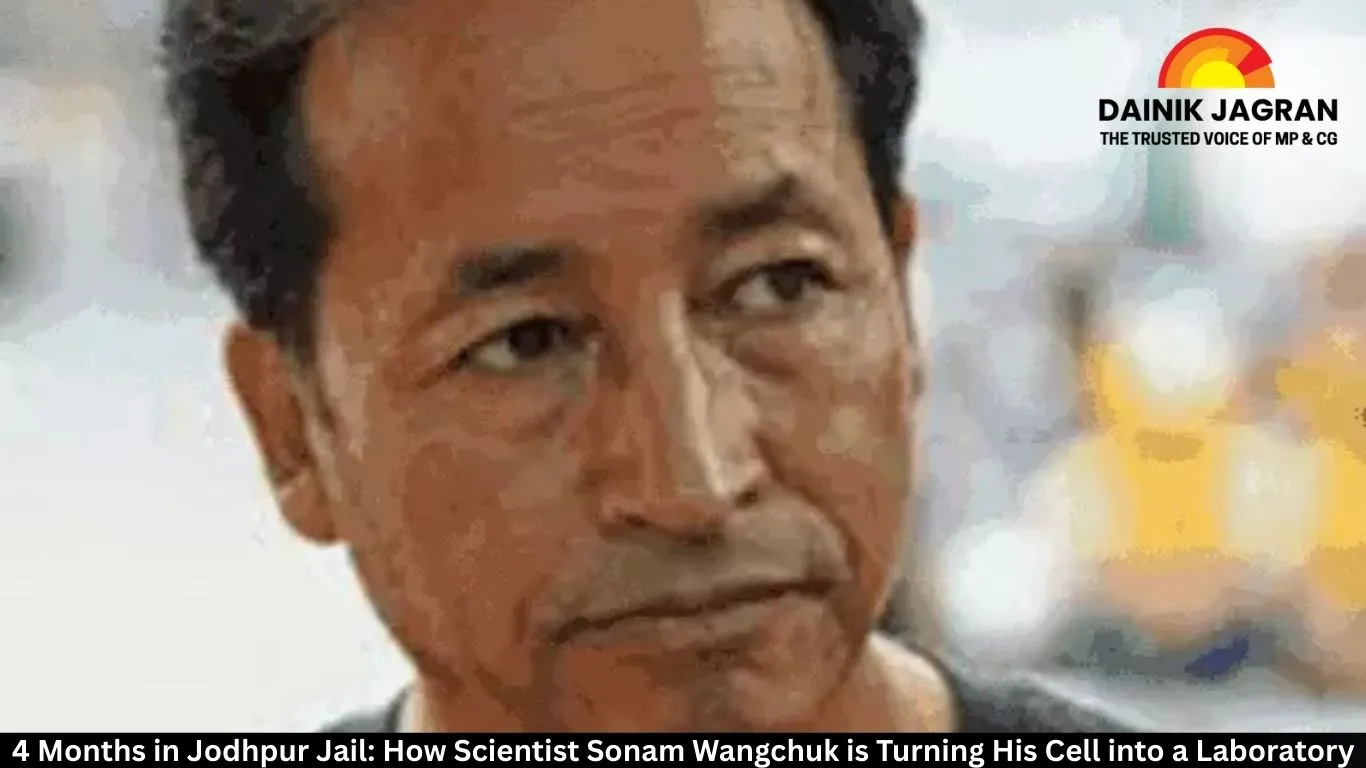
4 Months in Jodhpur Jail: How Scientist Sonam Wangchuk is Turning His Cell into a Laboratory
Digital Desk
While the cold winds of January sweep across the desert of Rajasthan, one of India’s most celebrated innovators, Sonam Wangchuk, is proving that walls cannot confine a restless mind. Four months after his arrest under the National Security Act (NSA), the climate activist and educator remains lodged in Jodhpur Jail. Far from the serene peaks of Ladakh, Wangchuk is reportedly spending his time advising prison staff on parenting and planning scientific experiments to improve the very barracks that hold him.
Life Inside: Books, Ants, and "Forever Positive"
In a recent update shared by his wife and entrepreneur, Gitanjali Angmo, a picture emerges of a man who has traded his solar-heated tents for a solitary cell with minimal amenities. According to Angmo, Wangchuk spends his days in a state of "monastic productivity."
He is currently sleeping on a simple blanket on the floor, yet his spirits remain remarkably high. To pass the time, he has turned to the natural world—specifically a colony of ants near his cell—observing their social structure and team spirit. He is also reportedly drafting a new book, tentatively titled Forever Positive, documenting his experiences and philosophical shifts during this period of detention.
The "Jail Scientist": Thermometers and Architecture
Even in custody, the engineer in Wangchuk remains active. He has recently requested thermometers and specific measuring instruments through legal channels. His goal? To study the thermal performance of the jail's stone barracks.
-
Eco-Experiments: Wangchuk intends to suggest architectural modifications to the authorities to make the cells naturally cooler in the summer and warmer in the winter.
-
Consultancy for Constables: In a heartwarming twist, jail wardens and constables have reportedly been seeking "parenting advice" from him. He encourages them to celebrate their children’s strengths rather than focusing on mistakes—a philosophy he has championed for decades in Ladakh.
The Political Context: Why He is Behind Bars
The background of this detention is the ongoing struggle for the Ladakh 6th Schedule and statehood. Wangchuk was arrested in late September 2025 following a period of intense protests in Leh. The government invoked the NSA, alleging that his speeches incited unrest.
However, his supporters and the Leh Apex Body maintain that his movement for constitutional safeguards for the fragile Himalayan ecosystem is entirely peaceful. As of late January 2026, the Supreme Court continues to hear pleas regarding the legality of his detention, while Ladakh remains on edge, awaiting the outcome of high-level talks with the Ministry of Home Affairs scheduled for February.
Why This Matters Now
The case of Sonam Wangchuk is no longer just about one man; it has become a symbol of the intersection between environmental activism and civil liberties in India. For the digital audience, Wangchuk’s "prison experiments" serve as a masterclass in resilience. He demonstrates that even when stripped of freedom, one can remain a "citizen scientist," contributing to society from the most restricted environments.
"Sonam sees the positive side of everything. He has made his life in jail a means for his progress," says Gitanjali Angmo.
Key Takeaways for Readers:
-
Resilience: Wangchuk’s use of Vipassana and yoga highlights the importance of mental health in high-stress situations.
-
Legacy of Innovation: His focus on "eco-responsive architecture" even in jail reminds us that sustainable solutions are needed everywhere.
-
Constitutional Awareness: The ongoing demand for the 6th Schedule highlights the unique cultural and ecological needs of the Himalayan region.

.jpg)




