


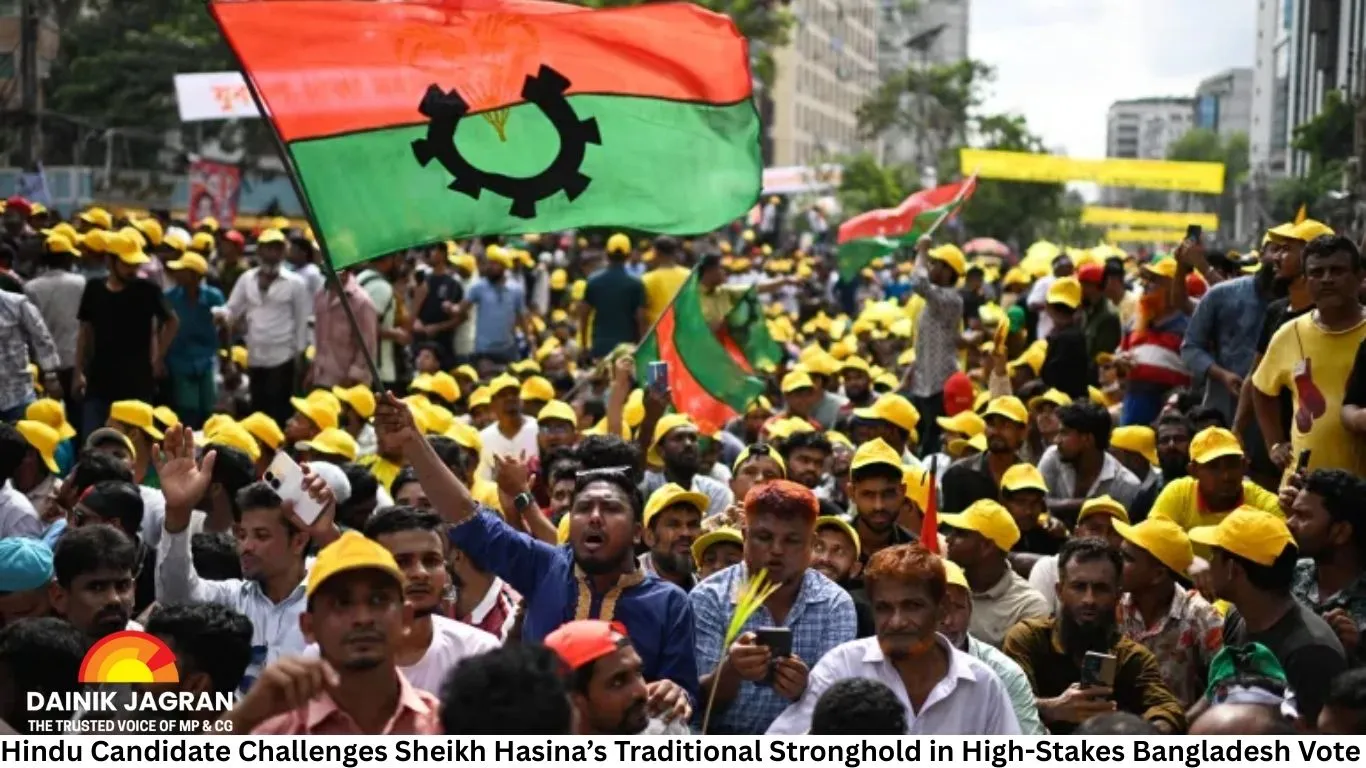
Hindu Candidate Challenges Sheikh Hasina’s Traditional Stronghold in High-Stakes Bangladesh Vote
Digital Desk
Gopalganj-3, encompassing the upazilas of Tungipara and Kotalipara, has a high minority population; roughly 80 % of its approximately 308,000 voters are from minority communities, with Hindus forming a significant share. Pramanik argues that this demographic shift offers a genuine opportunity to unseat traditional power brokers if voters cast their ballots without fear of intimidation.
Pramanik’s entry into the race comes amid a dramatically altered political landscape. The Awami League — which Hasina led for decades — is absent from the ballot, and the Bangladesh Nationalist Party (BNP) is poised to make substantial gains nationwide. The BNP’s SM Jilani is the party’s official candidate in Gopalganj-3, placing him in direct competition with Pramanik and other independents and smaller party nominees.
Pramanik stresses that his candidacy is grounded in a non-partisan mission to advocate for minority rights and community security. He told reporters that if minority voters turn out en masse, his chances are strong. However, he has also voiced concern over alleged efforts by rival political workers to discourage minority turnout through threats — a claim reflecting wider anxieties about election-day safety.
His campaign has faced bureaucratic obstacles too; Pramanik’s nomination was initially rejected on technical grounds related to signature requirements for independent candidates. Following an appeal, however, the Bangladesh Election Commission cleared him to contest the seat, allowing him to campaign ahead of tomorrow’s vote.
Political analysts say that Gopalganj-3’s contest is emblematic of broader trends in the 2026 polls. With the traditional Awami League vote fragmented and multiple parties vying for dominance, minority-focused campaigning and grassroots mobilisation have taken on heightened importance.
The outcome in this constituency — and across the country — could have implications beyond party politics, influencing Bangladesh’s direction on minority inclusion and social cohesion. Voter turnout, particularly among minorities who feel under pressure, may be a decisive factor shaping results tomorrow.
.jpg)




