


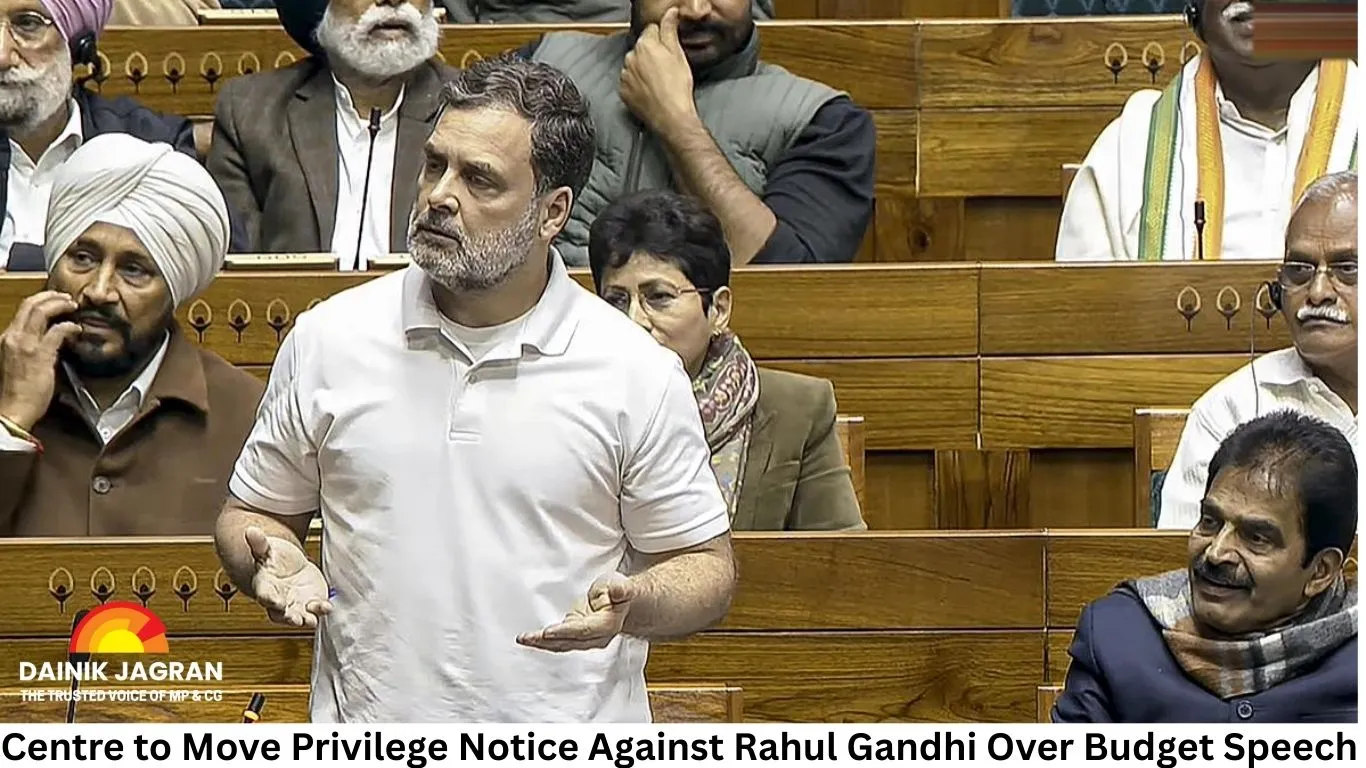
Centre to Move Privilege Notice Against Rahul Gandhi Over Budget Speech: Rijiju Accuses LoP of Misleading Lok Sabha
Digital Desk
Rahul Gandhi drew sharp criticism from government benches after asserting that India’s national interests were being compromised in dealings with the United States and linking the ongoing Adani group controversy in the US to Prime Minister Narendra Modi. He also spoke about sensitive issues including data reliance, oil sourcing, and alleged foreign influence—remarks that drew immediate interruption from ministers.
What Was Said and Why It Sparked Rows
During his speech in the Lower House, Gandhi claimed that the United States relies on Indian data for technological supremacy and suggested that US ties were dictating India’s oil purchases—a charge met with disbelief by ruling party MPs. He also referred to the Epstein files and a US case involving the Adani group, asserting without evidence that such events reflected negatively on the government’s financial framework.
Rijiju interrupted Gandhi in the Lok Sabha, demanding proof and urging him to substantiate his statements. The minister later said the government would initiate a privilege notice because Gandhi had failed to provide prior notice or documentary evidence for serious allegations made on the floor of the House.
Government’s Standpoint
Addressing reporters outside Parliament, Rijiju said there are clear procedural rules in both Houses, which require a member to give advance notice before levelling serious charges against other members or the government. He stressed that misleading the House contravenes these norms and that no member is exempt from accountability.
Government MPs described Gandhi’s comments as “baseless” and “unparliamentary,” underscoring that serious allegations without evidence undermine the dignity and credibility of parliamentary discourse.
Opposition Reaction
Gandhi responded on the floor by saying he was prepared to authenticate his points and would produce evidence at the earliest possible opportunity. The Speaker intervened at one point, allowing him to continue without immediate proof, noting that evidence could be submitted later.
Opposition parties rallied behind Gandhi, denouncing the government’s move as an attempt to stifle dissent rather than engage with substantive policy criticism.
Context and Implications
This confrontation comes amid heated debates over the Union Budget 2026–27 and a broader pattern of friction between the ruling party and the Congress in Parliament. Privilege notices are relatively rare and signal rising tensions over parliamentary conduct and legislative oversight.
The notice — once moved formally — could lead to a parliamentary committee review. Depending on proceedings, it has the potential to further strain political dialogue during an already contentious Budget session.
.jpg)




