How a Red Sea Crisis Could Impact India's Economy, Trade and Energy Security
Digital Desk
A possible disruption of the Bab el-Mandeb Strait could increase shipping costs, fuel prices and inflation while affecting India's trade, exports and energy security.
The conflict in West Asia is no longer confined to the battlefield. It is increasingly threatening some of the world's most critical maritime trade routes, raising fresh concerns for the global economy. After prolonged disruptions in the Strait of Hormuz, attention has now shifted to the Red Sea, where reports suggest Iran has asked Yemen's Houthi movement to prepare for a possible closure of the Bab el-Mandeb Strait.
If the strategic waterway is disrupted, it could significantly impact global shipping, energy supplies and international trade. For India, which relies heavily on maritime imports and exports, the consequences could be substantial.
Why the Bab el-Mandeb Strait Matters
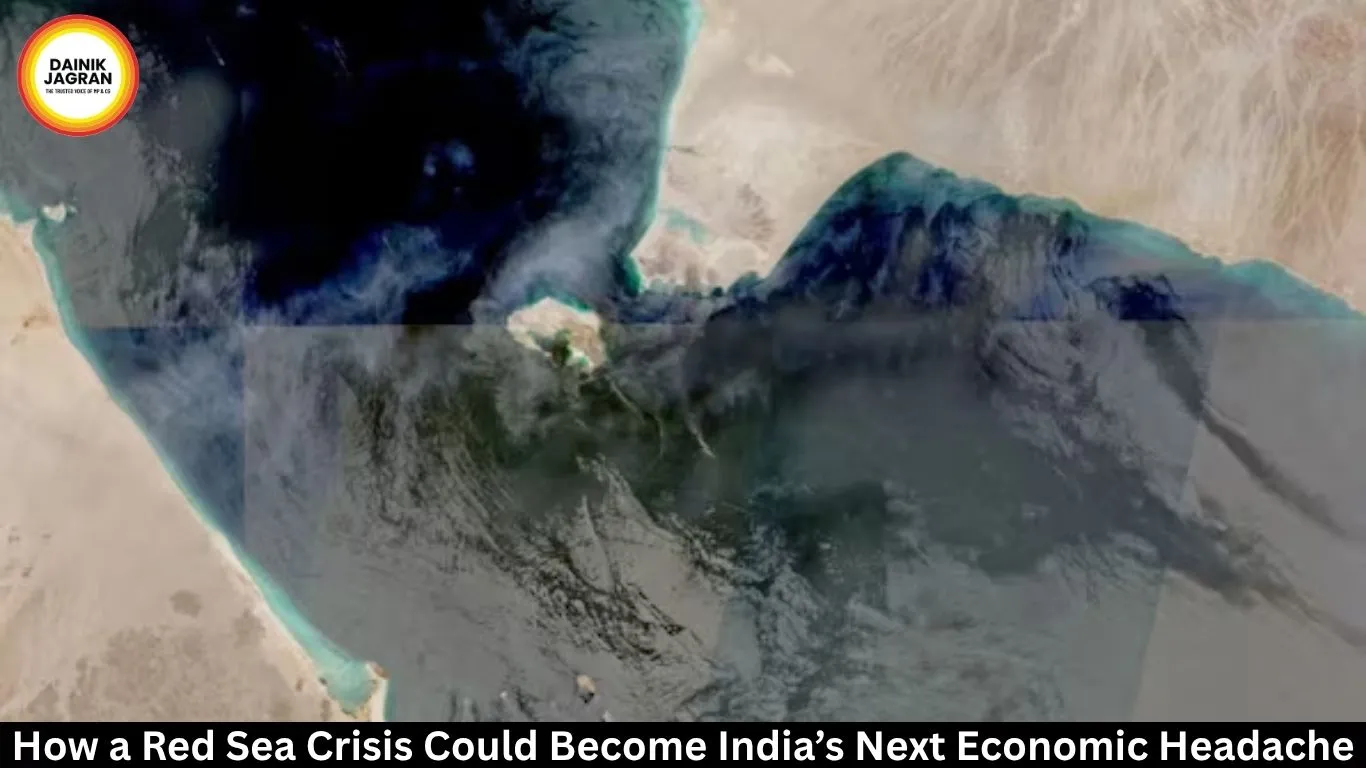
The Bab el-Mandeb Strait connects the Red Sea with the Gulf of Aden and the Arabian Sea. It serves as a crucial gateway for ships travelling between Asia and Europe through the Suez Canal.
Every year, thousands of commercial vessels carrying crude oil, liquefied natural gas (LNG), manufactured goods and essential commodities pass through the narrow passage. Any disruption would force ships to take the much longer route around the Cape of Good Hope in South Africa, increasing both transit time and transportation costs.
Potential Impact on India
India imports nearly 85% of its crude oil requirements, with a significant share sourced from West Asian countries. While much of this energy reaches India through the Strait of Hormuz, exports to Europe and trade with Mediterranean markets largely depend on the Red Sea route.
A prolonged disruption in the Bab el-Mandeb Strait could have multiple economic consequences:
-
Shipping costs may rise sharply due to longer routes and higher insurance premiums.
-
Crude oil prices could increase, pushing up India's import bill.
-
Exports to Europe may become costlier and slower, affecting sectors such as engineering goods, textiles, pharmaceuticals and chemicals.
-
Delays in the supply of raw materials and components could disrupt manufacturing and industrial production.
Inflation Risks
Higher transportation and fuel costs are likely to translate into increased prices for goods and services. Rising crude oil prices generally lead to higher fuel costs, which eventually affect logistics, food prices and overall inflation.
Economists warn that persistent supply disruptions could put additional pressure on the Reserve Bank of India's efforts to maintain price stability.
Supply Chain Challenges
Global supply chains are still recovering from disruptions witnessed over the past few years. Any closure of the Red Sea route could create fresh bottlenecks in the movement of containers, industrial equipment and consumer goods.
Companies dependent on just-in-time deliveries may face production delays, while exporters could encounter higher freight charges and longer delivery schedules.
Government Monitoring Developments
Indian authorities are closely monitoring developments in West Asia. Shipping companies have already increased security measures, while global maritime agencies continue to issue advisories for vessels operating in the region.
Industry experts believe that if tensions escalate further and both the Strait of Hormuz and the Bab el-Mandeb Strait face prolonged disruptions, global trade could witness one of its biggest logistical challenges in recent years.
For India, maintaining energy security, controlling inflation and ensuring uninterrupted trade will remain key priorities as geopolitical tensions continue to evolve.

--------
🚨 Beat the News Rush – Join Now!
Get breaking alerts, hot exclusives, and game-changing stories instantly on your phone. No delays, no fluff – just the edge you need. ⚡
Tap to join:
🟢 WhatsApp Channel: Dainik Jagran MP CG
Crave more?
🅕 Facebook: Dainik Jagran MP CG English
🅧 Twitter (X): Dainik Jagran MP CG
🅘 Instagram: Dainik Jagran MP CG
Share the fire – keep your crew ahead! 🗞️🔥
How a Red Sea Crisis Could Impact India's Economy, Trade and Energy Security
Digital Desk
The conflict in West Asia is no longer confined to the battlefield. It is increasingly threatening some of the world's most critical maritime trade routes, raising fresh concerns for the global economy. After prolonged disruptions in the Strait of Hormuz, attention has now shifted to the Red Sea, where reports suggest Iran has asked Yemen's Houthi movement to prepare for a possible closure of the Bab el-Mandeb Strait.
If the strategic waterway is disrupted, it could significantly impact global shipping, energy supplies and international trade. For India, which relies heavily on maritime imports and exports, the consequences could be substantial.
Why the Bab el-Mandeb Strait Matters
The Bab el-Mandeb Strait connects the Red Sea with the Gulf of Aden and the Arabian Sea. It serves as a crucial gateway for ships travelling between Asia and Europe through the Suez Canal.
Every year, thousands of commercial vessels carrying crude oil, liquefied natural gas (LNG), manufactured goods and essential commodities pass through the narrow passage. Any disruption would force ships to take the much longer route around the Cape of Good Hope in South Africa, increasing both transit time and transportation costs.
Potential Impact on India
India imports nearly 85% of its crude oil requirements, with a significant share sourced from West Asian countries. While much of this energy reaches India through the Strait of Hormuz, exports to Europe and trade with Mediterranean markets largely depend on the Red Sea route.
A prolonged disruption in the Bab el-Mandeb Strait could have multiple economic consequences:
-
Shipping costs may rise sharply due to longer routes and higher insurance premiums.
-
Crude oil prices could increase, pushing up India's import bill.
-
Exports to Europe may become costlier and slower, affecting sectors such as engineering goods, textiles, pharmaceuticals and chemicals.
-
Delays in the supply of raw materials and components could disrupt manufacturing and industrial production.
Inflation Risks
Higher transportation and fuel costs are likely to translate into increased prices for goods and services. Rising crude oil prices generally lead to higher fuel costs, which eventually affect logistics, food prices and overall inflation.
Economists warn that persistent supply disruptions could put additional pressure on the Reserve Bank of India's efforts to maintain price stability.
Supply Chain Challenges
Global supply chains are still recovering from disruptions witnessed over the past few years. Any closure of the Red Sea route could create fresh bottlenecks in the movement of containers, industrial equipment and consumer goods.
Companies dependent on just-in-time deliveries may face production delays, while exporters could encounter higher freight charges and longer delivery schedules.
Government Monitoring Developments
Indian authorities are closely monitoring developments in West Asia. Shipping companies have already increased security measures, while global maritime agencies continue to issue advisories for vessels operating in the region.
Industry experts believe that if tensions escalate further and both the Strait of Hormuz and the Bab el-Mandeb Strait face prolonged disruptions, global trade could witness one of its biggest logistical challenges in recent years.
For India, maintaining energy security, controlling inflation and ensuring uninterrupted trade will remain key priorities as geopolitical tensions continue to evolve.