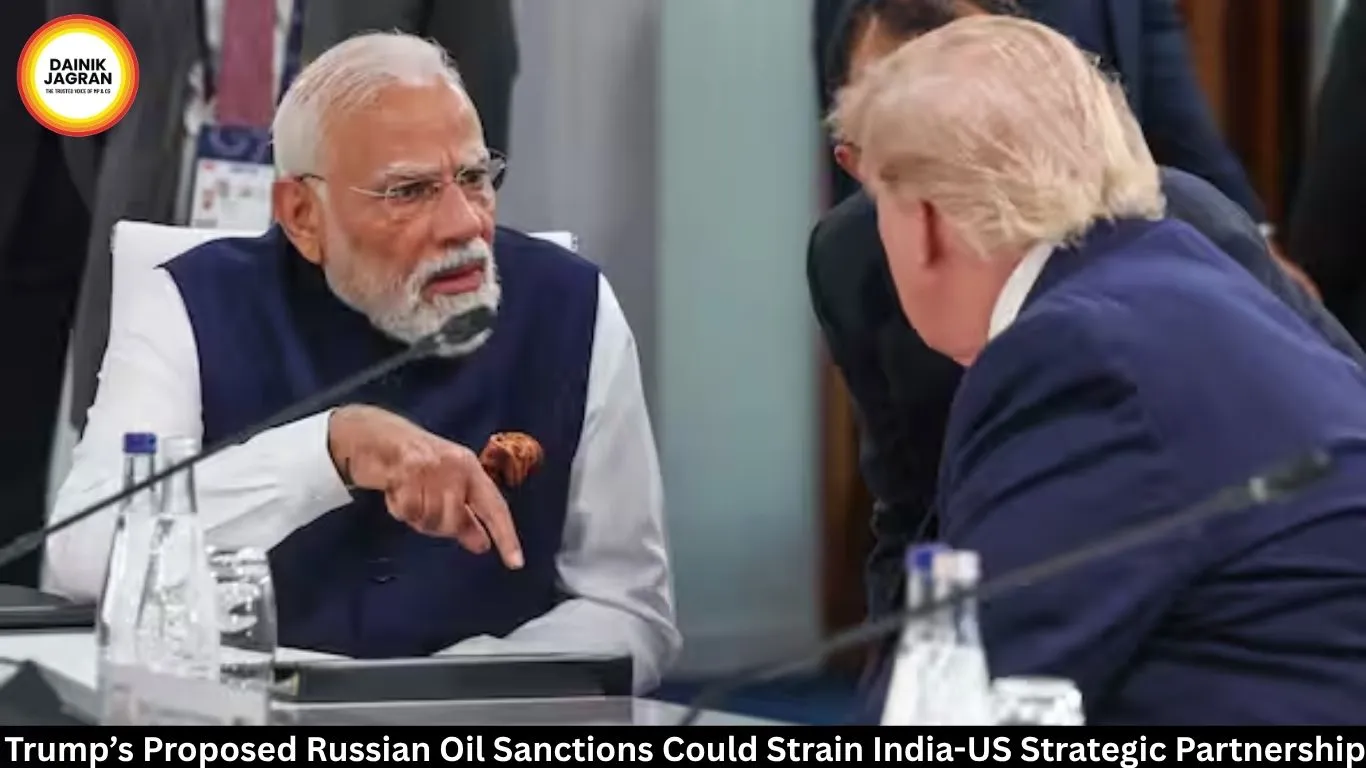
Trump’s Proposed Russian Oil Sanctions Could Test India-US Relations
Digital Desk
Proposed US sanctions on Russian oil buyers and possible Section 301 tariffs could increase pressure on India-US relations, with implications for energy security, trade and the broader strategic partnership.
India-United States relations could face renewed pressure if the Trump administration moves ahead with proposed sanctions targeting countries importing Russian oil and expands the use of Section 301 tariffs, according to strategic and trade analysts.
The developments come amid rising geopolitical tensions, volatile global energy markets and ongoing trade negotiations between the two countries.
Russian Oil Sanctions Raise Concerns
A bipartisan bill under consideration in the US Congress proposes imposing secondary tariffs of up to 100% on countries purchasing Russian oil. India, one of Russia's largest crude oil buyers, could be among the nations affected if the legislation is enacted.
Energy experts say India remains heavily dependent on imported crude oil, with Russian supplies becoming a significant source since the outbreak of the Russia-Ukraine conflict. Any restrictions on these imports could increase India's energy costs and affect domestic fuel prices.
The proposal comes at a time when global energy markets remain under pressure due to tensions in West Asia and disruptions to key shipping routes.
Section 301 Tariffs Spark Trade Fears
Apart from the proposed sanctions, concerns have also emerged over the possible use of Section 301 of US trade law, which allows Washington to impose tariffs against countries it believes engage in unfair trade practices.
The Trump administration recently invoked the provision against Brazil, prompting speculation that similar action could be considered against other major trading partners.
Analysts believe India's digital payment ecosystem, including the Unified Payments Interface (UPI), along with its regulatory policies, could come under greater scrutiny if bilateral trade disputes intensify.
Economic Impact on India
Industry experts warn that higher tariffs or sanctions could affect several sectors, including energy, manufacturing, exports and technology.
India imports nearly 90% of its crude oil requirements, making affordable energy supplies crucial for controlling inflation and supporting economic growth. Any disruption in oil imports could increase the country's import bill, widen the current account deficit and place additional pressure on the rupee.
Businesses also fear that new tariffs could impact bilateral trade and investment at a time when both countries are working to deepen economic cooperation.
Strategic Partnership at a Crossroads
India and the United States have strengthened cooperation over the past decade in areas such as defence, technology, semiconductors, critical minerals and the Indo-Pacific.
However, trade disputes and differing approaches to energy security continue to present challenges in the relationship.
Experts say New Delhi is expected to continue pursuing a balanced foreign policy while protecting its energy security and strategic interests.
Diplomatic engagement between both countries is likely to remain important as discussions continue on trade, sanctions and broader geopolitical issues.

--------
🚨 Beat the News Rush – Join Now!
Get breaking alerts, hot exclusives, and game-changing stories instantly on your phone. No delays, no fluff – just the edge you need. ⚡
Tap to join:
🟢 WhatsApp Channel: Dainik Jagran MP CG
Crave more?
🅕 Facebook: Dainik Jagran MP CG English
🅧 Twitter (X): Dainik Jagran MP CG
🅘 Instagram: Dainik Jagran MP CG
Share the fire – keep your crew ahead! 🗞️🔥
Trump’s Proposed Russian Oil Sanctions Could Test India-US Relations
Digital Desk
India-United States relations could face renewed pressure if the Trump administration moves ahead with proposed sanctions targeting countries importing Russian oil and expands the use of Section 301 tariffs, according to strategic and trade analysts.
The developments come amid rising geopolitical tensions, volatile global energy markets and ongoing trade negotiations between the two countries.
Russian Oil Sanctions Raise Concerns
A bipartisan bill under consideration in the US Congress proposes imposing secondary tariffs of up to 100% on countries purchasing Russian oil. India, one of Russia's largest crude oil buyers, could be among the nations affected if the legislation is enacted.
Energy experts say India remains heavily dependent on imported crude oil, with Russian supplies becoming a significant source since the outbreak of the Russia-Ukraine conflict. Any restrictions on these imports could increase India's energy costs and affect domestic fuel prices.
The proposal comes at a time when global energy markets remain under pressure due to tensions in West Asia and disruptions to key shipping routes.
Section 301 Tariffs Spark Trade Fears
Apart from the proposed sanctions, concerns have also emerged over the possible use of Section 301 of US trade law, which allows Washington to impose tariffs against countries it believes engage in unfair trade practices.
The Trump administration recently invoked the provision against Brazil, prompting speculation that similar action could be considered against other major trading partners.
Analysts believe India's digital payment ecosystem, including the Unified Payments Interface (UPI), along with its regulatory policies, could come under greater scrutiny if bilateral trade disputes intensify.
Economic Impact on India
Industry experts warn that higher tariffs or sanctions could affect several sectors, including energy, manufacturing, exports and technology.
India imports nearly 90% of its crude oil requirements, making affordable energy supplies crucial for controlling inflation and supporting economic growth. Any disruption in oil imports could increase the country's import bill, widen the current account deficit and place additional pressure on the rupee.
Businesses also fear that new tariffs could impact bilateral trade and investment at a time when both countries are working to deepen economic cooperation.
Strategic Partnership at a Crossroads
India and the United States have strengthened cooperation over the past decade in areas such as defence, technology, semiconductors, critical minerals and the Indo-Pacific.
However, trade disputes and differing approaches to energy security continue to present challenges in the relationship.
Experts say New Delhi is expected to continue pursuing a balanced foreign policy while protecting its energy security and strategic interests.
Diplomatic engagement between both countries is likely to remain important as discussions continue on trade, sanctions and broader geopolitical issues.