India vs US Elections Explained: Voter ID, EVMs, Mail Voting and 7 Key Differences
Digital desk
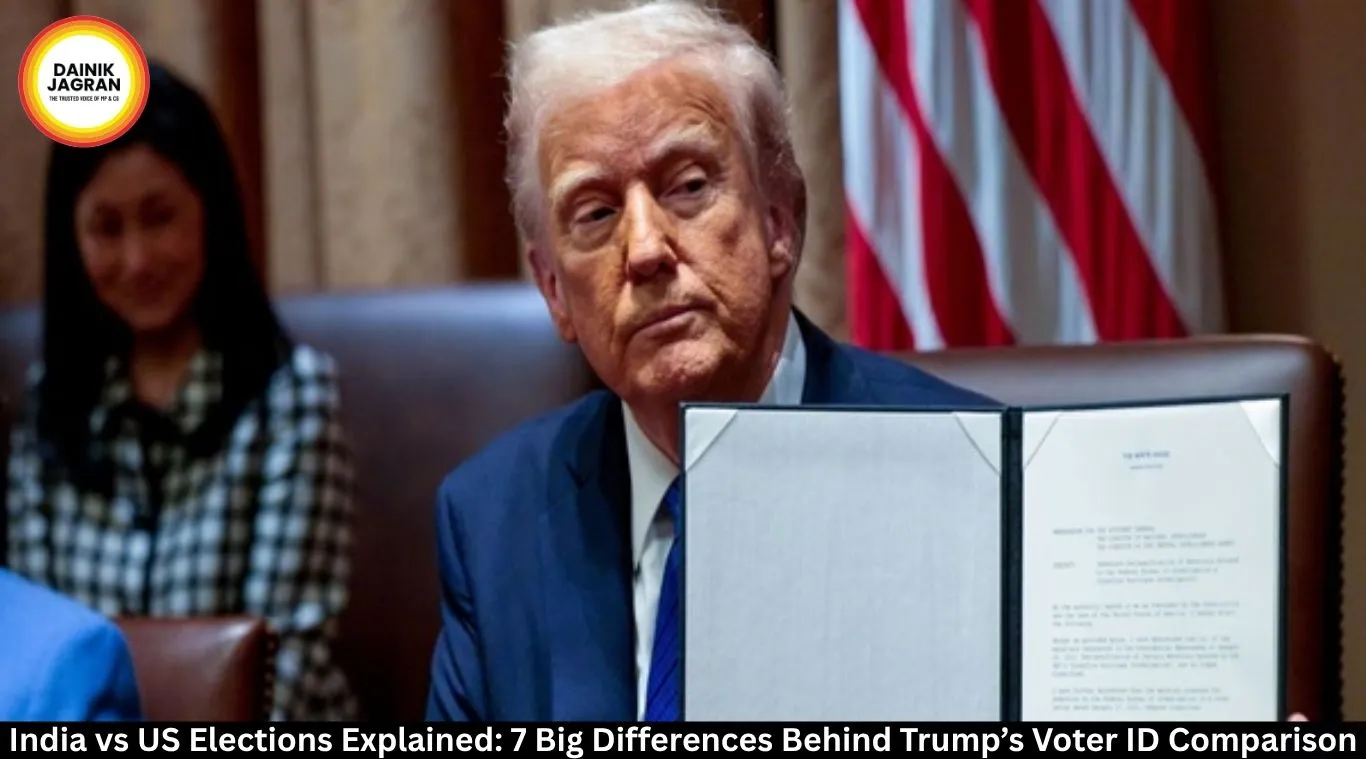
Trump has praised India’s voter ID system. Here are seven major differences between elections in India and the US, from EVMs and mail voting to who runs elections.
India vs US Elections Explained: 7 Big Differences Behind Trump’s Voter ID Comparison
Deck: Donald Trump has cited India’s election system while pushing for tougher voter-ID rules in America. But voter identification, postal ballots, voting technology and election administration work very differently in the two democracies.
1. Does every Indian voter need a Voter ID card?
No. A voter must be on the electoral roll and must establish identity, but EPIC is not the only accepted identification document. The Election Commission permits alternative recognised photo IDs such as Aadhaar, passport, driving licence, PAN card and others.
2. Does every American voter need photo ID?
No. Requirements differ substantially between states. Some states impose strict photo-identification requirements, while others use different identification or verification mechanisms.
3. Who conducts elections?
India’s Election Commission is a constitutional authority administering elections to Parliament and state legislatures under a common national framework. US election administration is much more decentralised, with states and local jurisdictions playing major roles.
4. India uses EVMs. What does America use?
India predominantly uses Electronic Voting Machines with VVPAT in Lok Sabha and Assembly elections. The United States has no single nationwide voting technology; equipment and ballot methods vary by jurisdiction.
5. Why did Trump mention postal ballots?
Postal voting is available to specified categories in India and represents a small share of total votes. Mail and absentee voting are far more extensively used in many parts of the United States, making restrictions much more consequential there.
6. What exactly does Trump want?
The SAVE America Act would require documentary proof of US citizenship for federal voter registration and eligible photo identification for voting in federal elections. Trump is using India as an example to argue that large-scale voter identification is practical.
7. Can the US simply adopt India’s rules?
Not easily. The constitutional structures are different. India has a national election authority operating under a common framework, while the US Constitution gives states an important role in election administration, subject to federal constitutional and congressional powers.
India vs US: At a Glance
| Feature | India | United States |
| Administration | Election Commission / common national framework | Decentralised state/local administration |
| Identity verification | Required at polling station | Varies by state |
| One compulsory voter card? | No; approved alternatives allowed | No national equivalent |
| Main voting technology | EVM + VVPAT | Varies by jurisdiction |
| Postal/mail voting | Limited categories | Broader in many states |
| Rules nationwide | Relatively uniform framework | Significant state variation |
The bottom line
Trump’s comparison is meaningful on voter identification and the relatively limited role of postal ballots in India, but it needs constitutional context. The two democracies organise elections very differently, which makes a direct transplant of the Indian model to the United States far more complicated than the political slogan suggests.

India vs US Elections Explained: Voter ID, EVMs, Mail Voting and 7 Key Differences
Digital desk
India vs US Elections Explained: 7 Big Differences Behind Trump’s Voter ID Comparison
Deck: Donald Trump has cited India’s election system while pushing for tougher voter-ID rules in America. But voter identification, postal ballots, voting technology and election administration work very differently in the two democracies.
1. Does every Indian voter need a Voter ID card?
No. A voter must be on the electoral roll and must establish identity, but EPIC is not the only accepted identification document. The Election Commission permits alternative recognised photo IDs such as Aadhaar, passport, driving licence, PAN card and others.
2. Does every American voter need photo ID?
No. Requirements differ substantially between states. Some states impose strict photo-identification requirements, while others use different identification or verification mechanisms.
3. Who conducts elections?
India’s Election Commission is a constitutional authority administering elections to Parliament and state legislatures under a common national framework. US election administration is much more decentralised, with states and local jurisdictions playing major roles.
4. India uses EVMs. What does America use?
India predominantly uses Electronic Voting Machines with VVPAT in Lok Sabha and Assembly elections. The United States has no single nationwide voting technology; equipment and ballot methods vary by jurisdiction.
5. Why did Trump mention postal ballots?
Postal voting is available to specified categories in India and represents a small share of total votes. Mail and absentee voting are far more extensively used in many parts of the United States, making restrictions much more consequential there.
6. What exactly does Trump want?
The SAVE America Act would require documentary proof of US citizenship for federal voter registration and eligible photo identification for voting in federal elections. Trump is using India as an example to argue that large-scale voter identification is practical.
7. Can the US simply adopt India’s rules?
Not easily. The constitutional structures are different. India has a national election authority operating under a common framework, while the US Constitution gives states an important role in election administration, subject to federal constitutional and congressional powers.
India vs US: At a Glance
| Feature | India | United States |
| Administration | Election Commission / common national framework | Decentralised state/local administration |
| Identity verification | Required at polling station | Varies by state |
| One compulsory voter card? | No; approved alternatives allowed | No national equivalent |
| Main voting technology | EVM + VVPAT | Varies by jurisdiction |
| Postal/mail voting | Limited categories | Broader in many states |
| Rules nationwide | Relatively uniform framework | Significant state variation |
The bottom line
Trump’s comparison is meaningful on voter identification and the relatively limited role of postal ballots in India, but it needs constitutional context. The two democracies organise elections very differently, which makes a direct transplant of the Indian model to the United States far more complicated than the political slogan suggests.
Recommended For You
--------
🚨 Beat the News Rush – Join Now!
Get breaking alerts, hot exclusives, and game-changing stories instantly on your phone. No delays, no fluff – just the edge you need. ⚡
Tap to join:
🟢 WhatsApp Channel: Dainik Jagran MP CG
Crave more?
🅕 Facebook: Dainik Jagran MP CG English
🅧 Twitter (X): Dainik Jagran MP CG
🅘 Instagram: Dainik Jagran MP CG
Share the fire – keep your crew ahead! 🗞️🔥