Iran Power Struggle Comes Into Public View After Khamenei's Death: President Pezeshkian Faces Fury at Funeral, Hardliners Oppose US Truce
Digital Desk
Iran's political divisions have surfaced publicly following the death of Supreme Leader Ali Khamenei, with President Masoud Pezeshkian and Foreign Minister Abbas Araghchi facing sharp criticism from hardliners over efforts to negotiate with the United States. The developments have intensified speculation over Iran's post-Khamenei power balance.
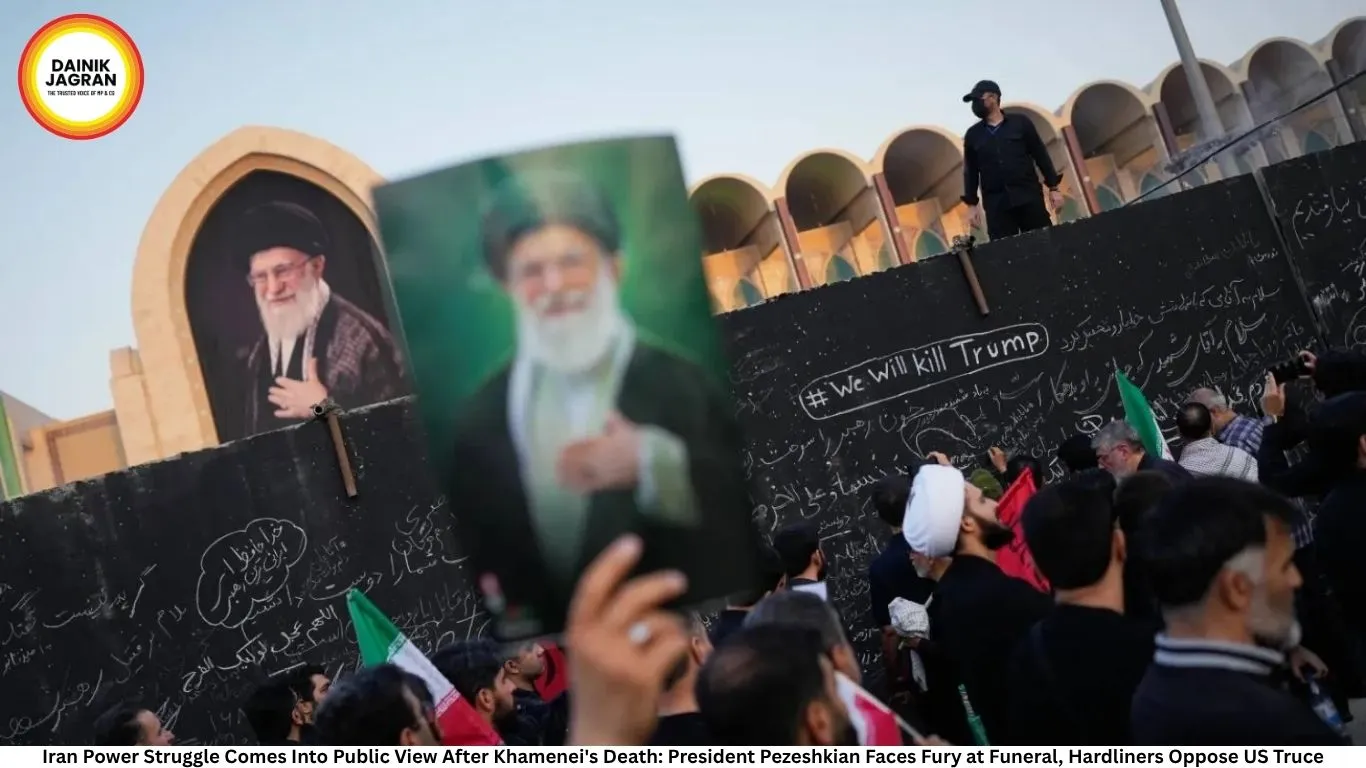
A state funeral meant to project national unity after the death of Iran's Supreme Leader Ayatollah Ali Khamenei instead exposed deep political divisions within the country's leadership. During funeral ceremonies attended by thousands, President Masoud Pezeshkian and Foreign Minister Seyed Abbas Araghchi faced hostile slogans and public criticism from hardline supporters who accused the government of compromising with the United States.
The confrontation comes amid heightened uncertainty over Iran's future political direction following Khamenei's death during the US-Israel military strikes on 28 February 2026 and the appointment of Mojtaba Khamenei as his successor.
Funeral Turns Into Political Flashpoint
As President Pezeshkian walked alongside Khamenei's coffin during funeral proceedings, sections of the crowd reportedly chanted slogans such as "Death to the compromiser," expressing anger over the government's attempts to pursue a diplomatic understanding with Washington.
The incident reflected growing tensions between Iran's elected leadership and influential hardline factions, many of whom believe the government has shown weakness toward the United States instead of pursuing retaliation following Khamenei's assassination.
Funeral ceremonies were held across Tehran, Mashhad, Qom, and parts of Iraq, drawing large numbers of supporters of the Islamic Republic.
Foreign Minister Also Targeted
Foreign Minister Seyed Abbas Araghchi, who had played a key role in negotiations with the United States before the reported collapse of the proposed agreement, also faced protests during the ceremonies.
According to reports, some hardline supporters accused him of betraying the country by engaging in talks with Washington. Media reports said objects were thrown in his direction, forcing security personnel to escort him away from the venue.
The criticism reflects broader opposition among conservative groups, who argue that any negotiations with the United States undermine Iran's strategic position following recent military confrontations.
Leadership Faces Pressure After Khamenei's Death
The death of Ayatollah Ali Khamenei marked a major turning point in Iran's political landscape.
Although Mojtaba Khamenei was announced as the country's new Supreme Leader shortly after his father's death, he has remained largely absent from public events because of reported security concerns.
His limited public appearances have fuelled speculation about internal power dynamics, while hardline groups continue demanding a stronger response against the United States and Israel.
Calls for Revenge Intensify
During the funeral ceremonies, crowds reportedly raised anti-US slogans and demanded retaliation for Khamenei's killing.
Many hardline supporters argued that Iran's leadership should prioritize revenge instead of pursuing diplomatic engagement. Some speakers claimed any agreement with Washington contradicted the principles laid down by the late Supreme Leader.
The reported collapse of the proposed peace understanding has further strengthened the position of conservative factions advocating a tougher national security approach.
Religious Figure Issues Threat
The political tensions escalated after Mohammad Ali Bakhshi, a religious singer known for his close association with Iran's conservative establishment, publicly warned President Pezeshkian during the funeral events.
In remarks widely circulated on social media, Bakhshi said the government must fulfil the directives of the country's leadership and warned of serious consequences if it failed to do so.
The statement drew criticism from several observers but, according to reports, no official action has been taken against him.
Iran Enters a New Political Phase
The events surrounding Khamenei's funeral underscore the challenges facing Iran's leadership as it navigates succession, domestic political rivalries and heightened regional tensions.
While the government continues to balance security concerns with diplomatic considerations, hardline groups remain influential and continue to push for a more confrontational approach toward the United States.
With questions over leadership, foreign policy and internal political stability remaining unresolved, the coming months are expected to play a crucial role in shaping Iran's post-Khamenei future.
--------
🚨 Beat the News Rush – Join Now!
Get breaking alerts, hot exclusives, and game-changing stories instantly on your phone. No delays, no fluff – just the edge you need. ⚡
Tap to join:
🟢 WhatsApp Channel: Dainik Jagran MP CG
Crave more?
🅕 Facebook: Dainik Jagran MP CG English
🅧 Twitter (X): Dainik Jagran MP CG
🅘 Instagram: Dainik Jagran MP CG
Share the fire – keep your crew ahead! 🗞️🔥
Iran Power Struggle Comes Into Public View After Khamenei's Death: President Pezeshkian Faces Fury at Funeral, Hardliners Oppose US Truce
Digital Desk
A state funeral meant to project national unity after the death of Iran's Supreme Leader Ayatollah Ali Khamenei instead exposed deep political divisions within the country's leadership. During funeral ceremonies attended by thousands, President Masoud Pezeshkian and Foreign Minister Seyed Abbas Araghchi faced hostile slogans and public criticism from hardline supporters who accused the government of compromising with the United States.
The confrontation comes amid heightened uncertainty over Iran's future political direction following Khamenei's death during the US-Israel military strikes on 28 February 2026 and the appointment of Mojtaba Khamenei as his successor.
Funeral Turns Into Political Flashpoint
As President Pezeshkian walked alongside Khamenei's coffin during funeral proceedings, sections of the crowd reportedly chanted slogans such as "Death to the compromiser," expressing anger over the government's attempts to pursue a diplomatic understanding with Washington.
The incident reflected growing tensions between Iran's elected leadership and influential hardline factions, many of whom believe the government has shown weakness toward the United States instead of pursuing retaliation following Khamenei's assassination.
Funeral ceremonies were held across Tehran, Mashhad, Qom, and parts of Iraq, drawing large numbers of supporters of the Islamic Republic.
Foreign Minister Also Targeted
Foreign Minister Seyed Abbas Araghchi, who had played a key role in negotiations with the United States before the reported collapse of the proposed agreement, also faced protests during the ceremonies.
According to reports, some hardline supporters accused him of betraying the country by engaging in talks with Washington. Media reports said objects were thrown in his direction, forcing security personnel to escort him away from the venue.
The criticism reflects broader opposition among conservative groups, who argue that any negotiations with the United States undermine Iran's strategic position following recent military confrontations.
Leadership Faces Pressure After Khamenei's Death
The death of Ayatollah Ali Khamenei marked a major turning point in Iran's political landscape.
Although Mojtaba Khamenei was announced as the country's new Supreme Leader shortly after his father's death, he has remained largely absent from public events because of reported security concerns.
His limited public appearances have fuelled speculation about internal power dynamics, while hardline groups continue demanding a stronger response against the United States and Israel.
Calls for Revenge Intensify
During the funeral ceremonies, crowds reportedly raised anti-US slogans and demanded retaliation for Khamenei's killing.
Many hardline supporters argued that Iran's leadership should prioritize revenge instead of pursuing diplomatic engagement. Some speakers claimed any agreement with Washington contradicted the principles laid down by the late Supreme Leader.
The reported collapse of the proposed peace understanding has further strengthened the position of conservative factions advocating a tougher national security approach.
Religious Figure Issues Threat
The political tensions escalated after Mohammad Ali Bakhshi, a religious singer known for his close association with Iran's conservative establishment, publicly warned President Pezeshkian during the funeral events.
In remarks widely circulated on social media, Bakhshi said the government must fulfil the directives of the country's leadership and warned of serious consequences if it failed to do so.
The statement drew criticism from several observers but, according to reports, no official action has been taken against him.
Iran Enters a New Political Phase
The events surrounding Khamenei's funeral underscore the challenges facing Iran's leadership as it navigates succession, domestic political rivalries and heightened regional tensions.
While the government continues to balance security concerns with diplomatic considerations, hardline groups remain influential and continue to push for a more confrontational approach toward the United States.
With questions over leadership, foreign policy and internal political stability remaining unresolved, the coming months are expected to play a crucial role in shaping Iran's post-Khamenei future.