Man Dies After Setting Himself on Fire Outside UN Headquarters in New York; Tibet-Related Leaflets Recovered

Digital Desk

Man Dies After Setting Himself on Fire Outside UN Headquarters in New York; Tibet-Related Leaflets Recovered

A 52-year-old man died after setting himself on fire outside the United Nations headquarters in New York City on Thursday evening in an incident that authorities are investigating as a possible act of protest linked to the Tibet issue.

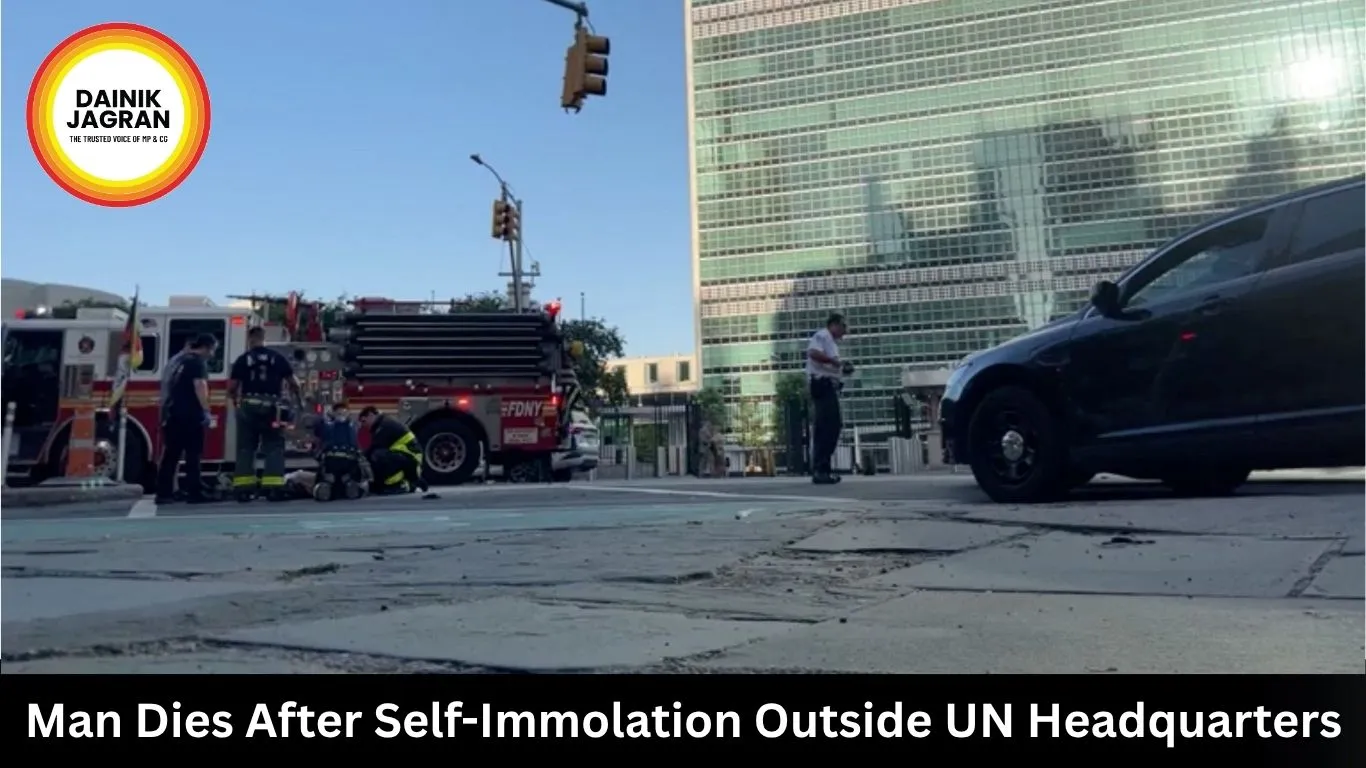
According to the New York Police Department, the man allegedly poured a flammable liquid over himself before setting himself ablaze outside the UN complex. Emergency responders rushed him to a nearby hospital with severe burn injuries, where he later died during treatment.

Video circulating on social media showed the man dressed in robes resembling those worn by Buddhist monks. Footage also appeared to show him placing a Tibetan flag on the pavement outside the UN headquarters shortly before the incident. Authorities have not officially verified the authenticity of all videos being shared online.

Investigators recovered pamphlets from the scene carrying the message, "China, Get Out of Tibet." Officials said the material suggests the incident may have been linked to the Tibet issue, although the exact motive has not yet been confirmed. The investigation remains ongoing.

A spokesperson for the United Nations said the incident occurred after official meetings at the headquarters had concluded and did not affect the organisation's operations or scheduled activities.

The incident has once again drawn attention to self-immolation protests associated with the Tibet issue. According to Tibetan advocacy groups, more than 150 Tibetans—including Buddhist monks, nuns, students and civilians—have died by self-immolation since 2009 in protests against Chinese rule in Tibet.

The first widely reported case occurred in February 2009 when a young monk, Tapey, set himself on fire. The number of such incidents peaked between 2012 and 2013 before declining following tighter security measures imposed by Chinese authorities across Tibet.

Tibetan organisations say these protests reflect opposition to Chinese policies, restrictions on religious and cultural freedoms, and demands for the return of the 14th Dalai Lama to Tibet. China, however, rejects these claims and has accused the Tibetan leadership in exile of encouraging such acts, an allegation the Central Tibetan Administration denies.

The Tibet issue remains one of the longest-running geopolitical disputes in Asia. China maintains that Tibet has been an integral part of its territory for centuries and says its administration over the region was formalised through the 1951 Seventeen-Point Agreement. Many Tibetans dispute that position, arguing the agreement was signed under coercion following the entry of Chinese troops into Tibet in 1950.

The Central Tibetan Administration, based in Dharamshala in Himachal Pradesh, continues to manage the educational, cultural and social affairs of Tibetan refugees worldwide. Although often referred to as the Tibetan government-in-exile, it is not recognised as a sovereign government by India, the United Nations or any other country.

India officially recognises the Tibet Autonomous Region as part of China while providing asylum to the Dalai Lama and thousands of Tibetan refugees on humanitarian grounds. The Indian government has consistently maintained that its territory should not be used for political activities directed against China.

Authorities in New York are continuing to investigate the circumstances surrounding the incident. Further details are awaited.

--------

🚨 Beat the News Rush – Join Now!

Get breaking alerts, hot exclusives, and game-changing stories instantly on your phone. No delays, no fluff – just the edge you need. ⚡

Tap to join: 

🟢 WhatsApp Channel: Dainik Jagran MP CG

Crave more?

🅕 Facebook: Dainik Jagran MP CG English

🅧 Twitter (X): Dainik Jagran MP CG

🅘 Instagram: Dainik Jagran MP CG

Share the fire – keep your crew ahead! 🗞️🔥

english.dainikjagranmpcg.com
03 Jul 2026 By Abhishek Joshi

Man Dies After Setting Himself on Fire Outside UN Headquarters in New York; Tibet-Related Leaflets Recovered

Digital Desk

According to the New York Police Department, the man allegedly poured a flammable liquid over himself before setting himself ablaze outside the UN complex. Emergency responders rushed him to a nearby hospital with severe burn injuries, where he later died during treatment.

Video circulating on social media showed the man dressed in robes resembling those worn by Buddhist monks. Footage also appeared to show him placing a Tibetan flag on the pavement outside the UN headquarters shortly before the incident. Authorities have not officially verified the authenticity of all videos being shared online.

Investigators recovered pamphlets from the scene carrying the message, "China, Get Out of Tibet." Officials said the material suggests the incident may have been linked to the Tibet issue, although the exact motive has not yet been confirmed. The investigation remains ongoing.

A spokesperson for the United Nations said the incident occurred after official meetings at the headquarters had concluded and did not affect the organisation's operations or scheduled activities.

The incident has once again drawn attention to self-immolation protests associated with the Tibet issue. According to Tibetan advocacy groups, more than 150 Tibetans—including Buddhist monks, nuns, students and civilians—have died by self-immolation since 2009 in protests against Chinese rule in Tibet.

The first widely reported case occurred in February 2009 when a young monk, Tapey, set himself on fire. The number of such incidents peaked between 2012 and 2013 before declining following tighter security measures imposed by Chinese authorities across Tibet.

Tibetan organisations say these protests reflect opposition to Chinese policies, restrictions on religious and cultural freedoms, and demands for the return of the 14th Dalai Lama to Tibet. China, however, rejects these claims and has accused the Tibetan leadership in exile of encouraging such acts, an allegation the Central Tibetan Administration denies.

The Tibet issue remains one of the longest-running geopolitical disputes in Asia. China maintains that Tibet has been an integral part of its territory for centuries and says its administration over the region was formalised through the 1951 Seventeen-Point Agreement. Many Tibetans dispute that position, arguing the agreement was signed under coercion following the entry of Chinese troops into Tibet in 1950.

The Central Tibetan Administration, based in Dharamshala in Himachal Pradesh, continues to manage the educational, cultural and social affairs of Tibetan refugees worldwide. Although often referred to as the Tibetan government-in-exile, it is not recognised as a sovereign government by India, the United Nations or any other country.

India officially recognises the Tibet Autonomous Region as part of China while providing asylum to the Dalai Lama and thousands of Tibetan refugees on humanitarian grounds. The Indian government has consistently maintained that its territory should not be used for political activities directed against China.

Authorities in New York are continuing to investigate the circumstances surrounding the incident. Further details are awaited.

https://english.dainikjagranmpcg.com/international/man-dies-after-setting-himself-on-fire-outside-un-headquarters/article-20974

Latest News