Pakistan Crypto Deal With Trump Firm Raises Diplomatic Questions
Digital Desk
A partnership involving World Liberty Financial has sparked debate after analysts suggested Pakistan gained diplomatic access to the Trump administration despite limited progress on the proposed crypto initiative.
A memorandum of understanding (MoU) signed between Pakistan's Ministry of Finance and World Liberty Financial (WLF), a cryptocurrency venture linked to the family of US President Donald Trump, has come under renewed scrutiny after fresh financial disclosures highlighted the firm's earnings from digital assets.
According to Trump's latest financial disclosure, World Liberty Financial generated more than $500 million through token sales in 2025. Analysts cited in recent reports argue that while Pakistan's crypto collaboration has yet to produce tangible financial outcomes, it may have strengthened Islamabad's diplomatic engagement with the Trump administration.
MoU Signed Earlier
Pakistan signed the MoU with SC Financial Technologies, an affiliate of World Liberty Financial, in January 2026 to explore the use of the firm's USD1 stablecoin for cross-border payments.
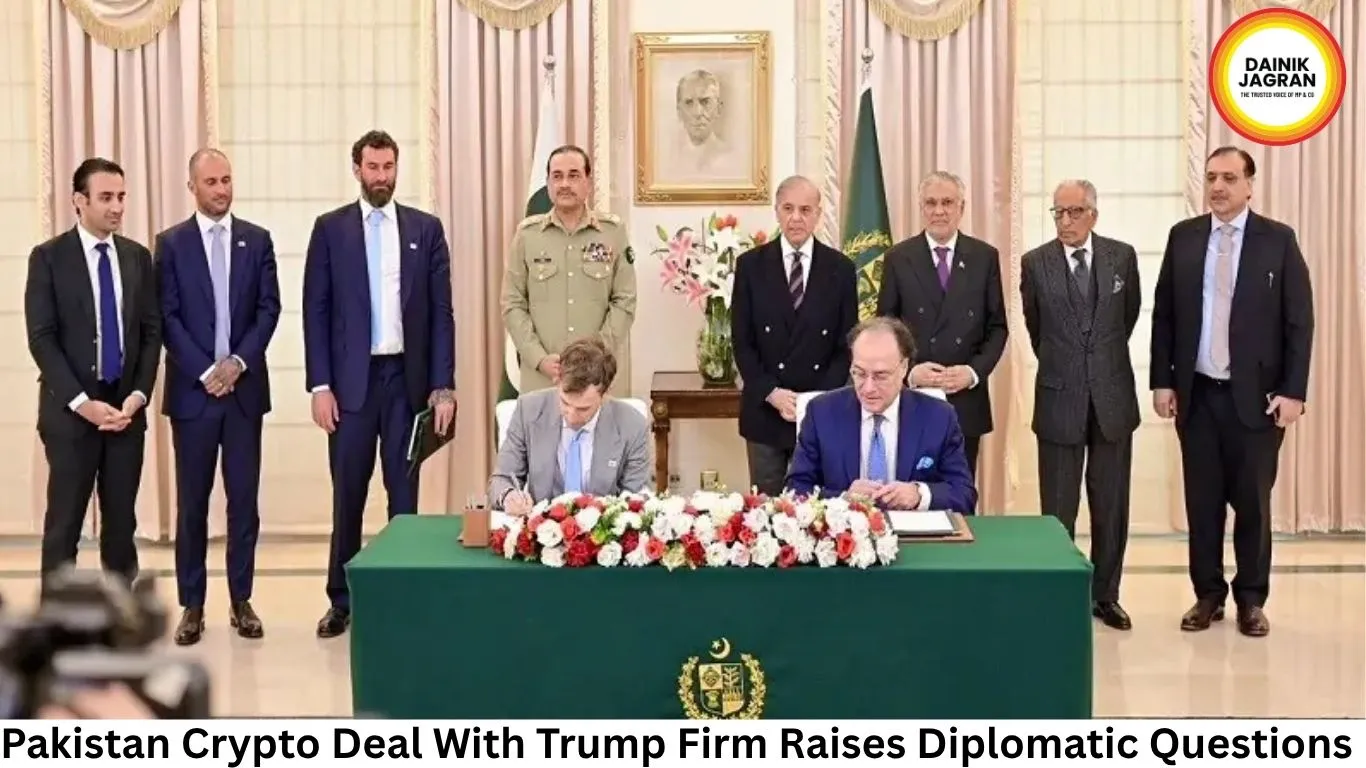
The agreement was signed in Islamabad by Finance Minister Muhammad Aurangzeb and Zach Witkoff, an executive associated with the company. Prime Minister Shehbaz Sharif, Field Marshal Asim Munir and Deputy Prime Minister Ishaq Dar were also present during the ceremony.
However, Pakistani officials have since confirmed that no pilot project has commenced, no licences have been issued and no transactions involving the USD1 stablecoin have taken place.
Stablecoin Proposal Reviewed
USD1 is a dollar-backed stablecoin designed to facilitate digital payments while maintaining a value linked to the US dollar.
Pakistan already ranks among the world's largest cryptocurrency markets. Industry data has consistently placed the country among the leading adopters of digital assets, with much of the existing activity centred on established stablecoins such as USDT.
Financial experts note that despite the proposed partnership, there is no indication that USD1 has been adopted for remittances or commercial transactions within Pakistan.
Regulatory Framework Expands
Pakistan has nevertheless accelerated efforts to regulate its virtual asset sector.
The government enacted the Virtual Assets Act in March, creating the Pakistan Virtual Assets Regulatory Authority (PVARA) to oversee licensing and compliance for cryptocurrency businesses. The State Bank of Pakistan has also permitted banks to open accounts for licensed crypto firms.
Officials clarified that the World Liberty Financial agreement remains exploratory and focused on technical cooperation rather than the immediate deployment of any specific digital currency.
Authorities said licensing procedures are still under development, with comprehensive operational rules expected before commercial implementation begins.
Diplomatic Significance
Several analysts believe the broader significance of the agreement extends beyond cryptocurrency.
Pakistan has strengthened engagement with the Trump administration over the past year through multiple diplomatic interactions. These have included meetings involving senior Pakistani leaders and US officials, as well as discussions on regional security and economic cooperation.
Some observers argue that the crypto partnership provided Islamabad with an additional channel for engagement with influential figures connected to the White House. However, the White House has maintained that no conflict of interest exists regarding the business relationship.
Experts Differ
Economists and banking professionals remain divided over the practical value of the initiative.
Some financial experts questioned whether another dollar-backed stablecoin would offer meaningful advantages given Pakistan's record remittance inflows through formal banking channels. Others argued that the country's focus should remain on establishing a transparent regulatory framework before introducing new digital payment systems.
Government officials have maintained that any future implementation will depend on regulatory approvals and market readiness rather than commitments made under the initial memorandum.
--------
๐จ Beat the News Rush โ Join Now!
Get breaking alerts, hot exclusives, and game-changing stories instantly on your phone. No delays, no fluff โ just the edge you need. โก
Tap to join:ย
๐ข WhatsApp Channel: Dainik Jagran MP CG
Crave more?
๐ Facebook: Dainik Jagran MP CG English
๐ ง Twitter (X): Dainik Jagran MP CG
๐ Instagram: Dainik Jagran MP CG
Share the fire โ keep your crew ahead! ๐๏ธ๐ฅ
Pakistan Crypto Deal With Trump Firm Raises Diplomatic Questions
Digital Desk
A memorandum of understanding (MoU) signed between Pakistan's Ministry of Finance and World Liberty Financial (WLF), a cryptocurrency venture linked to the family of US President Donald Trump, has come under renewed scrutiny after fresh financial disclosures highlighted the firm's earnings from digital assets.
According to Trump's latest financial disclosure, World Liberty Financial generated more than $500 million through token sales in 2025. Analysts cited in recent reports argue that while Pakistan's crypto collaboration has yet to produce tangible financial outcomes, it may have strengthened Islamabad's diplomatic engagement with the Trump administration.
MoU Signed Earlier
Pakistan signed the MoU with SC Financial Technologies, an affiliate of World Liberty Financial, in January 2026 to explore the use of the firm's USD1 stablecoin for cross-border payments.
The agreement was signed in Islamabad by Finance Minister Muhammad Aurangzeb and Zach Witkoff, an executive associated with the company. Prime Minister Shehbaz Sharif, Field Marshal Asim Munir and Deputy Prime Minister Ishaq Dar were also present during the ceremony.
However, Pakistani officials have since confirmed that no pilot project has commenced, no licences have been issued and no transactions involving the USD1 stablecoin have taken place.
Stablecoin Proposal Reviewed
USD1 is a dollar-backed stablecoin designed to facilitate digital payments while maintaining a value linked to the US dollar.
Pakistan already ranks among the world's largest cryptocurrency markets. Industry data has consistently placed the country among the leading adopters of digital assets, with much of the existing activity centred on established stablecoins such as USDT.
Financial experts note that despite the proposed partnership, there is no indication that USD1 has been adopted for remittances or commercial transactions within Pakistan.
Regulatory Framework Expands
Pakistan has nevertheless accelerated efforts to regulate its virtual asset sector.
The government enacted the Virtual Assets Act in March, creating the Pakistan Virtual Assets Regulatory Authority (PVARA) to oversee licensing and compliance for cryptocurrency businesses. The State Bank of Pakistan has also permitted banks to open accounts for licensed crypto firms.
Officials clarified that the World Liberty Financial agreement remains exploratory and focused on technical cooperation rather than the immediate deployment of any specific digital currency.
Authorities said licensing procedures are still under development, with comprehensive operational rules expected before commercial implementation begins.
Diplomatic Significance
Several analysts believe the broader significance of the agreement extends beyond cryptocurrency.
Pakistan has strengthened engagement with the Trump administration over the past year through multiple diplomatic interactions. These have included meetings involving senior Pakistani leaders and US officials, as well as discussions on regional security and economic cooperation.
Some observers argue that the crypto partnership provided Islamabad with an additional channel for engagement with influential figures connected to the White House. However, the White House has maintained that no conflict of interest exists regarding the business relationship.
Experts Differ
Economists and banking professionals remain divided over the practical value of the initiative.
Some financial experts questioned whether another dollar-backed stablecoin would offer meaningful advantages given Pakistan's record remittance inflows through formal banking channels. Others argued that the country's focus should remain on establishing a transparent regulatory framework before introducing new digital payment systems.
Government officials have maintained that any future implementation will depend on regulatory approvals and market readiness rather than commitments made under the initial memorandum.