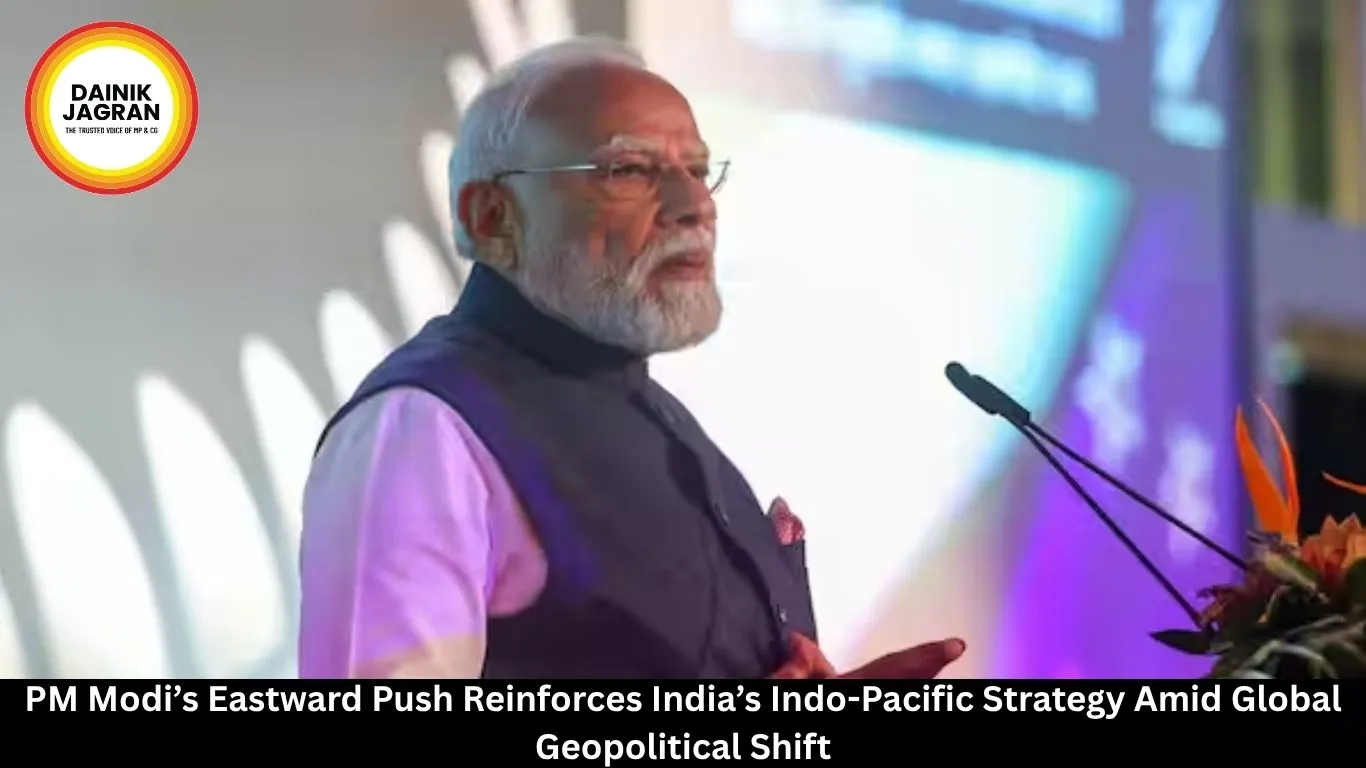
PM Modi's Eastward Push Strengthens India's Indo-Pacific Strategy Through Three-Nation Tour
Digital Desk
Prime Minister Narendra Modi's visit to Indonesia, Australia and New Zealand reinforces India's Act East Policy and Indo-Pacific strategy amid changing global geopolitical dynamics.
Prime Minister Narendra Modi's recent five-day visit to Indonesia, Australia and New Zealand has marked a renewed strategic focus on India's Act East Policy and its broader Indo-Pacific vision, signalling New Delhi's intent to deepen partnerships in the region amid rapidly evolving global geopolitical dynamics.
The visit, held from July 6 to July 11, came after a series of engagements in Europe, West Asia and the Indian Ocean, highlighting the government's effort to balance India's diplomatic outreach across multiple strategic theatres.
Renewed Focus on the Indo-Pacific
The East Asia tour followed Prime Minister Modi's visit to Malaysia earlier this year and Japanese Prime Minister's visit to India in early July, creating momentum for stronger cooperation with key Indo-Pacific partners.
The three-nation visit was among the longest overseas engagements undertaken by the Prime Minister in recent years and focused on expanding cooperation in defence, trade, technology, maritime security and regional connectivity.
Addressing members of the Indian diaspora in Auckland, Modi described the visit as historic, noting that it was the first visit by an Indian Prime Minister to New Zealand in four decades.
Global Context Shapes India's Strategy
The renewed emphasis on the Indo-Pacific comes against the backdrop of significant geopolitical changes over the past few years.
The COVID-19 pandemic, the Russia-Ukraine conflict, the Gaza crisis and tensions in the Gulf region have reshaped global strategic priorities. At the same time, shifts in United States foreign policy and Washington's evolving approach towards China have prompted countries across Asia to reassess their regional security and economic strategies.
Growing concerns over the security of critical maritime routes, including the Strait of Hormuz and the Strait of Malacca, have further reinforced the importance of diversified partnerships across the Indo-Pacific.
Defence and Economic Cooperation in Focus
India's engagements with Indonesia, Australia and New Zealand placed significant emphasis on strengthening defence cooperation, maritime security, resilient supply chains and economic collaboration.
The tour reflected New Delhi's broader objective of working closely with like-minded democracies to promote a free, open and rules-based Indo-Pacific while expanding investment, technology partnerships and people-to-people ties.
Officials view stronger regional cooperation as essential to ensuring stability across one of the world's most strategically significant maritime regions.
Act East Policy Continues to Evolve
Launched more than a decade ago, India's Act East Policy has gradually expanded beyond economic engagement to include strategic, security and connectivity initiatives across Southeast Asia, East Asia and the Pacific.
The latest diplomatic outreach indicates that the Indo-Pacific remains central to India's foreign policy despite competing global crises, with New Delhi seeking to strengthen its role as a key regional stakeholder through sustained diplomatic and strategic engagement.
Analysts believe the visit reflects India's continued effort to balance economic interests, regional security concerns and strategic partnerships in an increasingly complex international environment.

--------
🚨 Beat the News Rush – Join Now!
Get breaking alerts, hot exclusives, and game-changing stories instantly on your phone. No delays, no fluff – just the edge you need. ⚡
Tap to join:
🟢 WhatsApp Channel: Dainik Jagran MP CG
Crave more?
🅕 Facebook: Dainik Jagran MP CG English
🅧 Twitter (X): Dainik Jagran MP CG
🅘 Instagram: Dainik Jagran MP CG
Share the fire – keep your crew ahead! 🗞️🔥
PM Modi's Eastward Push Strengthens India's Indo-Pacific Strategy Through Three-Nation Tour
Digital Desk
Prime Minister Narendra Modi's recent five-day visit to Indonesia, Australia and New Zealand has marked a renewed strategic focus on India's Act East Policy and its broader Indo-Pacific vision, signalling New Delhi's intent to deepen partnerships in the region amid rapidly evolving global geopolitical dynamics.
The visit, held from July 6 to July 11, came after a series of engagements in Europe, West Asia and the Indian Ocean, highlighting the government's effort to balance India's diplomatic outreach across multiple strategic theatres.
Renewed Focus on the Indo-Pacific
The East Asia tour followed Prime Minister Modi's visit to Malaysia earlier this year and Japanese Prime Minister's visit to India in early July, creating momentum for stronger cooperation with key Indo-Pacific partners.
The three-nation visit was among the longest overseas engagements undertaken by the Prime Minister in recent years and focused on expanding cooperation in defence, trade, technology, maritime security and regional connectivity.
Addressing members of the Indian diaspora in Auckland, Modi described the visit as historic, noting that it was the first visit by an Indian Prime Minister to New Zealand in four decades.
Global Context Shapes India's Strategy
The renewed emphasis on the Indo-Pacific comes against the backdrop of significant geopolitical changes over the past few years.
The COVID-19 pandemic, the Russia-Ukraine conflict, the Gaza crisis and tensions in the Gulf region have reshaped global strategic priorities. At the same time, shifts in United States foreign policy and Washington's evolving approach towards China have prompted countries across Asia to reassess their regional security and economic strategies.
Growing concerns over the security of critical maritime routes, including the Strait of Hormuz and the Strait of Malacca, have further reinforced the importance of diversified partnerships across the Indo-Pacific.
Defence and Economic Cooperation in Focus
India's engagements with Indonesia, Australia and New Zealand placed significant emphasis on strengthening defence cooperation, maritime security, resilient supply chains and economic collaboration.
The tour reflected New Delhi's broader objective of working closely with like-minded democracies to promote a free, open and rules-based Indo-Pacific while expanding investment, technology partnerships and people-to-people ties.
Officials view stronger regional cooperation as essential to ensuring stability across one of the world's most strategically significant maritime regions.
Act East Policy Continues to Evolve
Launched more than a decade ago, India's Act East Policy has gradually expanded beyond economic engagement to include strategic, security and connectivity initiatives across Southeast Asia, East Asia and the Pacific.
The latest diplomatic outreach indicates that the Indo-Pacific remains central to India's foreign policy despite competing global crises, with New Delhi seeking to strengthen its role as a key regional stakeholder through sustained diplomatic and strategic engagement.
Analysts believe the visit reflects India's continued effort to balance economic interests, regional security concerns and strategic partnerships in an increasingly complex international environment.