Quad Reaffirms Free Indo-Pacific Vision in Manila, Signals Support for Sovereignty Amid South China Sea Tensions
Digital Desk
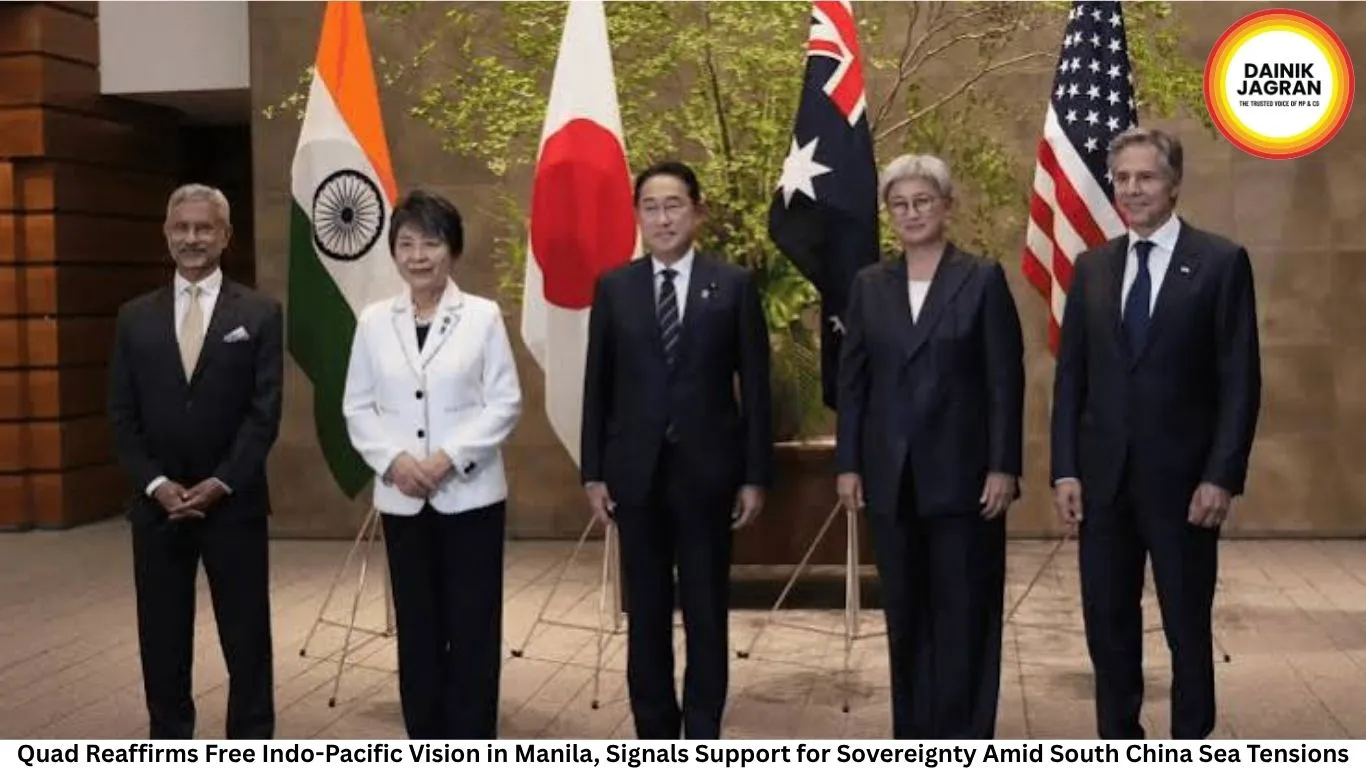
The foreign ministers of India, the US, Japan and Australia reaffirmed their commitment to a free, open and rules-based Indo-Pacific during the Quad meeting in Manila. While China was not named directly, the emphasis on sovereignty, territorial integrity and international law came amid fresh tensions in the South China Sea.
The Quad foreign ministers on Tuesday reaffirmed their commitment to a free, open and rules-based Indo-Pacific, underscoring the importance of international law, sovereignty and territorial integrity during a high-level meeting in Manila, Philippines. The meeting, held on the sidelines of the ASEAN Foreign Ministers' Meeting, came amid renewed tensions in the South China Sea following a fresh confrontation between Chinese and Philippine forces.
Although the joint discussions did not explicitly mention China, the repeated emphasis on respecting sovereignty and maintaining the rules-based international order was widely viewed as a diplomatic message directed at Beijing's growing maritime activities in the Indo-Pacific.
Quad Reviews Regional Security
The meeting brought together India's External Affairs Minister S. Jaishankar, US Secretary of State Marco Rubio, and their counterparts from Japan and Australia to review recent developments affecting regional security.
Following the discussions, Jaishankar said the ministers reviewed the evolving Indo-Pacific landscape and assessed progress on decisions taken during the previous Quad Foreign Ministers' Meeting held in New Delhi.
He reiterated that the four countries remain committed to promoting a free, open, inclusive and prosperous Indo-Pacific, while recognizing ASEAN's central role in the region's security architecture.
Rule of Law at the Centre
US Secretary of State Marco Rubio echoed the group's shared vision, stating that India, the United States, Japan and Australia remain united in supporting an Indo-Pacific based on the rule of law, sovereignty and territorial integrity.
Rubio said the Quad continues to be a strategic priority for Washington and confirmed that the four nations are expected to meet again later this year to advance cooperation across security, economic resilience, critical technologies and regional stability.
Diplomatic observers noted that the ministers deliberately avoided directly naming China, but the language used closely reflected long-standing concerns over Beijing's activities in disputed maritime regions.
South China Sea Tensions
The meeting took place just a day after a fresh confrontation between China and the Philippines near the disputed Second Thomas Shoal in the South China Sea.
According to Philippine authorities, personnel from both sides engaged in a physical clash involving oars and batons during a maritime encounter. Manila alleged that a Chinese Coast Guard officer injured a Filipino sailor during the incident.
China rejected the allegations, accusing Philippine personnel of provoking the confrontation and claiming that Manila's account distorted the facts.
The incident has further heightened tensions between the two countries, both of which have summoned each other's ambassadors following the clash.
Strategic Message Without Naming China
While the Quad's official statements avoided directly referring to Beijing, analysts believe the meeting reflected growing concern over attempts to alter the regional status quo through coercion or unilateral actions.
The emphasis on territorial integrity, freedom of navigation, and respect for international law aligns with the group's longstanding position on maintaining stability in the Indo-Pacific.
The latest developments also highlight the Quad's expanding role as a strategic platform for coordination among four major democracies amid increasing geopolitical competition in the region.
India's Expanding Indo-Pacific Role
For India, the Manila meeting reinforced its commitment to strengthening partnerships across the Indo-Pacific while continuing to advocate dialogue, adherence to international law and peaceful resolution of disputes.
New Delhi has consistently maintained that peace and stability in the Indo-Pacific are essential for regional prosperity and global trade, particularly as vital international shipping routes pass through the South China Sea.
With maritime security becoming an increasingly prominent issue, the Quad is expected to deepen cooperation in areas including humanitarian assistance, disaster relief, cyber security, critical technologies, supply chain resilience and maritime domain awareness.
--------
🚨 Beat the News Rush – Join Now!
Get breaking alerts, hot exclusives, and game-changing stories instantly on your phone. No delays, no fluff – just the edge you need. ⚡
Tap to join:
🟢 WhatsApp Channel: Dainik Jagran MP CG
Crave more?
🅕 Facebook: Dainik Jagran MP CG English
🅧 Twitter (X): Dainik Jagran MP CG
🅘 Instagram: Dainik Jagran MP CG
Share the fire – keep your crew ahead! 🗞️🔥
Quad Reaffirms Free Indo-Pacific Vision in Manila, Signals Support for Sovereignty Amid South China Sea Tensions
Digital Desk
The Quad foreign ministers on Tuesday reaffirmed their commitment to a free, open and rules-based Indo-Pacific, underscoring the importance of international law, sovereignty and territorial integrity during a high-level meeting in Manila, Philippines. The meeting, held on the sidelines of the ASEAN Foreign Ministers' Meeting, came amid renewed tensions in the South China Sea following a fresh confrontation between Chinese and Philippine forces.
Although the joint discussions did not explicitly mention China, the repeated emphasis on respecting sovereignty and maintaining the rules-based international order was widely viewed as a diplomatic message directed at Beijing's growing maritime activities in the Indo-Pacific.
Quad Reviews Regional Security
The meeting brought together India's External Affairs Minister S. Jaishankar, US Secretary of State Marco Rubio, and their counterparts from Japan and Australia to review recent developments affecting regional security.
Following the discussions, Jaishankar said the ministers reviewed the evolving Indo-Pacific landscape and assessed progress on decisions taken during the previous Quad Foreign Ministers' Meeting held in New Delhi.
He reiterated that the four countries remain committed to promoting a free, open, inclusive and prosperous Indo-Pacific, while recognizing ASEAN's central role in the region's security architecture.
Rule of Law at the Centre
US Secretary of State Marco Rubio echoed the group's shared vision, stating that India, the United States, Japan and Australia remain united in supporting an Indo-Pacific based on the rule of law, sovereignty and territorial integrity.
Rubio said the Quad continues to be a strategic priority for Washington and confirmed that the four nations are expected to meet again later this year to advance cooperation across security, economic resilience, critical technologies and regional stability.
Diplomatic observers noted that the ministers deliberately avoided directly naming China, but the language used closely reflected long-standing concerns over Beijing's activities in disputed maritime regions.
South China Sea Tensions
The meeting took place just a day after a fresh confrontation between China and the Philippines near the disputed Second Thomas Shoal in the South China Sea.
According to Philippine authorities, personnel from both sides engaged in a physical clash involving oars and batons during a maritime encounter. Manila alleged that a Chinese Coast Guard officer injured a Filipino sailor during the incident.
China rejected the allegations, accusing Philippine personnel of provoking the confrontation and claiming that Manila's account distorted the facts.
The incident has further heightened tensions between the two countries, both of which have summoned each other's ambassadors following the clash.
Strategic Message Without Naming China
While the Quad's official statements avoided directly referring to Beijing, analysts believe the meeting reflected growing concern over attempts to alter the regional status quo through coercion or unilateral actions.
The emphasis on territorial integrity, freedom of navigation, and respect for international law aligns with the group's longstanding position on maintaining stability in the Indo-Pacific.
The latest developments also highlight the Quad's expanding role as a strategic platform for coordination among four major democracies amid increasing geopolitical competition in the region.
India's Expanding Indo-Pacific Role
For India, the Manila meeting reinforced its commitment to strengthening partnerships across the Indo-Pacific while continuing to advocate dialogue, adherence to international law and peaceful resolution of disputes.
New Delhi has consistently maintained that peace and stability in the Indo-Pacific are essential for regional prosperity and global trade, particularly as vital international shipping routes pass through the South China Sea.
With maritime security becoming an increasingly prominent issue, the Quad is expected to deepen cooperation in areas including humanitarian assistance, disaster relief, cyber security, critical technologies, supply chain resilience and maritime domain awareness.