


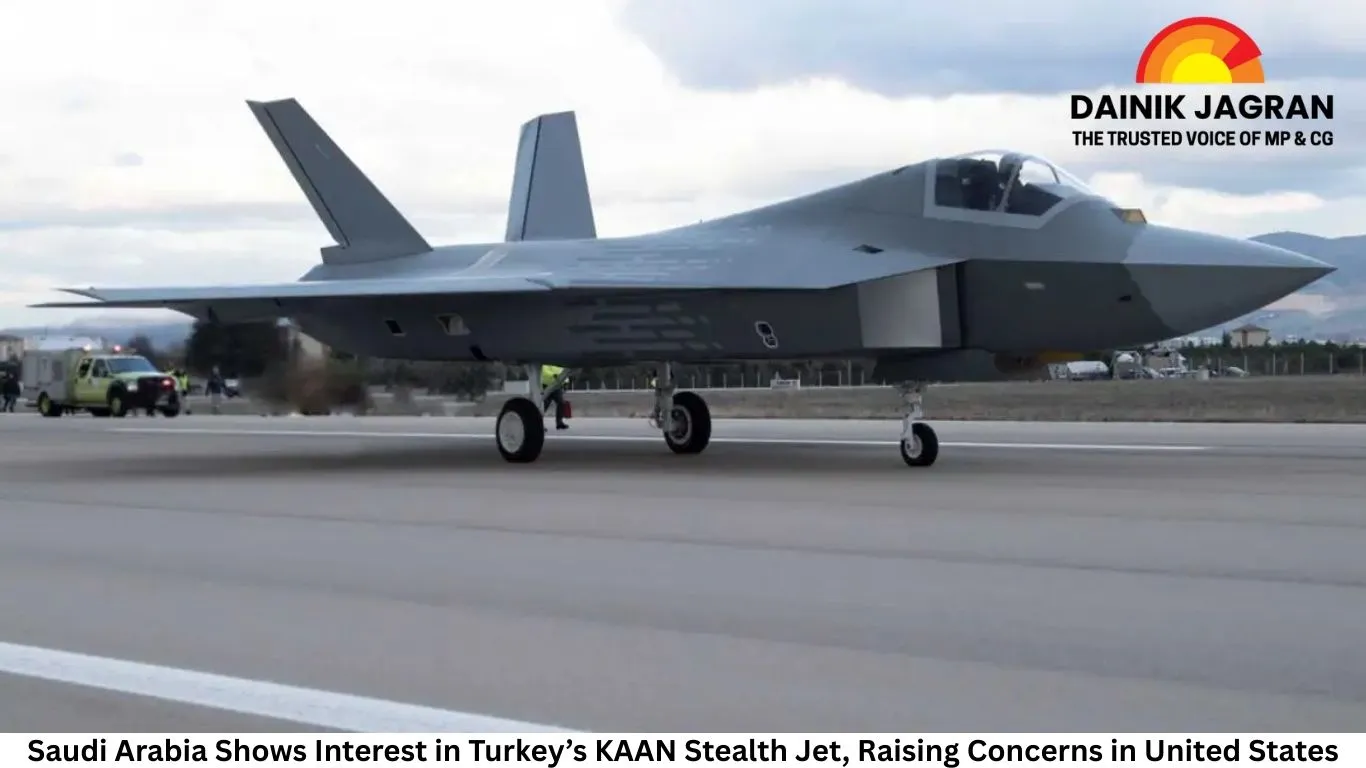
Saudi Arabia Shows Interest in Turkey’s KAAN Stealth Jet, Raising Concerns in United States
Digital Desk
Sources indicate the aircraft is being developed by Turkish Aerospace Industries, and Saudi interest signals a possible shift toward broader defense partnerships. Analysts say U.S. policymakers view the development cautiously, concerned it could affect America’s dominant position in advanced fighter exports and alter regional defense dynamics.
Officials familiar with the matter note that past U.S. administrations, including that of Donald Trump, strongly encouraged Riyadh to prioritize American platforms in major defense deals. Washington continues to promote its own aircraft as preferred options, while Saudi leadership appears intent on keeping alternative technological channels open.
Defense experts emphasize that the initiative goes beyond a simple procurement decision. They interpret it as a signal of Saudi Arabia’s effort to expand military autonomy amid shifting geopolitical conditions in the Middle East. Improving ties between Ankara and Riyadh in recent years have further supported the possibility of deeper security cooperation.
Policy analysts in Riyadh stress that diversification—not distancing from Washington—is the kingdom’s core objective. Saudi officials are believed to be seeking access to advanced stealth capabilities, potential joint production arrangements, and technology transfer opportunities that could strengthen domestic defense manufacturing.
Strategists say such a multi-supplier approach could give Saudi Arabia greater flexibility in responding to regional rivalries and long-term security challenges. If negotiations progress, the potential deal may influence procurement calculations across the region and intensify competition among global defense exporters.
.jpg)




