


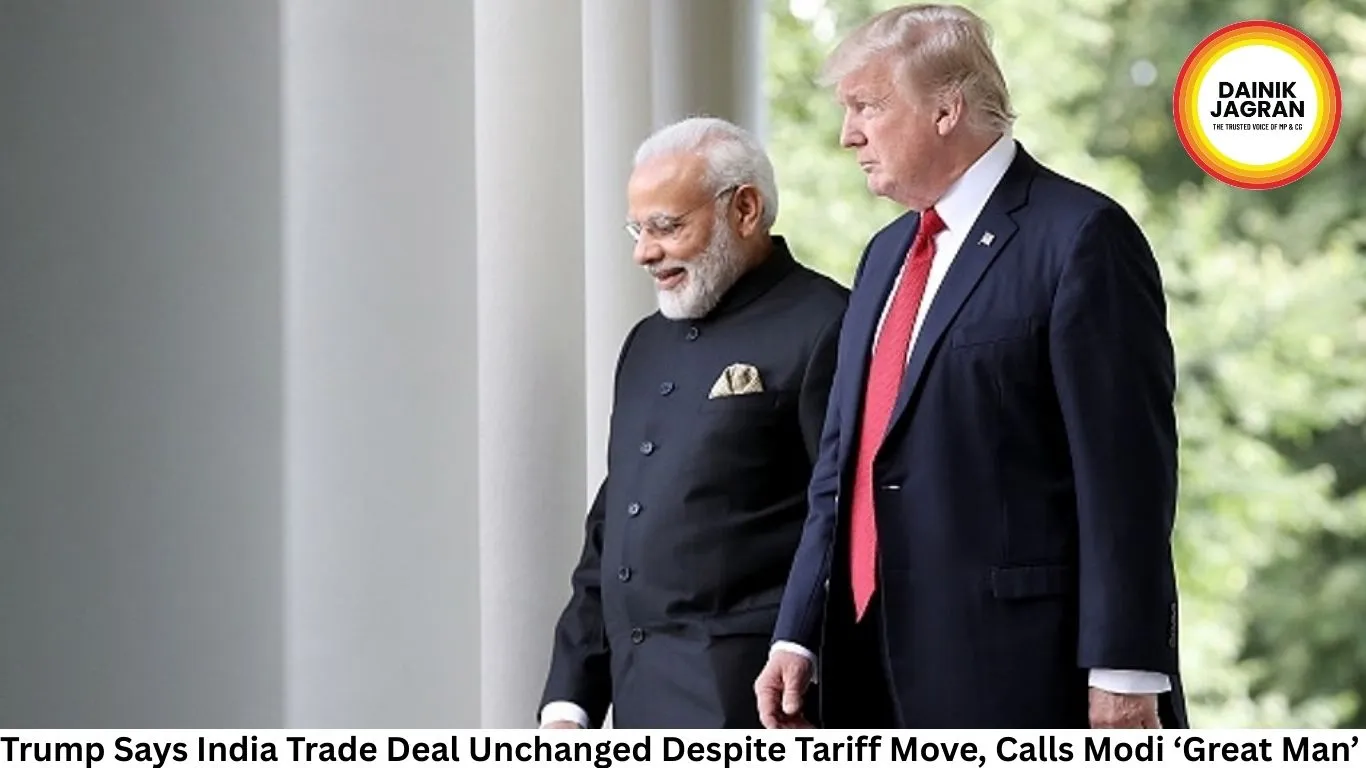
Trump Says India Trade Deal Unchanged Despite Tariff Move, Calls Modi ‘Great Man’
Digital Desk
Trump described Prime Minister Narendra Modi as a “great man” and said both sides would continue working within the framework of existing understandings. He did not clarify whether the additional 10% tariff would be incorporated into, or remain separate from, the proposed bilateral arrangement, under which US duties on Indian goods are expected to drop from 25% to 18%.
India’s Commerce Minister Piyush Goyal said negotiations on an interim trade agreement are progressing on schedule and should conclude by the end of February. He indicated the pact could be signed in March and implemented from April, provided legal vetting and procedural clearances are completed. A three-day meeting of officials from both countries is scheduled in the United States beginning February 23 to finalise the legal text based on a joint statement issued earlier this month.
Officials familiar with the talks said the draft agreement aims to expand market access while removing non-tariff barriers that often delay trade flows. These include regulatory hurdles, product certification rules, and pricing controls that companies say increase costs despite nominal tariff reductions. Indian negotiators are seeking easier entry for textiles, leather goods, and gems and jewellery, sectors expected to benefit directly from lower duties.
Goyal has also said Indian agricultural exports would gain zero-tariff access under the interim arrangement, while New Delhi would not extend similar concessions to genetically modified farm imports. The minister described the deal as opening access to a market worth roughly $30 trillion for Indian exporters, while India has committed to purchasing about $50 billion in US goods over five years.
Trade analysts say the timeline reflects political urgency on both sides, with Washington eager to stabilise tariff policy after court intervention and New Delhi pushing to secure export gains amid global demand uncertainty. If finalised as planned, the agreement would mark one of the most significant tariff recalibrations between the two countries in recent years and could set the template for future sector-specific trade accords.
.jpg)




