Trump Says Iran Talks in Final Stages as Hormuz Tensions Rise

Digital Desk

Trump Says Iran Talks in Final Stages as Hormuz Tensions Rise

US President Trump warns of "nasty" action if Iran talks fail, as Tehran defines Strait of Hormuz boundaries and mandates permits for all vessels passing through.


Trump Says Iran Talks in 'Final Stages' as Tehran Defines Hormuz Boundaries, Mandates Vessel Permits

US President Donald Trump has said negotiations with Iran are in their "final stages", even as Tehran moved to assert tighter control over the strategic Strait of Hormuz by defining its supervisory boundaries and mandating permits for all vessels passing through the waterway.

Speaking to reporters on Wednesday, Trump said he was willing to give diplomacy "one shot" but warned that Washington could take "nasty" action if talks fail. "Ideally I'd like to see few people killed, as opposed to a lot," he said, adding that the situation was "right on the borderline."

Warning from Washington

The US President's comments come weeks after a ceasefire paused the US-Iran conflict. White House Deputy Chief of Staff Stephen Miller has delivered a blunt ultimatum to Tehran's leadership, though Trump suggested Washington could wait a few days to "get the right answers" from Iranian officials.

Trump also claimed that Israeli Prime Minister Benjamin Netanyahu "will do whatever I want him to do," signalling tight US control over its ally's posture in the ongoing tensions.

Tehran defines Hormuz boundaries

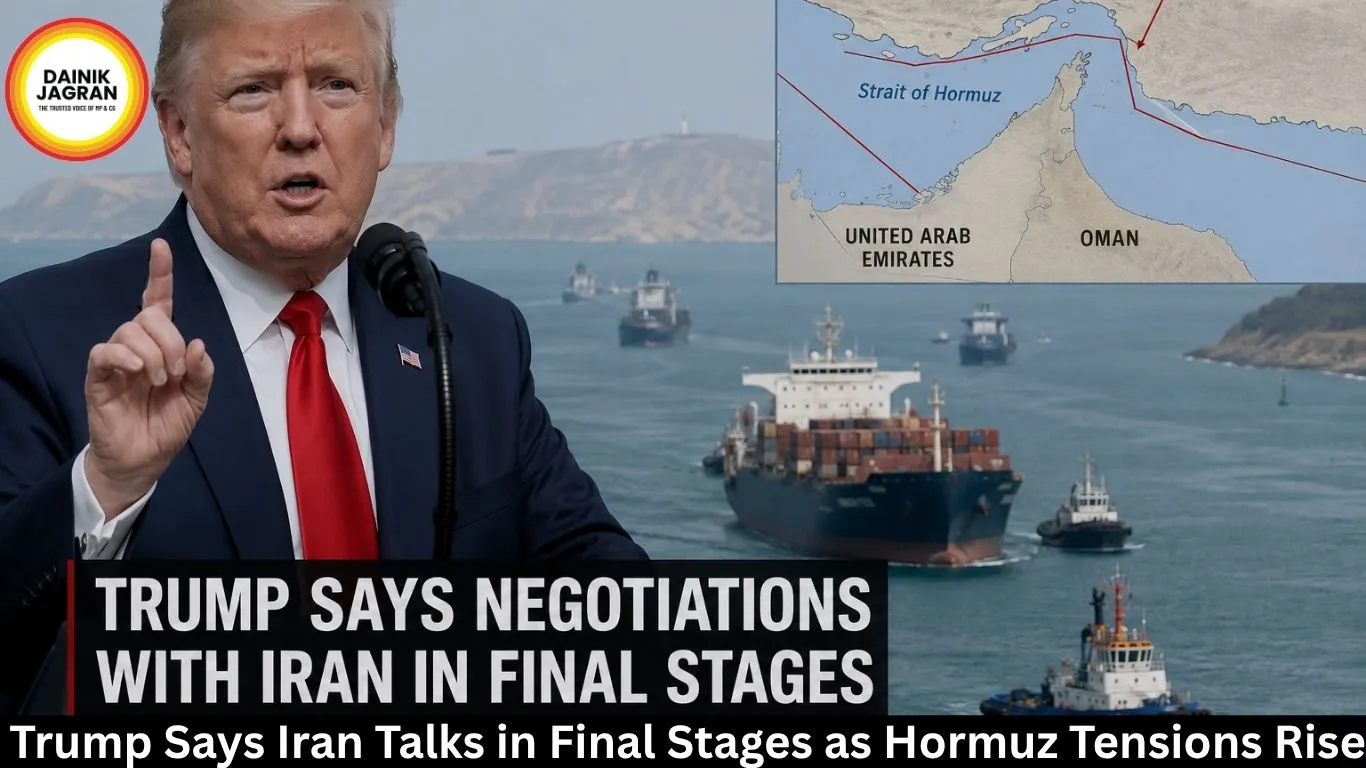
In a move that could escalate maritime tensions, Iran's newly-launched Persian Gulf Strait Authority (PGSA) has formally defined the management supervision area of the Strait of Hormuz. According to a post on X, the supervision area stretches from the line connecting Kuh Mobarak in Iran and the south of Fujairah in the UAE in the east, to the line connecting the end of Qeshm Island in Iran and Umm al-Qaiwain in the UAE in the west.

The management body has made it clear that "frequencies in this range for passing through the Strait of Hormuz require coordination with the Persian Gulf Waterway Management and a permit from this entity."

Economic shockwaves widen

The blockade of the Strait of Hormuz has already disrupted more than 20 per cent of global fuel supplies, and the economic fallout is being felt far beyond West Asia. In Kenya, deadly protests over soaring fuel prices have claimed at least four lives so far, with demonstrators taking to the streets across the East African nation as petrol and diesel costs have surged.

Sri Lanka's tea industry is also under mounting pressure. Tea workers in the central hill region say rising living costs are making survival increasingly difficult. "We don't know whether we can cope. If this war continues, many people will face hardship," tea estate worker Jacintha Malar told Reuters from Hatton.

Saudi Arabia turns to fuel oil

Saudi Arabia is expected to rely more heavily on fuel oil to meet soaring summer electricity demand after disruptions linked to the Iran conflict reduced natural gas supplies. The kingdom has reportedly increased imports of fuel oil for power generation as extreme summer heat pushes up air-conditioning use. Saudi Aramco boosted fuel oil imports to around 1.7 million tonnes in April, an 86 per cent increase compared with the same period last year, according to analysts cited by Reuters.

Military posturing in Tehran

As threats of renewed conflict persist, Iran has intensified public displays of military strength in the capital. Members of the Islamic Revolutionary Guard Corps are now frequently seen training civilians to use Kalashnikov-style assault rifles, while military parades featuring armoured vehicles have become increasingly common. A ballistic missile similar to those used in recent attacks on Israel was showcased during a mass wedding ceremony in Tehran.

Iran has also claimed it possesses advanced domestically developed weapons that have not yet been combat-tested. Meanwhile, officials confirmed that Tehran is "reviewing" the US response to its latest proposal, with Pakistan acting as mediator for message exchanges between the two sides.
 

--------

🚨 Beat the News Rush – Join Now!

Get breaking alerts, hot exclusives, and game-changing stories instantly on your phone. No delays, no fluff – just the edge you need. ⚡

Tap to join: 

🟢 WhatsApp Channel: Dainik Jagran MP CG

Crave more?

🅕 Facebook: Dainik Jagran MP CG English

🅧 Twitter (X): Dainik Jagran MP CG

🅘 Instagram: Dainik Jagran MP CG

Share the fire – keep your crew ahead! 🗞️🔥

english.dainikjagranmpcg.com
21 May 2026 By Abhishek Joshi

Trump Says Iran Talks in Final Stages as Hormuz Tensions Rise

Digital Desk

Trump Says Iran Talks in 'Final Stages' as Tehran Defines Hormuz Boundaries, Mandates Vessel Permits

US President Donald Trump has said negotiations with Iran are in their "final stages", even as Tehran moved to assert tighter control over the strategic Strait of Hormuz by defining its supervisory boundaries and mandating permits for all vessels passing through the waterway.

Speaking to reporters on Wednesday, Trump said he was willing to give diplomacy "one shot" but warned that Washington could take "nasty" action if talks fail. "Ideally I'd like to see few people killed, as opposed to a lot," he said, adding that the situation was "right on the borderline."

Warning from Washington

The US President's comments come weeks after a ceasefire paused the US-Iran conflict. White House Deputy Chief of Staff Stephen Miller has delivered a blunt ultimatum to Tehran's leadership, though Trump suggested Washington could wait a few days to "get the right answers" from Iranian officials.

Trump also claimed that Israeli Prime Minister Benjamin Netanyahu "will do whatever I want him to do," signalling tight US control over its ally's posture in the ongoing tensions.

Tehran defines Hormuz boundaries

In a move that could escalate maritime tensions, Iran's newly-launched Persian Gulf Strait Authority (PGSA) has formally defined the management supervision area of the Strait of Hormuz. According to a post on X, the supervision area stretches from the line connecting Kuh Mobarak in Iran and the south of Fujairah in the UAE in the east, to the line connecting the end of Qeshm Island in Iran and Umm al-Qaiwain in the UAE in the west.

The management body has made it clear that "frequencies in this range for passing through the Strait of Hormuz require coordination with the Persian Gulf Waterway Management and a permit from this entity."

Economic shockwaves widen

The blockade of the Strait of Hormuz has already disrupted more than 20 per cent of global fuel supplies, and the economic fallout is being felt far beyond West Asia. In Kenya, deadly protests over soaring fuel prices have claimed at least four lives so far, with demonstrators taking to the streets across the East African nation as petrol and diesel costs have surged.

Sri Lanka's tea industry is also under mounting pressure. Tea workers in the central hill region say rising living costs are making survival increasingly difficult. "We don't know whether we can cope. If this war continues, many people will face hardship," tea estate worker Jacintha Malar told Reuters from Hatton.

Saudi Arabia turns to fuel oil

Saudi Arabia is expected to rely more heavily on fuel oil to meet soaring summer electricity demand after disruptions linked to the Iran conflict reduced natural gas supplies. The kingdom has reportedly increased imports of fuel oil for power generation as extreme summer heat pushes up air-conditioning use. Saudi Aramco boosted fuel oil imports to around 1.7 million tonnes in April, an 86 per cent increase compared with the same period last year, according to analysts cited by Reuters.

Military posturing in Tehran

As threats of renewed conflict persist, Iran has intensified public displays of military strength in the capital. Members of the Islamic Revolutionary Guard Corps are now frequently seen training civilians to use Kalashnikov-style assault rifles, while military parades featuring armoured vehicles have become increasingly common. A ballistic missile similar to those used in recent attacks on Israel was showcased during a mass wedding ceremony in Tehran.

Iran has also claimed it possesses advanced domestically developed weapons that have not yet been combat-tested. Meanwhile, officials confirmed that Tehran is "reviewing" the US response to its latest proposal, with Pakistan acting as mediator for message exchanges between the two sides.
 

https://english.dainikjagranmpcg.com/special-news/trump-says-iran-talks-in-final-stages-as-hormuz-tensions/article-18916

Latest News