


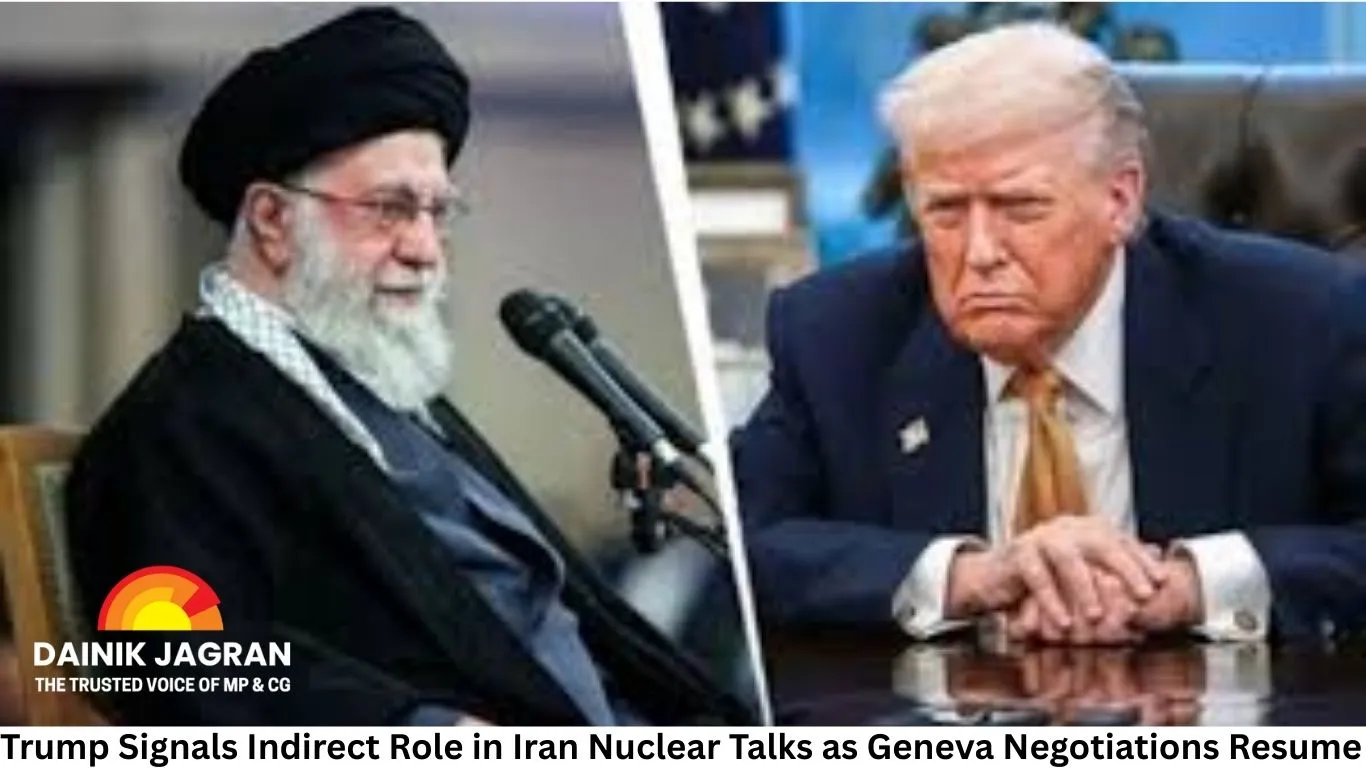
Trump Signals Indirect Role in Iran Nuclear Talks as Geneva Negotiations Resume
Digital Desk
The negotiations follow an initial round held on 6 February in Oman and are aimed at resolving long-running disputes over Iran’s nuclear programme, sanctions, and regional security concerns. Trump suggested last year’s U.S. airstrikes on Iranian nuclear facilities influenced Tehran’s willingness to negotiate, warning that failure to reach an agreement could carry consequences.
At the center of the talks is Iran’s uranium enrichment programme. Washington wants Tehran to halt enrichment or limit it to very low levels, arguing that higher enrichment could enable nuclear weapons development. The United States is also pressing Iran to reduce or export its stockpile of enriched uranium, estimated at about 2,000 kilograms across varying purity levels. In exchange, U.S. officials have indicated sanctions relief could be considered.
Iran, however, has signaled that sanctions removal—particularly those affecting oil exports and financial transactions—must be part of any deal. Deputy Foreign Minister Majid Takht-Ravanchi told BBC that Tehran is open to compromise if Washington demonstrates readiness to lift restrictions. He added that Iran has proposed reducing its stockpile of highly enriched uranium by 60 percent but insisted negotiations should focus strictly on nuclear matters.
Regional tensions remain high as Iran conducts naval drills in strategic waterways including the Strait of Hormuz, a vital global oil shipping route. Maritime advisories warned vessels of possible live-fire exercises, though Iranian state media did not confirm such operations.
Disagreements over Iran’s ballistic missile programme and its regional alliances pose additional obstacles. The United States wants discussions to address Tehran’s support for groups such as Hezbollah and Houthis, while Iran insists these issues fall outside the scope of nuclear negotiations. Iranian officials also accuse Israel of attempting to undermine diplomatic progress.
Meanwhile, the White House has reiterated that its objective is a verifiable agreement preventing Iran from acquiring nuclear weapons. U.S. officials say additional military deployments to the Middle East are intended as a deterrent rather than a signal of imminent conflict.
Diplomats from both sides describe the Geneva meeting as a critical test of whether months of tension can give way to substantive progress. Analysts note that while rhetoric remains sharp, the willingness to continue talks suggests neither side is ready to abandon diplomacy.
.jpg)




