Trump Xi Summit Beijing Taiwan Trade Tensions
Digital Desk
Trump and Xi meet in Beijing for two-hour summit discussing trade, Taiwan, and semiconductors amid ongoing US-China tensions.
Trump, Xi Meet for Strategic Summit in Beijing Amid Trade and Taiwan Tensions
Presidents discuss trade, semiconductors, and contentious Taiwan issue during two-hour talks
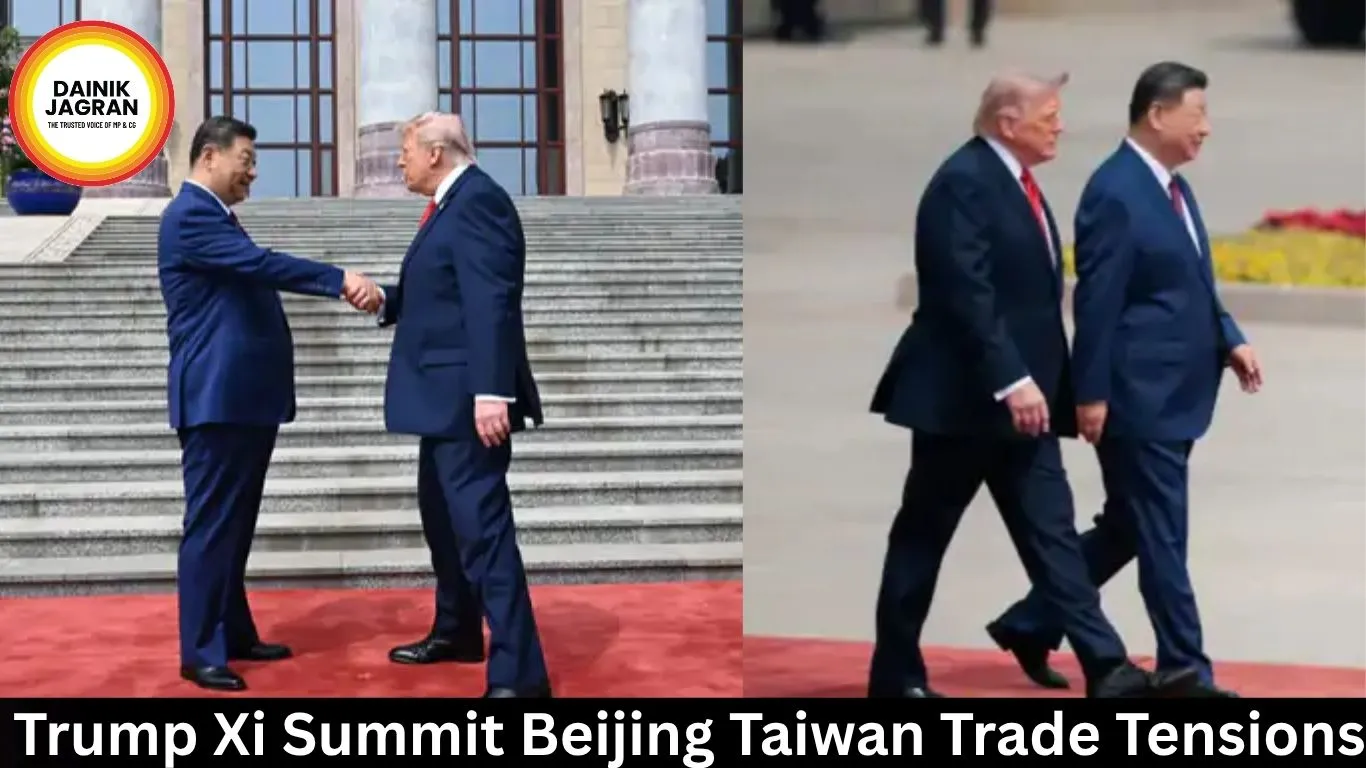
US President Donald Trump and Chinese President Xi Jinping held a closely watched two-hour meeting in Beijing on Thursday, with both leaders striking a cautiously optimistic tone even as underlying tensions over trade, Taiwan, and technology remained front and centre.
The meeting at the Great Hall of the People marked Trump's first visit to China in eight years and came with significant ceremonial trappings. Xi welcomed Trump with a guard of honour, while Trump arrived at the airport to a rare high-level reception from Chinese Vice President Han Zheng—a gesture that diplomatic observers noted broke with usual protocol and signalled China's desire to reset relations.
Opening Remarks Set Positive Tone
During opening remarks, both leaders spoke of partnership and mutual benefit. Trump told Xi, "It's an honour to be your friend," and said US-China relations would "be better than ever before." Xi responded by emphasising that the two nations should be "partners and not rivals," calling a stable China-US relationship "a boon for the world."
However, beneath the diplomatic pleasantries lay sharper differences. Xi explicitly warned Trump that mishandling the Taiwan issue could push bilateral ties into "a very dangerous place," according to Chinese state media Xinhua. The Chinese leader called Taiwan "the most important issue" in US-China relations—a clear signal that Beijing sees this as non-negotiable.
Business Delegation Signals Economic Focus
Trump brought with him 17 leading American business executives, including Tesla CEO Elon Musk and Apple's Tim Cook. The presence of such high-profile figures suggested Trump's administration wanted to emphasise economic cooperation and push for increased Chinese purchases of American goods.
Following the presidential talks, Xi met separately with the US business delegation. He told them that China's door "will only open wider" to American businesses and welcomed reciprocal cooperation. The Chinese leader also acknowledged that American companies had been "deeply involved in China's growth."
Multiple Issues on the Table
The agenda covered several contentious areas. Trade tensions remain significant, with Trump having previously warned of imposing heavy tariffs on Chinese goods. Both sides have also clashed over semiconductor technology and rare earth minerals, with China controlling much of the global supply while the US seeks alternatives.
The Taiwan issue looms largest. China considers Taiwan its territory and has consistently opposed US military aid to the island. Trump has indicated he plans to discuss a $11 billion US weapons package with Xi—precisely the kind of move that has drawn Beijing's ire.
Other topics included developments in West Asia and the Ukraine crisis, with US Secretary of State Marco Rubio hoping to persuade China to play a "more active role" in resolving tensions in the Middle East, particularly around Iran.
The Iranian Oil Question
One under-the-radar but significant issue is China's continued purchase of Iranian oil. Despite US sanctions on Tehran, Beijing has maintained large-scale oil imports to meet its energy needs. The Trump administration wants China to reduce these purchases to pressure Iran economically, but China has consistently resisted external pressure on energy policy matters.
Agricultural Hopes
American farmers are watching the summit closely. The previous trade war led China to reduce soybean purchases from the US, forcing many farmers to store unsold crops. The White House has indicated China could purchase 250 lakh metric tonnes of soybeans this year, though farmers are pushing for written commitments rather than verbal assurances.
A Reset or Business as Usual?
Chinese state media carried commentaries ahead of the meeting calling for a "reset" in relations, while also reiterating Beijing's "red lines" on Taiwan, democracy and human rights, China's political system, and technological development.
The meeting concludes a carefully orchestrated visit that included a tour of the Temple of Heaven—one of Beijing's most iconic sites—where Trump posed for photographs with Xi. A state dinner is planned, reflecting China's effort to convey the importance it places on the relationship.
Whether this summit will yield concrete agreements or merely reset the tone remains to be seen. Both leaders have invested significant political capital in the visit, but the fundamental disagreements on trade, technology, and Taiwan suggest that deeper tensions will likely persist beneath the surface of diplomatic cordiality.

--------
🚨 Beat the News Rush – Join Now!
Get breaking alerts, hot exclusives, and game-changing stories instantly on your phone. No delays, no fluff – just the edge you need. ⚡
Tap to join:
🟢 WhatsApp Channel: Dainik Jagran MP CG
Crave more?
🅕 Facebook: Dainik Jagran MP CG English
🅧 Twitter (X): Dainik Jagran MP CG
🅘 Instagram: Dainik Jagran MP CG
Share the fire – keep your crew ahead! 🗞️🔥
Trump Xi Summit Beijing Taiwan Trade Tensions
Digital Desk
Trump, Xi Meet for Strategic Summit in Beijing Amid Trade and Taiwan Tensions
Presidents discuss trade, semiconductors, and contentious Taiwan issue during two-hour talks
US President Donald Trump and Chinese President Xi Jinping held a closely watched two-hour meeting in Beijing on Thursday, with both leaders striking a cautiously optimistic tone even as underlying tensions over trade, Taiwan, and technology remained front and centre.
The meeting at the Great Hall of the People marked Trump's first visit to China in eight years and came with significant ceremonial trappings. Xi welcomed Trump with a guard of honour, while Trump arrived at the airport to a rare high-level reception from Chinese Vice President Han Zheng—a gesture that diplomatic observers noted broke with usual protocol and signalled China's desire to reset relations.
Opening Remarks Set Positive Tone
During opening remarks, both leaders spoke of partnership and mutual benefit. Trump told Xi, "It's an honour to be your friend," and said US-China relations would "be better than ever before." Xi responded by emphasising that the two nations should be "partners and not rivals," calling a stable China-US relationship "a boon for the world."
However, beneath the diplomatic pleasantries lay sharper differences. Xi explicitly warned Trump that mishandling the Taiwan issue could push bilateral ties into "a very dangerous place," according to Chinese state media Xinhua. The Chinese leader called Taiwan "the most important issue" in US-China relations—a clear signal that Beijing sees this as non-negotiable.
Business Delegation Signals Economic Focus
Trump brought with him 17 leading American business executives, including Tesla CEO Elon Musk and Apple's Tim Cook. The presence of such high-profile figures suggested Trump's administration wanted to emphasise economic cooperation and push for increased Chinese purchases of American goods.
Following the presidential talks, Xi met separately with the US business delegation. He told them that China's door "will only open wider" to American businesses and welcomed reciprocal cooperation. The Chinese leader also acknowledged that American companies had been "deeply involved in China's growth."
Multiple Issues on the Table
The agenda covered several contentious areas. Trade tensions remain significant, with Trump having previously warned of imposing heavy tariffs on Chinese goods. Both sides have also clashed over semiconductor technology and rare earth minerals, with China controlling much of the global supply while the US seeks alternatives.
The Taiwan issue looms largest. China considers Taiwan its territory and has consistently opposed US military aid to the island. Trump has indicated he plans to discuss a $11 billion US weapons package with Xi—precisely the kind of move that has drawn Beijing's ire.
Other topics included developments in West Asia and the Ukraine crisis, with US Secretary of State Marco Rubio hoping to persuade China to play a "more active role" in resolving tensions in the Middle East, particularly around Iran.
The Iranian Oil Question
One under-the-radar but significant issue is China's continued purchase of Iranian oil. Despite US sanctions on Tehran, Beijing has maintained large-scale oil imports to meet its energy needs. The Trump administration wants China to reduce these purchases to pressure Iran economically, but China has consistently resisted external pressure on energy policy matters.
Agricultural Hopes
American farmers are watching the summit closely. The previous trade war led China to reduce soybean purchases from the US, forcing many farmers to store unsold crops. The White House has indicated China could purchase 250 lakh metric tonnes of soybeans this year, though farmers are pushing for written commitments rather than verbal assurances.
A Reset or Business as Usual?
Chinese state media carried commentaries ahead of the meeting calling for a "reset" in relations, while also reiterating Beijing's "red lines" on Taiwan, democracy and human rights, China's political system, and technological development.
The meeting concludes a carefully orchestrated visit that included a tour of the Temple of Heaven—one of Beijing's most iconic sites—where Trump posed for photographs with Xi. A state dinner is planned, reflecting China's effort to convey the importance it places on the relationship.
Whether this summit will yield concrete agreements or merely reset the tone remains to be seen. Both leaders have invested significant political capital in the visit, but the fundamental disagreements on trade, technology, and Taiwan suggest that deeper tensions will likely persist beneath the surface of diplomatic cordiality.