


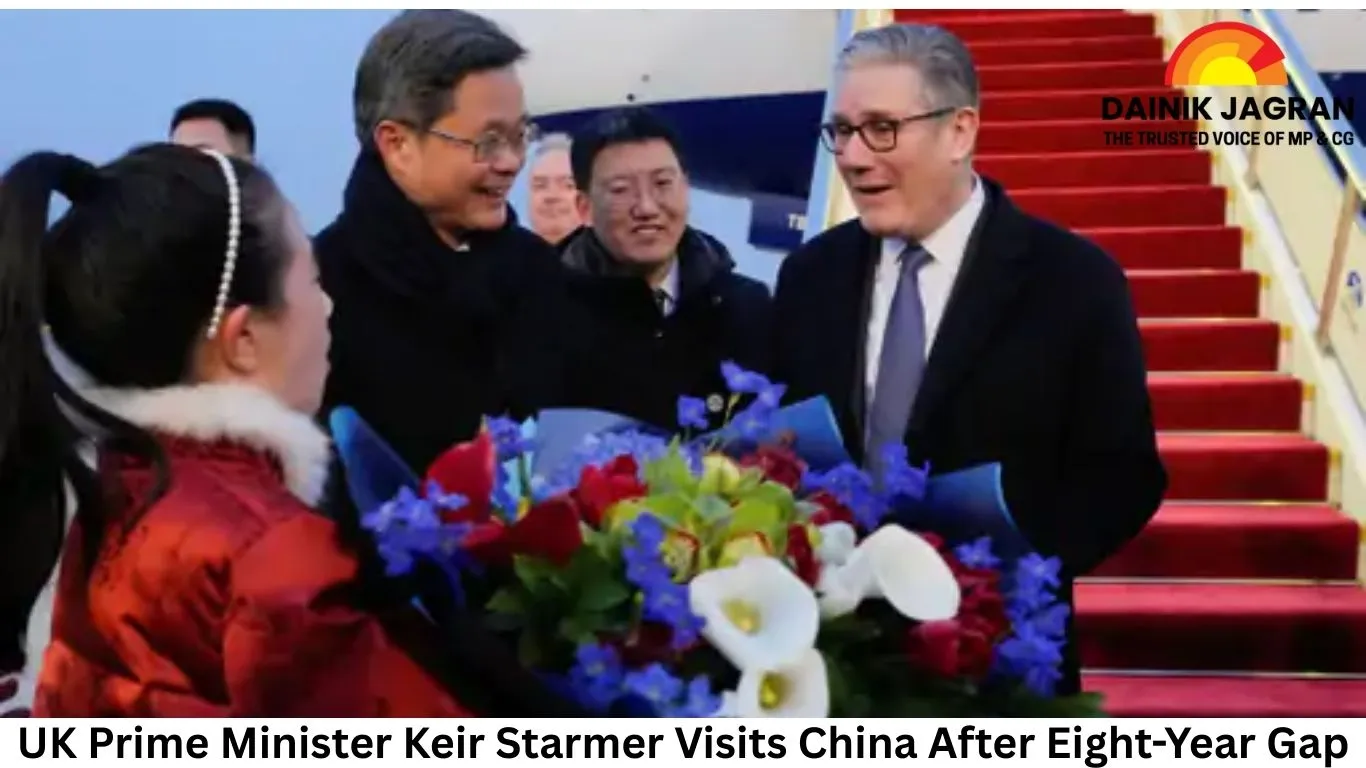
UK Prime Minister Keir Starmer Visits China After Eight-Year Gap, Signals Pragmatic Reset in Ties
Digital Desk
Starmer’s visit, the first since Theresa May’s 2018 trip, is aimed at rebuilding dialogue with the world’s second-largest economy while maintaining Britain’s strategic partnership with the United States. Speaking to reporters before departing London, Starmer said the UK does not face a binary choice between Washington and Beijing. “The US has its place, but China is essential,” he said, underlining a more pragmatic tone in British foreign policy.
China’s Ministry of Foreign Affairs welcomed the visit, saying it would help enhance mutual trust and add stability to bilateral relations. Starmer was given a red-carpet reception at Beijing airport, where he was received by China’s Finance Minister Lan Fo’an, signalling Beijing’s intent to reset ties after years of strain.
Relations between the two countries have been uneasy since 2020, when the UK removed Chinese technology firm Huawei from its 5G network, citing national security concerns. The decision followed a parliamentary inquiry that alleged close links between Huawei and the Chinese Communist Party. The move marked a sharp departure from earlier engagement, including the so-called “Golden Era” of UK-China relations promoted under former prime minister David Cameron.
Since then, tensions have been compounded by China’s actions in Hong Kong, concerns over human rights in Xinjiang, and Beijing’s withdrawal from a UK nuclear power project in 2023. At the same time, Britain’s exit from the European Union and changing US policies under President Donald Trump have pushed European nations to reassess their economic and diplomatic strategies.
Starmer’s trip reflects that reassessment. His delegation includes senior officials and business leaders from major British companies, with discussions expected to focus on trade, investment, climate cooperation and technology. British officials see engagement with China as critical to boosting economic growth at a time when global trade patterns are under strain.
Experts say the visit is part of a broader European outreach to Beijing. In recent weeks, the prime ministers of Finland and Ireland have visited China, while Germany’s chancellor is expected to travel there next month. Analysts note that European governments increasingly view China as neither a close partner nor an outright adversary, but as a power that must be dealt with pragmatically.
However, Starmer’s approach has drawn criticism from some former ministers and China hawks, who argue that economic engagement risks sidelining concerns over human rights and security. British officials say those issues will be raised during the visit, alongside efforts to stabilise ties.
The outcome of the trip is likely to shape the direction of UK-China relations in the coming years, balancing economic interests with strategic caution in an increasingly divided global order.
.jpg)




