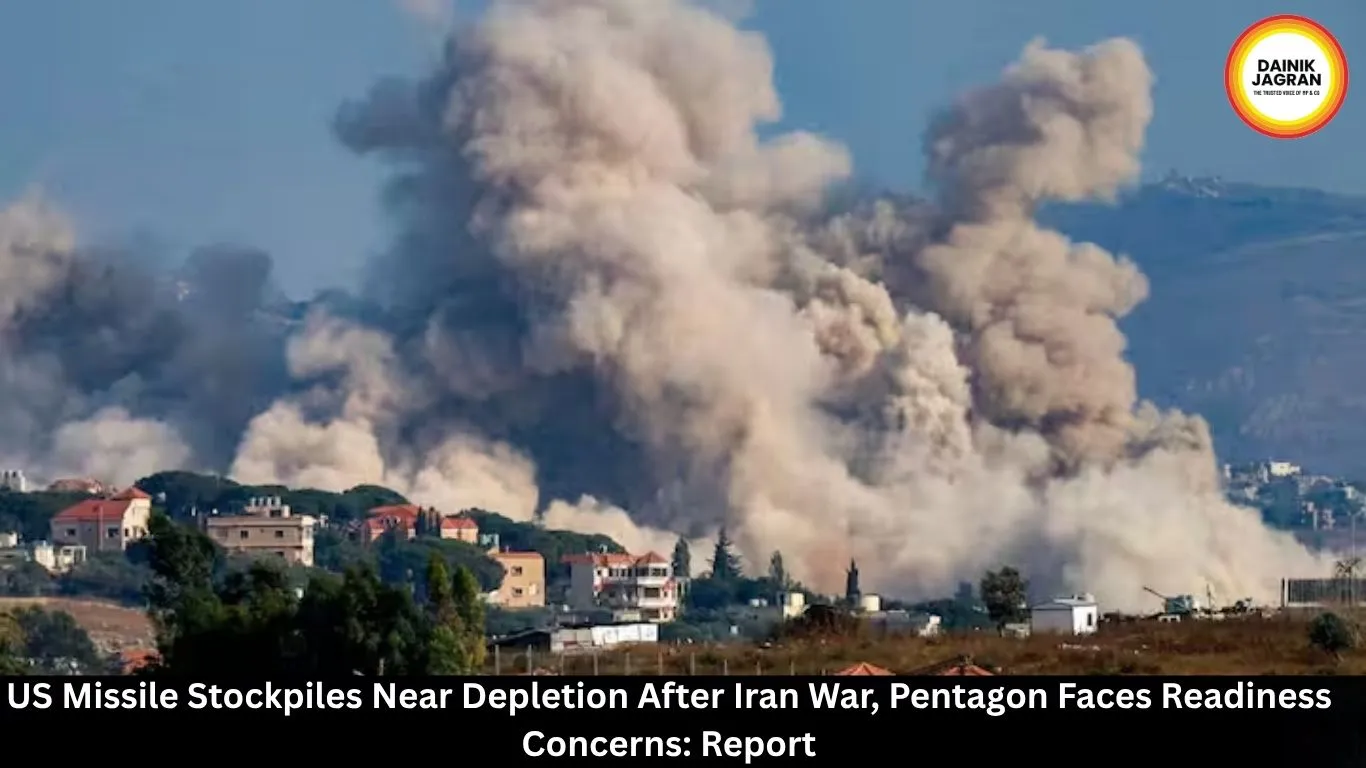
US Missile Stockpiles Depleted After Iran War, Pentagon Readiness Under Scrutiny: Report
Digital desk
Reuters reports the US has nearly exhausted key long-range precision missiles after the Iran conflict, raising Pentagon concerns over military readiness despite White House assurances.
The United States has reportedly exhausted most of its long-range precision missile inventory after five months of military operations against Iran, prompting growing concern within the Pentagon over the country's preparedness for future conflicts involving major powers such as China and Russia.
According to a Reuters report citing multiple sources familiar with internal US military assessments, the prolonged conflict has significantly reduced stocks of key precision-strike weapons, including the Army Tactical Missile System (ATACMS) and the newer Precision Strike Missile (PrSM). The depletion has reportedly triggered internal discussions within the Trump administration over America's military readiness.
Precision Missile Stocks Under Pressure
The report said the US Army has used "virtually all" of its available ATACMS and PrSM missiles during operations against Iran since the conflict began in February following President Donald Trump's decision to launch a joint military campaign alongside Israel.
Although officials did not disclose the exact number of missiles remaining, sources indicated that the depletion has become severe enough to raise concerns about the country's ability to respond effectively to another large-scale military confrontation.
Military planners reportedly relied heavily on long-range stand-off weapons instead of deploying more piloted aircraft for deep-strike missions, reducing risks to personnel while maintaining operational effectiveness.
Critical Weapons for Future Conflicts
ATACMS has long served as one of the US Army's primary long-range surface-to-surface missile systems, while the PrSM is its next-generation successor with greater range and enhanced strike capabilities.
Both missile systems are considered central to US military planning for any future conflict involving strategic rivals such as China or Russia. They have also been supplied to Ukraine and used extensively against Russian military targets during the ongoing war.
Defence analysts believe replenishing these advanced weapons could take considerable time despite increased manufacturing efforts.
Production Expansion Faces Challenges
According to the report, American defence manufacturers have significantly expanded production of missiles and artillery ammunition since the outbreak of the Iran conflict.
However, industry officials reportedly believe current production levels may still be insufficient to rapidly restore depleted inventories if another prolonged military campaign emerges in the near future.
The growing demand for precision-guided weapons across multiple global theatres has placed sustained pressure on the US defence industrial base.
White House Rejects Shortage Concerns
President Donald Trump dismissed reports suggesting the United States faces a serious missile shortage.
Responding to questions, Trump said the country possesses "far more munitions than anyone in the world" and emphasised that defence manufacturers are producing weapons at record levels while expanding manufacturing facilities.
Pentagon spokesperson Sean Parnell also rejected suggestions that the US military lacks operational capability.
He said the American armed forces remain fully prepared to execute missions worldwide and continue to maintain a "deep arsenal of capabilities" to safeguard national interests.
Defensive Missile Systems Also Under Strain
The concerns extend beyond offensive weapons.
According to the Reuters report, inventories of defensive systems such as Patriot missile interceptors and the Terminal High Altitude Area Defense (THAAD) system have also declined substantially during the conflict.
A recent assessment by the Center for Strategic and International Studies (CSIS) estimated that nearly 65 per cent of Patriot interceptors have been consumed since February, while THAAD interceptor inventories have fallen by at least 38 per cent.
Questions Over Internal Transparency
The latest report follows earlier claims published by The Telegraph, which suggested some officials close to President Trump were concerned that the Pentagon had not fully communicated the extent of missile depletion to the White House.
According to the report, some officials feared a culture of reluctance within the Defence Department may have discouraged senior military leaders from delivering negative assessments regarding declining weapons inventories.
The developments come as the United States continues to monitor multiple global security challenges while balancing operational commitments across different regions.

--------
๐จ Beat the News Rush โ Join Now!
Get breaking alerts, hot exclusives, and game-changing stories instantly on your phone. No delays, no fluff โ just the edge you need. โก
Tap to join:ย
๐ข WhatsApp Channel: Dainik Jagran MP CG
Crave more?
๐ Facebook: Dainik Jagran MP CG English
๐ ง Twitter (X): Dainik Jagran MP CG
๐ Instagram: Dainik Jagran MP CG
Share the fire โ keep your crew ahead! ๐๏ธ๐ฅ
US Missile Stockpiles Depleted After Iran War, Pentagon Readiness Under Scrutiny: Report
Digital desk
The United States has reportedly exhausted most of its long-range precision missile inventory after five months of military operations against Iran, prompting growing concern within the Pentagon over the country's preparedness for future conflicts involving major powers such as China and Russia.
According to a Reuters report citing multiple sources familiar with internal US military assessments, the prolonged conflict has significantly reduced stocks of key precision-strike weapons, including the Army Tactical Missile System (ATACMS) and the newer Precision Strike Missile (PrSM). The depletion has reportedly triggered internal discussions within the Trump administration over America's military readiness.
Precision Missile Stocks Under Pressure
The report said the US Army has used "virtually all" of its available ATACMS and PrSM missiles during operations against Iran since the conflict began in February following President Donald Trump's decision to launch a joint military campaign alongside Israel.
Although officials did not disclose the exact number of missiles remaining, sources indicated that the depletion has become severe enough to raise concerns about the country's ability to respond effectively to another large-scale military confrontation.
Military planners reportedly relied heavily on long-range stand-off weapons instead of deploying more piloted aircraft for deep-strike missions, reducing risks to personnel while maintaining operational effectiveness.
Critical Weapons for Future Conflicts
ATACMS has long served as one of the US Army's primary long-range surface-to-surface missile systems, while the PrSM is its next-generation successor with greater range and enhanced strike capabilities.
Both missile systems are considered central to US military planning for any future conflict involving strategic rivals such as China or Russia. They have also been supplied to Ukraine and used extensively against Russian military targets during the ongoing war.
Defence analysts believe replenishing these advanced weapons could take considerable time despite increased manufacturing efforts.
Production Expansion Faces Challenges
According to the report, American defence manufacturers have significantly expanded production of missiles and artillery ammunition since the outbreak of the Iran conflict.
However, industry officials reportedly believe current production levels may still be insufficient to rapidly restore depleted inventories if another prolonged military campaign emerges in the near future.
The growing demand for precision-guided weapons across multiple global theatres has placed sustained pressure on the US defence industrial base.
White House Rejects Shortage Concerns
President Donald Trump dismissed reports suggesting the United States faces a serious missile shortage.
Responding to questions, Trump said the country possesses "far more munitions than anyone in the world" and emphasised that defence manufacturers are producing weapons at record levels while expanding manufacturing facilities.
Pentagon spokesperson Sean Parnell also rejected suggestions that the US military lacks operational capability.
He said the American armed forces remain fully prepared to execute missions worldwide and continue to maintain a "deep arsenal of capabilities" to safeguard national interests.
Defensive Missile Systems Also Under Strain
The concerns extend beyond offensive weapons.
According to the Reuters report, inventories of defensive systems such as Patriot missile interceptors and the Terminal High Altitude Area Defense (THAAD) system have also declined substantially during the conflict.
A recent assessment by the Center for Strategic and International Studies (CSIS) estimated that nearly 65 per cent of Patriot interceptors have been consumed since February, while THAAD interceptor inventories have fallen by at least 38 per cent.
Questions Over Internal Transparency
The latest report follows earlier claims published by The Telegraph, which suggested some officials close to President Trump were concerned that the Pentagon had not fully communicated the extent of missile depletion to the White House.
According to the report, some officials feared a culture of reluctance within the Defence Department may have discouraged senior military leaders from delivering negative assessments regarding declining weapons inventories.
The developments come as the United States continues to monitor multiple global security challenges while balancing operational commitments across different regions.