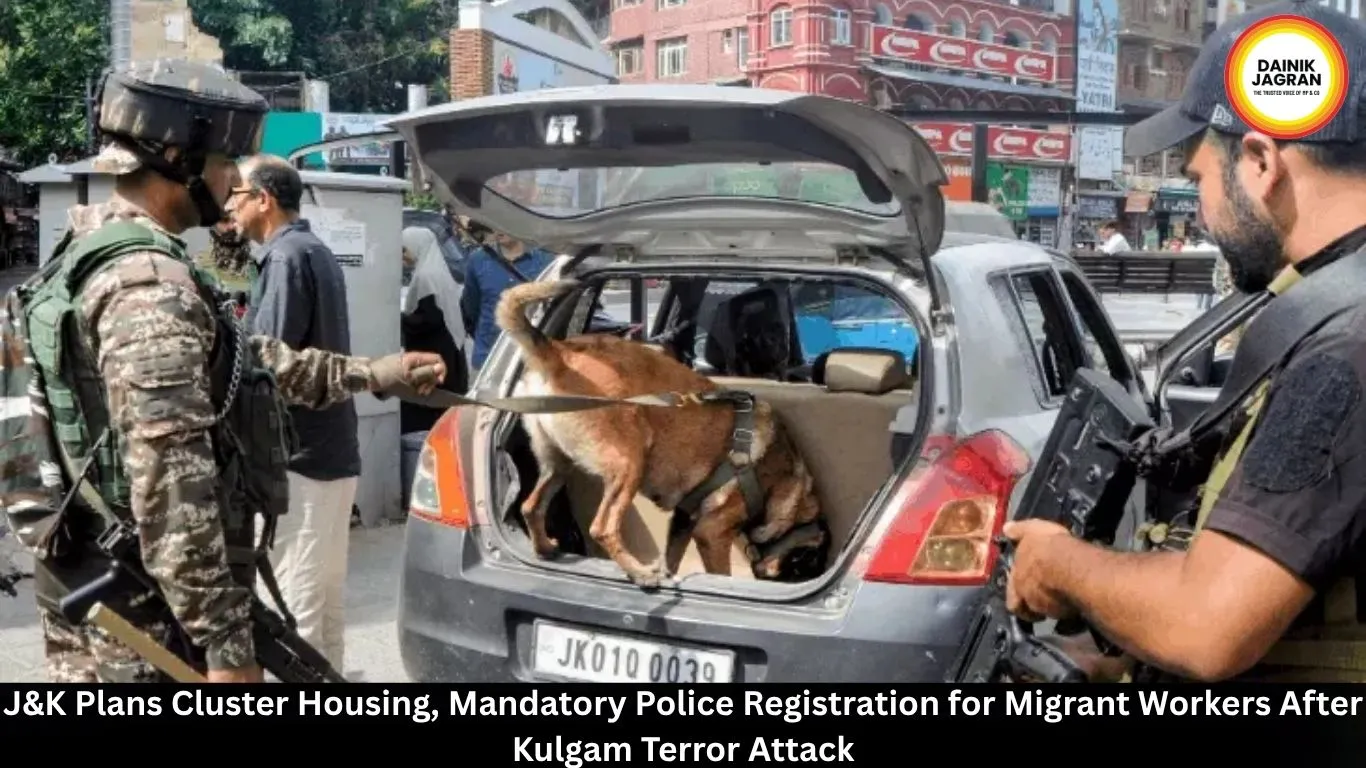
J&K Plans Cluster Housing, Police Registration for Migrant Workers After Kulgam Attack

Digital desk

J&K Plans Cluster Housing, Police Registration for Migrant Workers After Kulgam Attack

The Jammu and Kashmir administration is planning cluster housing and mandatory police registration for migrant workers following the killing of two labourers in Kulgam.

The Jammu and Kashmir administration is preparing a comprehensive security plan for migrant workers in the Kashmir Valley following the killing of two non-local labourers in Kulgam last week. The proposed measures include shifting workers to secure residential clusters, mandatory police registration for new arrivals and stricter verification of accommodation to prevent targeted terror attacks.

The move comes four days after terrorists shot dead two migrant workers in Kelam village of Kulgam district, renewing concerns over the safety of non-local labourers employed across the Valley.

High-Level Security Review

Lieutenant Governor Manoj Sinha chaired a high-level meeting to review the security arrangements for nearly four lakh migrant workers currently living and working in Jammu and Kashmir.

According to officials, the administration has decided to strengthen security protocols, particularly in districts that have witnessed targeted attacks on non-local workers in recent years.

The objective is to reduce the vulnerability of migrant labourers who often live in isolated locations near orchards, brick kilns and construction sites.

Cluster Housing Proposed

As part of the proposed strategy, migrant workers residing in scattered and remote locations will be relocated to designated secure housing clusters.

Officials believe that providing security to labourers living individually across hundreds of locations is operationally difficult. By moving them into identified clusters, security agencies expect to improve surveillance and ensure quicker response in case of emergencies.

Separate and isolated accommodation for non-local workers is likely to be discouraged under the new framework.

Mandatory Police Registration

The administration also plans to introduce compulsory police registration for every new migrant worker arriving in the Valley.

Under the proposal, workers will have to report to the nearest police station after arrival. Local police will verify their identity and inspect the place where they intend to stay before permitting them to reside there.

Officials say the verification process is aimed at improving security coordination and maintaining an updated database of migrant workers across the region.

Focus on South Kashmir

The security plan will primarily cover Budgam and the districts of Anantnag, Kulgam and Pulwama, where thousands of migrant workers from states such as Uttar Pradesh, Bihar and Chhattisgarh are employed in brick kilns, horticulture and allied sectors.

According to official data, the Kashmir Valley has around 199 registered brick kilns, many of which employ seasonal migrant labourers who stay in temporary settlements.

Authorities say relocating workers from isolated huts to protected clusters will help minimise security risks.

Background of Targeted Attacks

Security for migrant workers has remained a major concern since the abrogation of Article 370 in 2019.

Government data presented in Parliament and statements from the Ministry of Home Affairs indicate that around 23 migrant workers have been killed in targeted terrorist attacks over the past seven years.

The latest Kulgam attack has once again highlighted the continuing threat posed by terrorists targeting civilians from outside Jammu and Kashmir.

Security Operations Continue

The fresh security measures come amid intensified counter-terror operations across Jammu and Kashmir.

On July 18, the Indian Army foiled an infiltration attempt along the Line of Control (LoC) in the Rajouri sector after detecting suspicious movement in the Tarkundi forward area.

Earlier, on July 8, security forces eliminated Lashkar-e-Taiba commander Zakir Ahmed Ganie during a joint operation in Shopian. Ganie was among the most-wanted terrorists identified after the Pahalgam terror attack and was killed in an operation involving the Army, Jammu and Kashmir Police, and the CRPF.

With the proposed security overhaul, the administration aims to strengthen protection for migrant workers while continuing anti-terror operations across the Valley.


 

--------

๐Ÿšจ Beat the News Rush โ€“ Join Now!

Get breaking alerts, hot exclusives, and game-changing stories instantly on your phone. No delays, no fluff โ€“ just the edge you need. โšก

Tap to join:ย 

๐ŸŸข WhatsApp Channel: Dainik Jagran MP CG

Crave more?

๐Ÿ…• Facebook: Dainik Jagran MP CG English

๐Ÿ…ง Twitter (X): Dainik Jagran MP CG

๐Ÿ…˜ Instagram: Dainik Jagran MP CG

Share the fire โ€“ keep your crew ahead! ๐Ÿ—ž๏ธ๐Ÿ”ฅ

english.dainikjagranmpcg.com
04 Aug 2026 By Abhishek Joshi

J&K Plans Cluster Housing, Police Registration for Migrant Workers After Kulgam Attack

Digital desk

The Jammu and Kashmir administration is preparing a comprehensive security plan for migrant workers in the Kashmir Valley following the killing of two non-local labourers in Kulgam last week. The proposed measures include shifting workers to secure residential clusters, mandatory police registration for new arrivals and stricter verification of accommodation to prevent targeted terror attacks.

The move comes four days after terrorists shot dead two migrant workers in Kelam village of Kulgam district, renewing concerns over the safety of non-local labourers employed across the Valley.

High-Level Security Review

Lieutenant Governor Manoj Sinha chaired a high-level meeting to review the security arrangements for nearly four lakh migrant workers currently living and working in Jammu and Kashmir.

According to officials, the administration has decided to strengthen security protocols, particularly in districts that have witnessed targeted attacks on non-local workers in recent years.

The objective is to reduce the vulnerability of migrant labourers who often live in isolated locations near orchards, brick kilns and construction sites.

Cluster Housing Proposed

As part of the proposed strategy, migrant workers residing in scattered and remote locations will be relocated to designated secure housing clusters.

Officials believe that providing security to labourers living individually across hundreds of locations is operationally difficult. By moving them into identified clusters, security agencies expect to improve surveillance and ensure quicker response in case of emergencies.

Separate and isolated accommodation for non-local workers is likely to be discouraged under the new framework.

Mandatory Police Registration

The administration also plans to introduce compulsory police registration for every new migrant worker arriving in the Valley.

Under the proposal, workers will have to report to the nearest police station after arrival. Local police will verify their identity and inspect the place where they intend to stay before permitting them to reside there.

Officials say the verification process is aimed at improving security coordination and maintaining an updated database of migrant workers across the region.

Focus on South Kashmir

The security plan will primarily cover Budgam and the districts of Anantnag, Kulgam and Pulwama, where thousands of migrant workers from states such as Uttar Pradesh, Bihar and Chhattisgarh are employed in brick kilns, horticulture and allied sectors.

According to official data, the Kashmir Valley has around 199 registered brick kilns, many of which employ seasonal migrant labourers who stay in temporary settlements.

Authorities say relocating workers from isolated huts to protected clusters will help minimise security risks.

Background of Targeted Attacks

Security for migrant workers has remained a major concern since the abrogation of Article 370 in 2019.

Government data presented in Parliament and statements from the Ministry of Home Affairs indicate that around 23 migrant workers have been killed in targeted terrorist attacks over the past seven years.

The latest Kulgam attack has once again highlighted the continuing threat posed by terrorists targeting civilians from outside Jammu and Kashmir.

Security Operations Continue

The fresh security measures come amid intensified counter-terror operations across Jammu and Kashmir.

On July 18, the Indian Army foiled an infiltration attempt along the Line of Control (LoC) in the Rajouri sector after detecting suspicious movement in the Tarkundi forward area.

Earlier, on July 8, security forces eliminated Lashkar-e-Taiba commander Zakir Ahmed Ganie during a joint operation in Shopian. Ganie was among the most-wanted terrorists identified after the Pahalgam terror attack and was killed in an operation involving the Army, Jammu and Kashmir Police, and the CRPF.

With the proposed security overhaul, the administration aims to strengthen protection for migrant workers while continuing anti-terror operations across the Valley.

 

https://english.dainikjagranmpcg.com/national/jk-plans-cluster-housing-police-registration-for-migrant-workers-after/article-24833

Trending News