


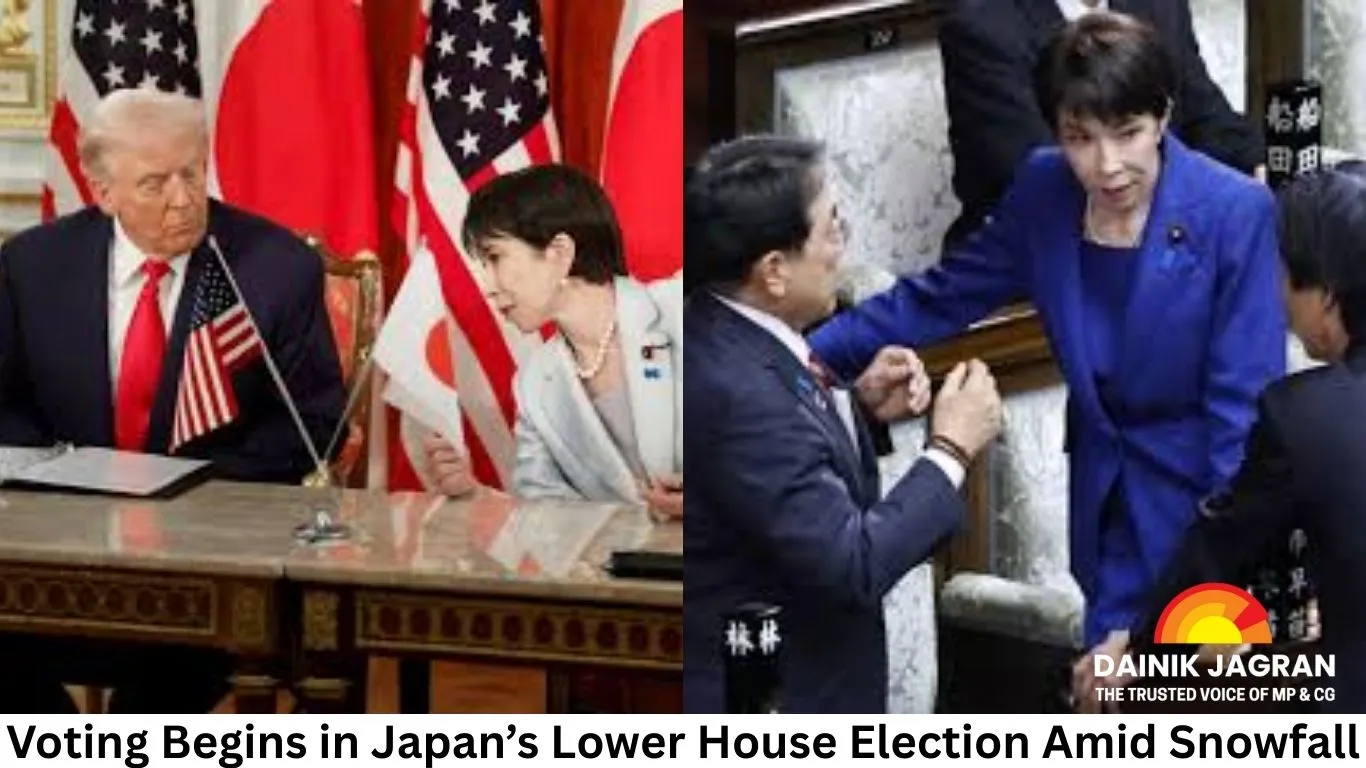
Voting Begins in Japan’s Lower House Election Amid Snowfall; PM Sanae Takaichi Seeks Strong Mandate
Digital Desk
Takaichi, Japan’s first female prime minister, is aiming to secure more than 300 seats for her Liberal Democratic Party (LDP)-led coalition with the Japan Innovation Party (Ishin no Kai). Opinion polls suggest the alliance could cross that threshold, which would allow the government to pass legislation even if it faces resistance in the Upper House. Takaichi has said she will resign if her coalition fails to retain a majority.
The election is being held under challenging conditions, with parts of northern and eastern Japan experiencing severe snowfall. Authorities have warned that snow accumulation—exceeding one metre in some areas—could make access to polling stations difficult. In past lower house elections, turnout has hovered around 55 percent, and officials are concerned that extreme weather could lower participation further.
Takaichi assumed office in October 2025 after winning the LDP leadership contest and forming a coalition government. In January this year, she dissolved the lower house to seek a fresh mandate, citing the need to push through key reforms. Her campaign has focused on national security, economic stimulus, and tax relief, including a pledge to suspend the eight percent sales tax on food items for two years to ease inflationary pressures.
The election has drawn international attention following public support for Takaichi from former US President Donald Trump, who described her as a strong leader and announced plans to meet her in Washington next month. The endorsement marked a rare instance of a former US president openly backing a Japanese leader during an election.
Takaichi has also taken a firm stance on China, advocating increased defence spending and reduced economic dependence on Beijing. Analysts say a clear victory would strengthen her hand in advancing security and fiscal reforms.
The opposition, led by the Centrist Reform Alliance comprising the Constitutional Democratic Party and Komeito, has campaigned on inflation, wages, and social welfare. Opposition leaders have criticised Takaichi’s security-focused agenda, arguing that household economic concerns should take priority.
Polling will close at 8 pm local time, with exit polls and initial projections expected shortly thereafter. The result is likely to shape Japan’s domestic policy direction and its strategic posture in the Indo-Pacific.
.jpg)




