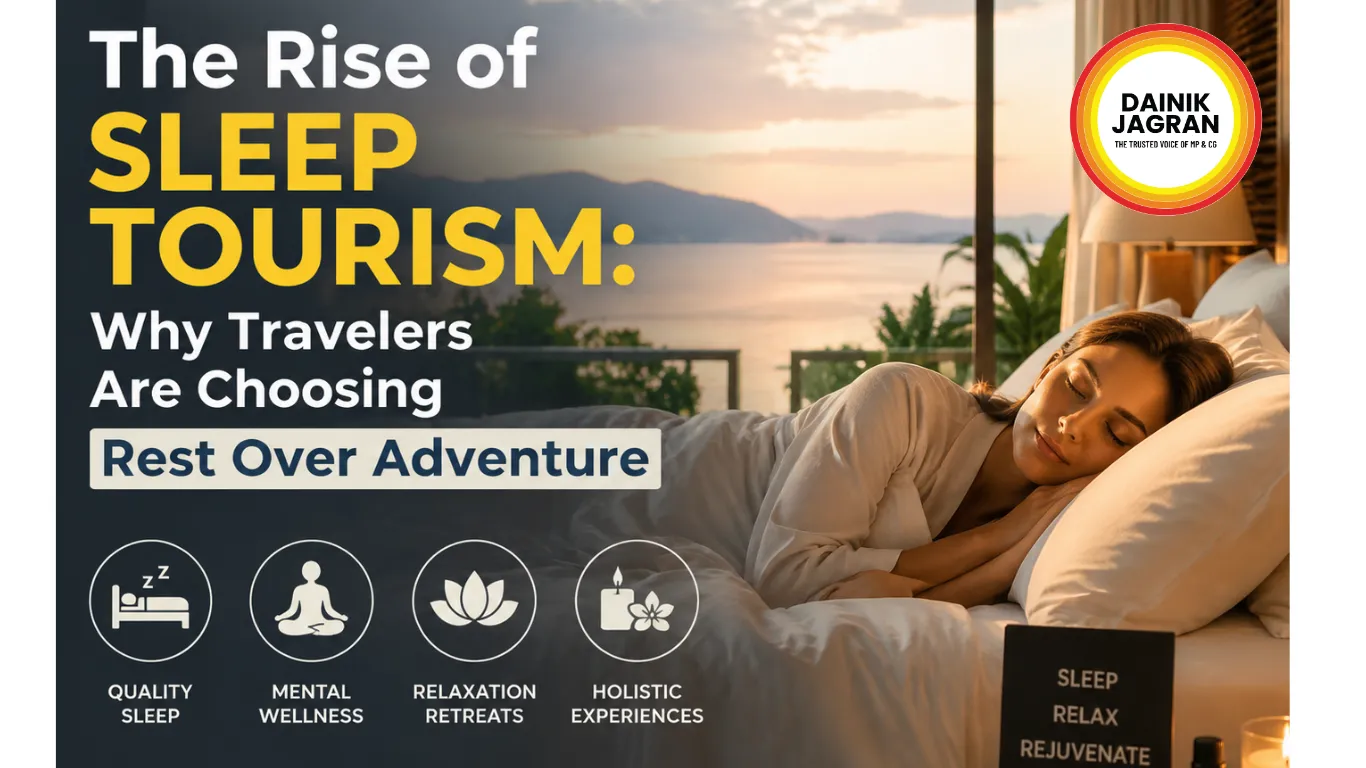
The Rise of Sleep Tourism: Why Travelers Are Choosing Rest Over Adventure

Digital Desk

The Rise of Sleep Tourism: Why Travelers Are Choosing Rest Over Adventure

Luxury holidays are no longer defined only by sightseeing, adventure sports or packed itineraries. Across major travel destinations, a growing number of hotels and wellness resorts are redesigning their offerings around one simple promise — a good night's sleep. The trend, widely referred to as sleep tourism, is gaining momentum as travellers seek relief from stress, burnout and the health effects of increasingly demanding lifestyles.

Industry observers say the shift reflects changing priorities among both leisure and business travellers. Instead of planning vacations around activities, many are opting for destinations that focus on rest, recovery and overall well-being.

Hotels in several countries have introduced dedicated sleep-focused packages that include customized bedding, sleep-friendly room designs, guided meditation sessions, aromatherapy, nutrition plans and wellness consultations. Some properties are also offering technology-free rooms, blackout curtains, soundproof environments and sleep-tracking devices designed to help guests improve their sleeping habits during their stay.

The hospitality sector's growing interest in sleep wellness comes amid increasing awareness about the impact of poor sleep on physical and mental health. Medical experts have repeatedly linked inadequate sleep to higher risks of anxiety, depression, cardiovascular diseases and reduced productivity. While hotels are not positioning these programmes as medical treatments, they are increasingly marketing them as part of a broader wellness experience.

Travel analysts note that the trend has accelerated in the years following the pandemic, when health and wellness became central to travel decisions. Wellness tourism has expanded beyond spa therapies and fitness retreats, with sleep now emerging as one of its fastest-growing segments.

Business travellers are also contributing to the demand. Frequent flyers dealing with jet lag, irregular work schedules and long-haul travel are showing greater interest in accommodations designed to support better rest. Some luxury hotels have begun offering circadian lighting systems, pillow menus and sleep coaching as premium services aimed at improving guest comfort.

The rise of remote work has also influenced travel behaviour. Professionals combining work and leisure are spending longer periods at hotels and resorts, making quality sleep an important factor when selecting accommodation. Travel companies report that guests are increasingly looking for quiet environments rather than activity-packed holiday packages.

Tourism researchers believe younger travellers are also reshaping the market. Millennials and Generation Z consumers are placing greater emphasis on mental health, work-life balance and preventive wellness than previous generations. This shift is encouraging hotels to invest in experiences that promote relaxation instead of constant entertainment.

The growing popularity of wearable health devices has further strengthened interest in sleep quality. Many travellers now actively monitor sleep duration and recovery scores through smartwatches and health apps, making them more aware of the benefits of restorative sleep. Hospitality brands are responding by integrating wellness technology into guest experiences without making it overly intrusive.

Industry experts caution, however, that sleep tourism should not be viewed as a substitute for professional medical care. People experiencing chronic insomnia or sleep disorders are advised to seek medical advice rather than relying solely on wellness retreats. Hotels generally present these programmes as lifestyle experiences intended to encourage healthier sleep habits rather than clinical solutions.

For destinations promoting wellness tourism, sleep-focused travel represents a new business opportunity. Countries known for luxury hospitality, natural surroundings and wellness retreats are expanding their offerings to attract travellers seeking relaxation over adventure. Industry reports indicate that wellness travel continues to outperform many traditional tourism segments, encouraging further investment in specialised experiences.

As consumer preferences continue to evolve, the definition of a successful holiday appears to be changing. Instead of returning home exhausted after ticking off sightseeing lists, many travellers now value feeling physically refreshed and mentally recharged. For the hospitality industry, that shift is turning sleep into one of travel's newest premium experiences.


--------

🚨 Beat the News Rush – Join Now!

Get breaking alerts, hot exclusives, and game-changing stories instantly on your phone. No delays, no fluff – just the edge you need. ⚡

Tap to join: 

🟢 WhatsApp Channel: Dainik Jagran MP CG

Crave more?

🅕 Facebook: Dainik Jagran MP CG English

🅧 Twitter (X): Dainik Jagran MP CG

🅘 Instagram: Dainik Jagran MP CG

Share the fire – keep your crew ahead! 🗞️🔥

english.dainikjagranmpcg.com
23 Jul 2026 By Priyanshu.Jha

The Rise of Sleep Tourism: Why Travelers Are Choosing Rest Over Adventure

Digital Desk

Industry observers say the shift reflects changing priorities among both leisure and business travellers. Instead of planning vacations around activities, many are opting for destinations that focus on rest, recovery and overall well-being.

Hotels in several countries have introduced dedicated sleep-focused packages that include customized bedding, sleep-friendly room designs, guided meditation sessions, aromatherapy, nutrition plans and wellness consultations. Some properties are also offering technology-free rooms, blackout curtains, soundproof environments and sleep-tracking devices designed to help guests improve their sleeping habits during their stay.

The hospitality sector's growing interest in sleep wellness comes amid increasing awareness about the impact of poor sleep on physical and mental health. Medical experts have repeatedly linked inadequate sleep to higher risks of anxiety, depression, cardiovascular diseases and reduced productivity. While hotels are not positioning these programmes as medical treatments, they are increasingly marketing them as part of a broader wellness experience.

Travel analysts note that the trend has accelerated in the years following the pandemic, when health and wellness became central to travel decisions. Wellness tourism has expanded beyond spa therapies and fitness retreats, with sleep now emerging as one of its fastest-growing segments.

Business travellers are also contributing to the demand. Frequent flyers dealing with jet lag, irregular work schedules and long-haul travel are showing greater interest in accommodations designed to support better rest. Some luxury hotels have begun offering circadian lighting systems, pillow menus and sleep coaching as premium services aimed at improving guest comfort.

The rise of remote work has also influenced travel behaviour. Professionals combining work and leisure are spending longer periods at hotels and resorts, making quality sleep an important factor when selecting accommodation. Travel companies report that guests are increasingly looking for quiet environments rather than activity-packed holiday packages.

Tourism researchers believe younger travellers are also reshaping the market. Millennials and Generation Z consumers are placing greater emphasis on mental health, work-life balance and preventive wellness than previous generations. This shift is encouraging hotels to invest in experiences that promote relaxation instead of constant entertainment.

The growing popularity of wearable health devices has further strengthened interest in sleep quality. Many travellers now actively monitor sleep duration and recovery scores through smartwatches and health apps, making them more aware of the benefits of restorative sleep. Hospitality brands are responding by integrating wellness technology into guest experiences without making it overly intrusive.

Industry experts caution, however, that sleep tourism should not be viewed as a substitute for professional medical care. People experiencing chronic insomnia or sleep disorders are advised to seek medical advice rather than relying solely on wellness retreats. Hotels generally present these programmes as lifestyle experiences intended to encourage healthier sleep habits rather than clinical solutions.

For destinations promoting wellness tourism, sleep-focused travel represents a new business opportunity. Countries known for luxury hospitality, natural surroundings and wellness retreats are expanding their offerings to attract travellers seeking relaxation over adventure. Industry reports indicate that wellness travel continues to outperform many traditional tourism segments, encouraging further investment in specialised experiences.

As consumer preferences continue to evolve, the definition of a successful holiday appears to be changing. Instead of returning home exhausted after ticking off sightseeing lists, many travellers now value feeling physically refreshed and mentally recharged. For the hospitality industry, that shift is turning sleep into one of travel's newest premium experiences.

https://english.dainikjagranmpcg.com/life-style/6a61b8c40b3bb/article-23257

Related Posts

Trending News