US Strikes Four Iranian Provinces as Conflict Escalates; Trump and Iran Exchange Fresh Warnings

Digital Desk

US Strikes Four Iranian Provinces as Conflict Escalates; Trump and Iran Exchange Fresh Warnings

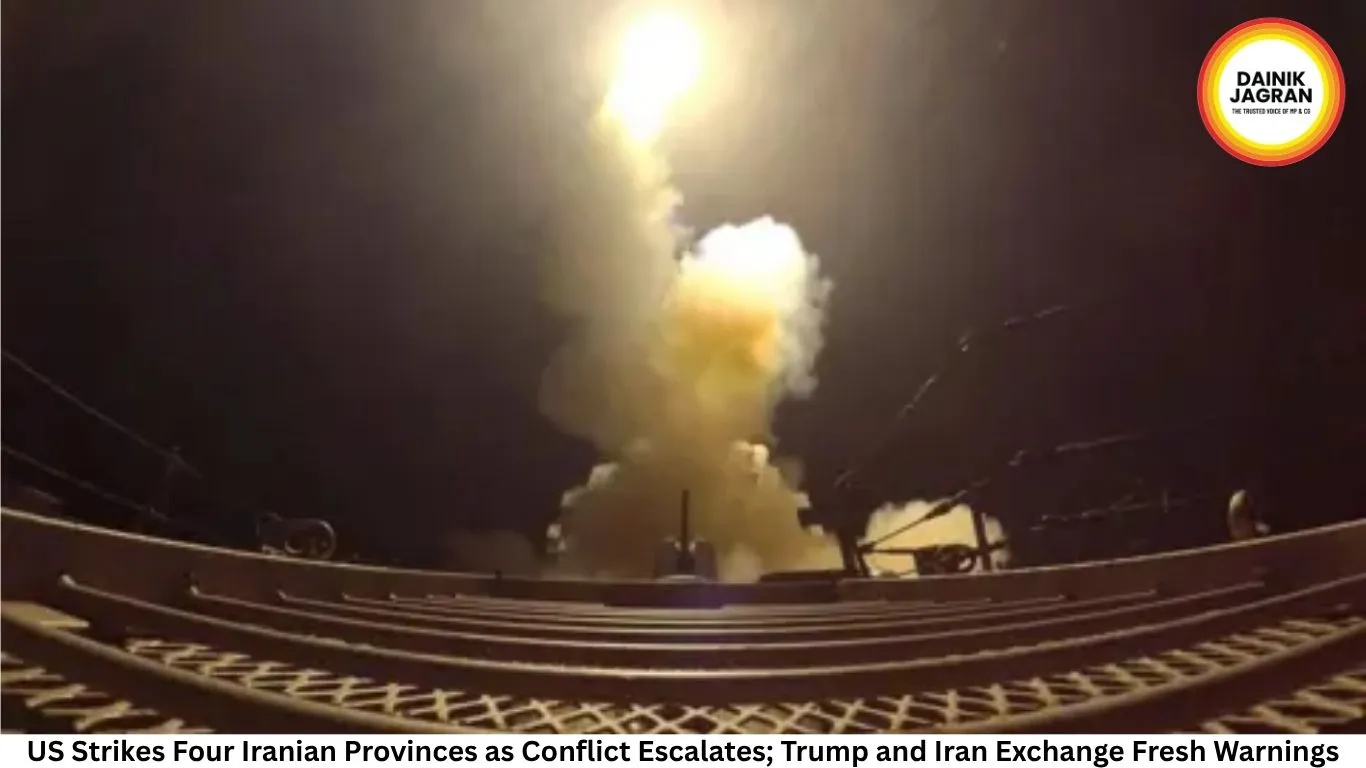
The United States carried out overnight strikes across four Iranian provinces, including a second reported missile attack on Bushehr, marking the 12th consecutive night of military operations. As tensions escalate, US President Donald Trump warned of further strikes, while Iranian leaders vowed retaliation, raising concerns over regional security and global oil markets.

The conflict between the United States and Iran intensified overnight after American forces reportedly carried out strikes across four Iranian provinces, including a second missile attack on the southern province of Bushehr. The latest operation marks the 12th consecutive night of US military action, underscoring the rapid escalation of tensions in the region.

According to Iran's Fars News Agency, quoting the deputy governor of Bushehr Province, the strike targeted a military installation at approximately 4:00 a.m. local time (0030 GMT). Iranian authorities have not yet released detailed information on casualties or the extent of the damage.

The latest developments come amid heightened fears of a broader regional conflict involving maritime security, energy infrastructure, and global oil supplies.

Trump Warns of More US Strikes

US President Donald Trump issued a fresh warning, stating that the United States would respond forcefully if Iran targets any vessel transiting the Strait of Hormuz, one of the world's most important maritime oil routes.

According to Trump's remarks, any Iranian attack on commercial or military shipping could trigger American strikes on strategic Iranian infrastructure, including bridges and power plants, with potential targets extending to facilities in and around Tehran.

The statement signals a further hardening of Washington's position as military operations continue.

Iran Promises Retaliation

Iranian Foreign Minister Abbas Araghchi rejected the US warnings and said Tehran would respond according to the principle of "an eye for an eye."

Iranian officials have repeatedly stated that any attack on the country's territory or strategic assets will be met with a proportional response, increasing concerns that the conflict could widen beyond direct US-Iran military engagements.

Meanwhile, reports also indicate that Iranian parliamentary speaker Mohammad Bagher Ghalibaf warned that if Iran is prevented from exporting oil, "no one will sell oil," a statement widely interpreted as a reference to the strategic importance of the Strait of Hormuz for global energy supplies.

Houthis Issue Shipping Warning

Adding to regional tensions, Yemen's Iran-aligned Houthi movement has reportedly warned international shipping companies against using Saudi Arabian ports.

The group threatened to target vessels that ignore its warning, raising fresh concerns over commercial shipping routes in the Red Sea and surrounding waters.

The development has prompted increased attention to maritime security across one of the world's busiest trade corridors.

US Reports Military Losses

According to the US Central Command (CENTCOM), the conflict has so far resulted in the deaths of 18 American service members, while hundreds more have reportedly sustained injuries.

The figures underscore the growing human cost of the military campaign as operations continue across multiple fronts.

Cost of Conflict Continues to Rise

US Defense Secretary Pete Hegseth said Washington has spent approximately $37.5 billion (around ₹3.6 lakh crore) on military operations related to the conflict with Iran.

The rising financial cost reflects the scale of the deployment and sustained military operations over the past several weeks.

Oil Prices Surge

Escalating geopolitical tensions have also affected global energy markets.

International benchmark Brent crude climbed above $92 per barrel, while West Texas Intermediate (WTI) crude traded at around $85 per barrel as investors reacted to fears of possible disruptions in Middle Eastern oil supplies.

Analysts continue to monitor developments around the Strait of Hormuz, through which a significant share of the world's seaborne crude oil exports passes.

Global Concerns Mount

The continuing exchange of military strikes and political warnings has intensified international concern about the possibility of a broader regional conflict.

Diplomatic observers say any disruption to shipping routes or further attacks on energy infrastructure could have far-reaching consequences for global trade, energy prices, and regional stability.

As the situation remains highly fluid, governments and international organizations continue to closely monitor developments while urging restraint and diplomatic engagement.
--------

🚨 Beat the News Rush – Join Now!

Get breaking alerts, hot exclusives, and game-changing stories instantly on your phone. No delays, no fluff – just the edge you need. ⚡

Tap to join: 

🟢 WhatsApp Channel: Dainik Jagran MP CG

Crave more?

🅕 Facebook: Dainik Jagran MP CG English

🅧 Twitter (X): Dainik Jagran MP CG

🅘 Instagram: Dainik Jagran MP CG

Share the fire – keep your crew ahead! 🗞️🔥

english.dainikjagranmpcg.com
23 Jul 2026 By Rishita

US Strikes Four Iranian Provinces as Conflict Escalates; Trump and Iran Exchange Fresh Warnings

Digital Desk

The conflict between the United States and Iran intensified overnight after American forces reportedly carried out strikes across four Iranian provinces, including a second missile attack on the southern province of Bushehr. The latest operation marks the 12th consecutive night of US military action, underscoring the rapid escalation of tensions in the region.

According to Iran's Fars News Agency, quoting the deputy governor of Bushehr Province, the strike targeted a military installation at approximately 4:00 a.m. local time (0030 GMT). Iranian authorities have not yet released detailed information on casualties or the extent of the damage.

The latest developments come amid heightened fears of a broader regional conflict involving maritime security, energy infrastructure, and global oil supplies.

Trump Warns of More US Strikes

US President Donald Trump issued a fresh warning, stating that the United States would respond forcefully if Iran targets any vessel transiting the Strait of Hormuz, one of the world's most important maritime oil routes.

According to Trump's remarks, any Iranian attack on commercial or military shipping could trigger American strikes on strategic Iranian infrastructure, including bridges and power plants, with potential targets extending to facilities in and around Tehran.

The statement signals a further hardening of Washington's position as military operations continue.

Iran Promises Retaliation

Iranian Foreign Minister Abbas Araghchi rejected the US warnings and said Tehran would respond according to the principle of "an eye for an eye."

Iranian officials have repeatedly stated that any attack on the country's territory or strategic assets will be met with a proportional response, increasing concerns that the conflict could widen beyond direct US-Iran military engagements.

Meanwhile, reports also indicate that Iranian parliamentary speaker Mohammad Bagher Ghalibaf warned that if Iran is prevented from exporting oil, "no one will sell oil," a statement widely interpreted as a reference to the strategic importance of the Strait of Hormuz for global energy supplies.

Houthis Issue Shipping Warning

Adding to regional tensions, Yemen's Iran-aligned Houthi movement has reportedly warned international shipping companies against using Saudi Arabian ports.

The group threatened to target vessels that ignore its warning, raising fresh concerns over commercial shipping routes in the Red Sea and surrounding waters.

The development has prompted increased attention to maritime security across one of the world's busiest trade corridors.

US Reports Military Losses

According to the US Central Command (CENTCOM), the conflict has so far resulted in the deaths of 18 American service members, while hundreds more have reportedly sustained injuries.

The figures underscore the growing human cost of the military campaign as operations continue across multiple fronts.

Cost of Conflict Continues to Rise

US Defense Secretary Pete Hegseth said Washington has spent approximately $37.5 billion (around ₹3.6 lakh crore) on military operations related to the conflict with Iran.

The rising financial cost reflects the scale of the deployment and sustained military operations over the past several weeks.

Oil Prices Surge

Escalating geopolitical tensions have also affected global energy markets.

International benchmark Brent crude climbed above $92 per barrel, while West Texas Intermediate (WTI) crude traded at around $85 per barrel as investors reacted to fears of possible disruptions in Middle Eastern oil supplies.

Analysts continue to monitor developments around the Strait of Hormuz, through which a significant share of the world's seaborne crude oil exports passes.

Global Concerns Mount

The continuing exchange of military strikes and political warnings has intensified international concern about the possibility of a broader regional conflict.

Diplomatic observers say any disruption to shipping routes or further attacks on energy infrastructure could have far-reaching consequences for global trade, energy prices, and regional stability.

As the situation remains highly fluid, governments and international organizations continue to closely monitor developments while urging restraint and diplomatic engagement.
https://english.dainikjagranmpcg.com/international/us-strikes-four-iranian-provinces-as-conflict-escalates-trump-and/article-23252

Trending News