A fresh political confrontation has erupted over competitive examination paper leak cases, with Leader of Opposition Rahul Gandhi launching a sharp attack on Prime Minister Narendra Modi after the government announced plans to set up fast-track courts to deal with those involved in exam-related irregularities.
The row comes against the backdrop of nationwide protests by students and opposition parties over alleged paper leaks in major examinations, including NEET. While the Centre has promised strict action against those responsible, the Congress has accused the government of failing to protect the integrity of the country's education system.
According to officials, Prime Minister Modi recently said that fast-track courts would be established to ensure swift punishment for individuals found guilty in examination fraud and paper leak cases. The announcement was aimed at addressing growing concerns among students and parents over transparency in recruitment and entrance examinations.
Rahul Gandhi’s Response
Responding to the Prime Minister’s statement on social media platform X, Rahul Gandhi alleged that the government was attempting to divert attention from what he described as the “destruction of the education system”.
In his post, Gandhi claimed that Prime Minister Modi had done the greatest damage to the future of India’s youth by allowing the education system to deteriorate and by protecting those responsible for failures within it.
The Congress leader reiterated three key demands. He called for the removal of Union Education Minister Dharmendra Pradhan, an apology to students affected by examination controversies, and action against those allegedly involved in violence against protesting students.
The remarks have intensified the political debate around examination reforms, student welfare and accountability within the education sector.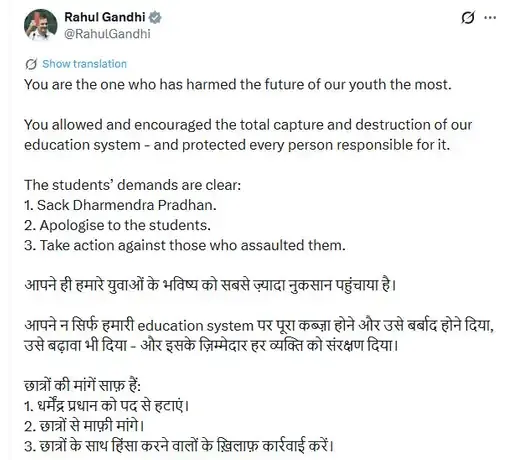
NEET Issue Takes Centre Stage
Addressing a press conference in New Delhi, Rahul Gandhi said the alleged NEET paper leak had impacted millions of students and their families across the country.
During the nearly 40-minute briefing, he displayed videos and presentation slides highlighting recent student protests and police action against demonstrators. Gandhi alleged that students were subjected to force during protests and questioned why action had been taken against them instead of those responsible for examination irregularities.
The Congress leader argued that the issue extends beyond a single examination and reflects deeper concerns about the credibility of recruitment and entrance tests conducted across the country.
He maintained that students deserved accountability and transparency from the government, especially in cases where allegations of paper leaks have emerged.
Opposition Protest in Delhi
The controversy escalated after opposition leaders staged a protest near Prime Minister Modi’s official residence in New Delhi.
The demonstration was attended by several senior opposition figures, including Rahul Gandhi, Priyanka Gandhi Vadra, Congress president Mallikarjun Kharge and Samajwadi Party chief Akhilesh Yadav.
During the protest, opposition leaders demanded a discussion on examination paper leaks in Parliament and sought the resignation of Education Minister Dharmendra Pradhan. Protesters also raised slogans against the government and accused it of failing to address student concerns adequately.
Political observers noted that demonstrations in the vicinity of the Prime Minister’s residence are rare, making the protest significant from both political and symbolic perspectives.
Government’s Position
The government has maintained that it is committed to ensuring transparency and fairness in examinations. Officials have highlighted ongoing investigations and legal action in cases where irregularities have been detected.
The proposal to establish fast-track courts is being seen as part of a broader effort to accelerate judicial proceedings and deliver timely punishment to those involved in examination fraud.
Government sources have also stressed that protecting the interests of students remains a priority and that institutional reforms are being pursued to strengthen examination systems.

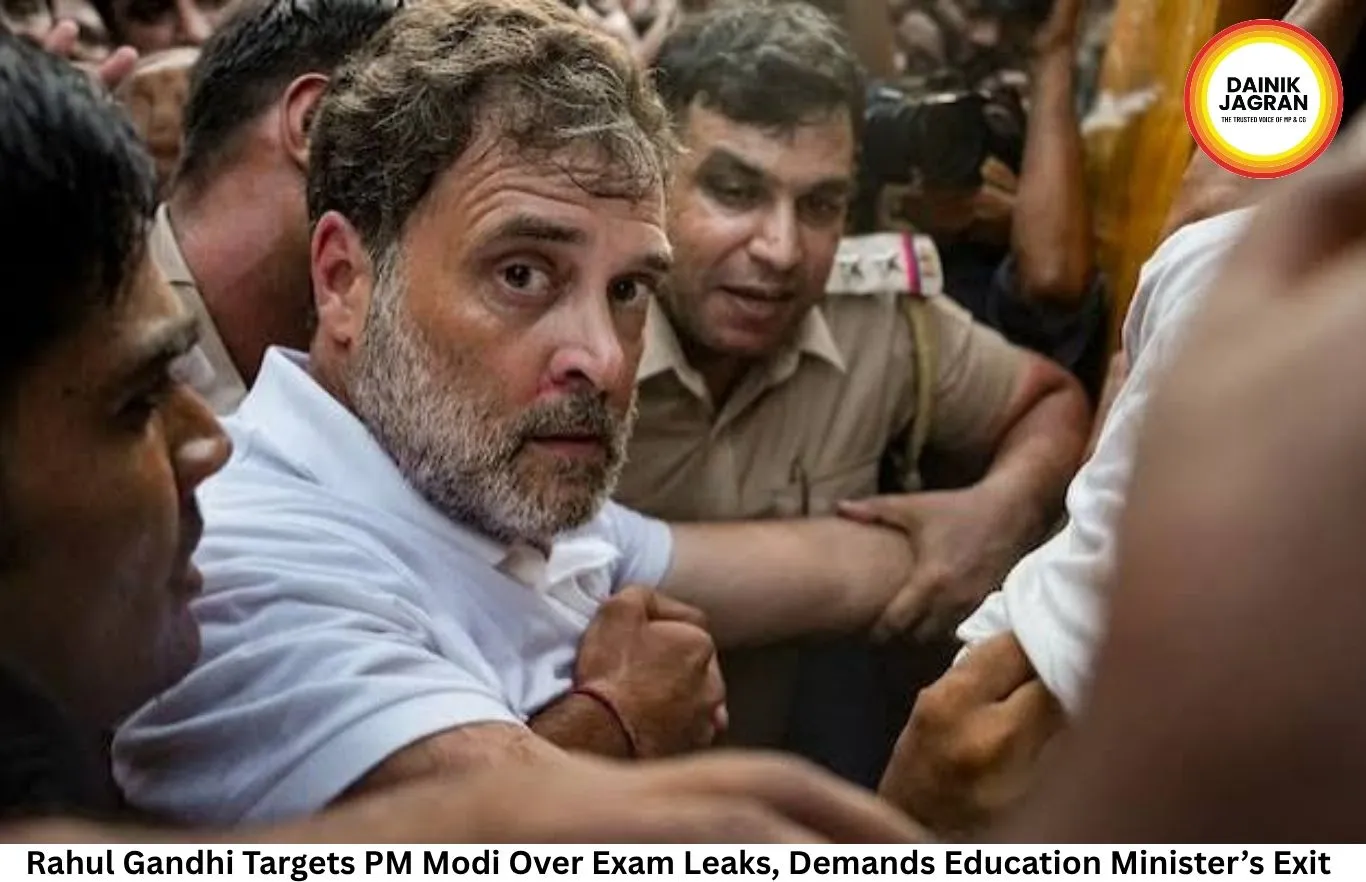
Rahul Gandhi Targets PM Modi Over Exam Leaks, Demands Education Minister’s Exit
Digital desk
A fresh political confrontation has erupted over competitive examination paper leak cases, with Leader of Opposition Rahul Gandhi launching a sharp attack on Prime Minister Narendra Modi after the government announced plans to set up fast-track courts to deal with those involved in exam-related irregularities.
The row comes against the backdrop of nationwide protests by students and opposition parties over alleged paper leaks in major examinations, including NEET. While the Centre has promised strict action against those responsible, the Congress has accused the government of failing to protect the integrity of the country's education system.
According to officials, Prime Minister Modi recently said that fast-track courts would be established to ensure swift punishment for individuals found guilty in examination fraud and paper leak cases. The announcement was aimed at addressing growing concerns among students and parents over transparency in recruitment and entrance examinations.
Rahul Gandhi’s Response
Responding to the Prime Minister’s statement on social media platform X, Rahul Gandhi alleged that the government was attempting to divert attention from what he described as the “destruction of the education system”.
In his post, Gandhi claimed that Prime Minister Modi had done the greatest damage to the future of India’s youth by allowing the education system to deteriorate and by protecting those responsible for failures within it.
The Congress leader reiterated three key demands. He called for the removal of Union Education Minister Dharmendra Pradhan, an apology to students affected by examination controversies, and action against those allegedly involved in violence against protesting students.
The remarks have intensified the political debate around examination reforms, student welfare and accountability within the education sector.
NEET Issue Takes Centre Stage
Addressing a press conference in New Delhi, Rahul Gandhi said the alleged NEET paper leak had impacted millions of students and their families across the country.
During the nearly 40-minute briefing, he displayed videos and presentation slides highlighting recent student protests and police action against demonstrators. Gandhi alleged that students were subjected to force during protests and questioned why action had been taken against them instead of those responsible for examination irregularities.
The Congress leader argued that the issue extends beyond a single examination and reflects deeper concerns about the credibility of recruitment and entrance tests conducted across the country.
He maintained that students deserved accountability and transparency from the government, especially in cases where allegations of paper leaks have emerged.
Opposition Protest in Delhi
The controversy escalated after opposition leaders staged a protest near Prime Minister Modi’s official residence in New Delhi.
The demonstration was attended by several senior opposition figures, including Rahul Gandhi, Priyanka Gandhi Vadra, Congress president Mallikarjun Kharge and Samajwadi Party chief Akhilesh Yadav.
During the protest, opposition leaders demanded a discussion on examination paper leaks in Parliament and sought the resignation of Education Minister Dharmendra Pradhan. Protesters also raised slogans against the government and accused it of failing to address student concerns adequately.
Political observers noted that demonstrations in the vicinity of the Prime Minister’s residence are rare, making the protest significant from both political and symbolic perspectives.
Government’s Position
The government has maintained that it is committed to ensuring transparency and fairness in examinations. Officials have highlighted ongoing investigations and legal action in cases where irregularities have been detected.
The proposal to establish fast-track courts is being seen as part of a broader effort to accelerate judicial proceedings and deliver timely punishment to those involved in examination fraud.
Government sources have also stressed that protecting the interests of students remains a priority and that institutional reforms are being pursued to strengthen examination systems.