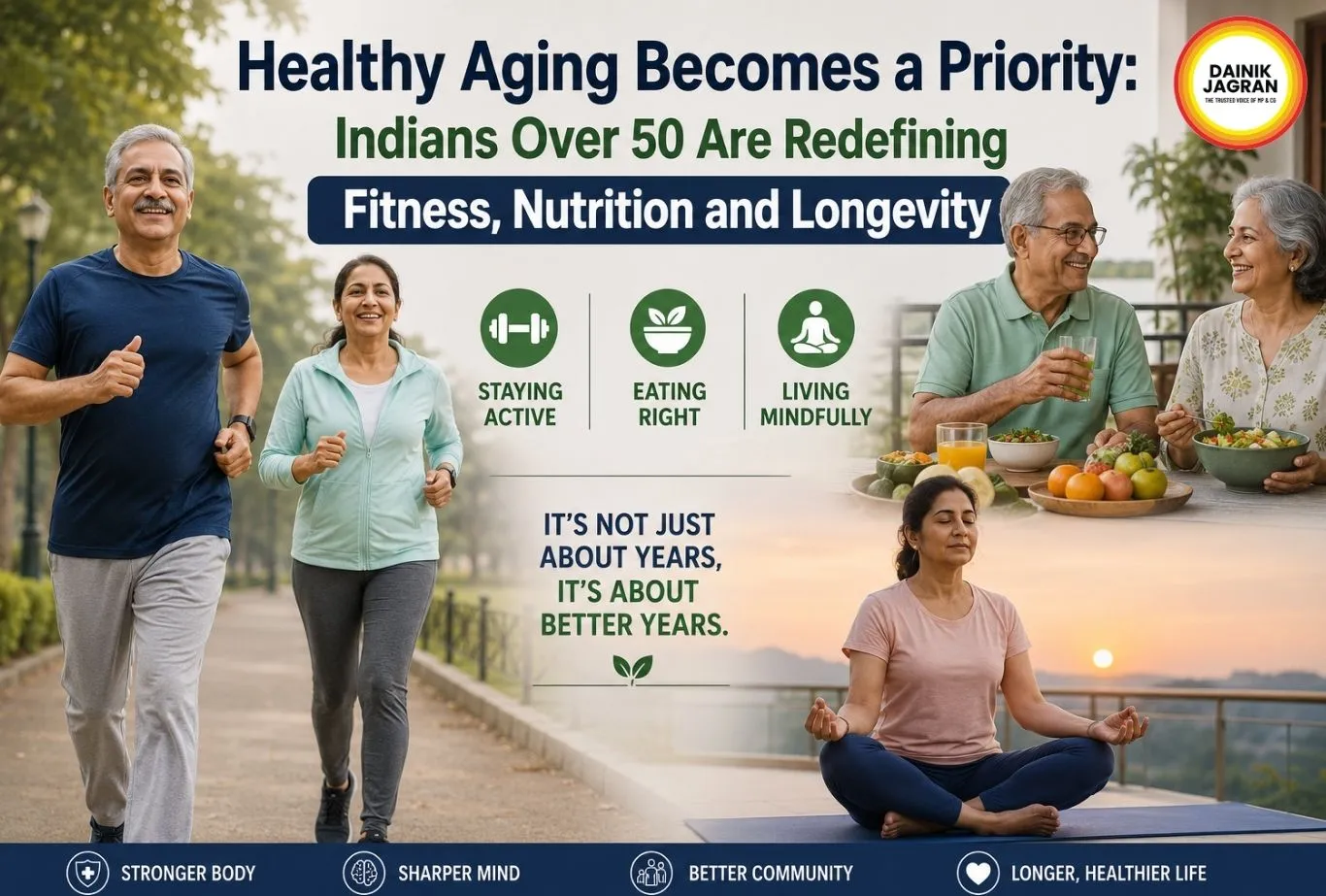
Healthy Aging Becomes a Priority: Indians Over 50 Are Redefining Fitness, Nutrition and Longevity

Digital desk

Healthy Aging Becomes a Priority: Indians Over 50 Are Redefining Fitness, Nutrition and Longevity

For decades, turning 50 in India was often associated with slowing down, retirement planning and managing age-related health concerns. That perception is gradually changing.

A growing number of Indians above the age of 50 are embracing fitness routines, preventive healthcare measures and lifestyle changes aimed at maintaining physical and mental well-being well into later years. Health experts say the shift reflects increasing awareness about longevity, quality of life and the importance of staying active as life expectancy continues to rise.

Morning parks across major cities offer a glimpse into this transformation. Walking groups, yoga sessions, cycling clubs and strength-training communities are attracting middle-aged and senior participants who are treating fitness as a long-term investment rather than a short-term goal.

Medical professionals note that preventive healthcare has become one of the biggest drivers behind the trend.

Regular health screenings, annual check-ups and early detection programmes are becoming more common among older adults. Conditions such as diabetes, hypertension, heart disease and osteoporosis are increasingly being monitored before symptoms become severe. Doctors say this proactive approach is helping many individuals maintain healthier lifestyles and reduce long-term medical risks.

Nutrition has also emerged as a major focus area.

Many people in the 50-plus age group are moving away from highly processed foods and adopting balanced diets rich in protein, fibre, fruits and vegetables. Nutritionists report growing interest in personalized meal plans designed to support muscle strength, heart health and metabolic wellness. The emphasis is no longer simply on weight loss but on maintaining energy levels and preserving overall health.

Fitness experts point out that exercise routines have evolved significantly compared to previous generations.

While walking remains popular, strength training has gained attention because of its role in preserving muscle mass and improving mobility. Resistance exercises, stretching routines and functional fitness programmes are increasingly recommended for older adults seeking to maintain independence and reduce injury risks.

The popularity of yoga continues to grow as well.

Many wellness centres report strong participation from individuals over 50 who are using yoga for flexibility, balance, stress management and overall physical conditioning. Experts say the practice has become particularly appealing because it combines physical activity with mindfulness and breathing techniques.

Technology is playing an important role in this lifestyle shift.

Fitness trackers, smartwatches and health-monitoring applications are helping users keep track of daily activity levels, sleep quality and heart-rate data. Older adults who may once have been reluctant to engage with digital tools are increasingly using technology to monitor and improve their health.

Mental wellness has become another important component of healthy aging.

Psychologists note that social engagement, hobbies and continued learning are being recognized as critical factors in maintaining cognitive health. Many retirees are participating in community groups, online learning programmes and recreational activities that keep them mentally active and socially connected.

The trend has also influenced India's wellness and healthcare industries.

Fitness centres, nutrition services, wellness retreats and preventive healthcare providers are expanding programmes specifically designed for middle-aged and senior consumers. The market for healthy aging products and services has grown steadily as demand increases among individuals seeking to remain active later in life.

Experts caution, however, that healthy aging is not defined by a single diet or exercise plan.

Medical professionals stress that individual health conditions, lifestyle factors and personal goals should guide decisions regarding fitness and nutrition. They advise consulting healthcare specialists before making major changes to exercise routines or dietary habits.

The broader cultural shift is perhaps the most significant development.

Many Indians over 50 are rejecting traditional assumptions that aging automatically means physical decline. Instead, they are focusing on maintaining mobility, independence and overall well-being through informed lifestyle choices.

As awareness around preventive healthcare and longevity continues to expand, healthy aging is increasingly being viewed not as a medical challenge but as an ongoing lifestyle commitment. For a growing section of India's population, the years after 50 are becoming less about slowing down and more about staying active, engaged and healthy.


--------

🚨 Beat the News Rush – Join Now!

Get breaking alerts, hot exclusives, and game-changing stories instantly on your phone. No delays, no fluff – just the edge you need. ⚡

Tap to join: 

🟢 WhatsApp Channel: Dainik Jagran MP CG

Crave more?

🅕 Facebook: Dainik Jagran MP CG English

🅧 Twitter (X): Dainik Jagran MP CG

🅘 Instagram: Dainik Jagran MP CG

Share the fire – keep your crew ahead! 🗞️🔥

english.dainikjagranmpcg.com
22 Jul 2026 By Priyanshu.Jha

Healthy Aging Becomes a Priority: Indians Over 50 Are Redefining Fitness, Nutrition and Longevity

Digital desk

A growing number of Indians above the age of 50 are embracing fitness routines, preventive healthcare measures and lifestyle changes aimed at maintaining physical and mental well-being well into later years. Health experts say the shift reflects increasing awareness about longevity, quality of life and the importance of staying active as life expectancy continues to rise.

Morning parks across major cities offer a glimpse into this transformation. Walking groups, yoga sessions, cycling clubs and strength-training communities are attracting middle-aged and senior participants who are treating fitness as a long-term investment rather than a short-term goal.

Medical professionals note that preventive healthcare has become one of the biggest drivers behind the trend.

Regular health screenings, annual check-ups and early detection programmes are becoming more common among older adults. Conditions such as diabetes, hypertension, heart disease and osteoporosis are increasingly being monitored before symptoms become severe. Doctors say this proactive approach is helping many individuals maintain healthier lifestyles and reduce long-term medical risks.

Nutrition has also emerged as a major focus area.

Many people in the 50-plus age group are moving away from highly processed foods and adopting balanced diets rich in protein, fibre, fruits and vegetables. Nutritionists report growing interest in personalized meal plans designed to support muscle strength, heart health and metabolic wellness. The emphasis is no longer simply on weight loss but on maintaining energy levels and preserving overall health.

Fitness experts point out that exercise routines have evolved significantly compared to previous generations.

While walking remains popular, strength training has gained attention because of its role in preserving muscle mass and improving mobility. Resistance exercises, stretching routines and functional fitness programmes are increasingly recommended for older adults seeking to maintain independence and reduce injury risks.

The popularity of yoga continues to grow as well.

Many wellness centres report strong participation from individuals over 50 who are using yoga for flexibility, balance, stress management and overall physical conditioning. Experts say the practice has become particularly appealing because it combines physical activity with mindfulness and breathing techniques.

Technology is playing an important role in this lifestyle shift.

Fitness trackers, smartwatches and health-monitoring applications are helping users keep track of daily activity levels, sleep quality and heart-rate data. Older adults who may once have been reluctant to engage with digital tools are increasingly using technology to monitor and improve their health.

Mental wellness has become another important component of healthy aging.

Psychologists note that social engagement, hobbies and continued learning are being recognized as critical factors in maintaining cognitive health. Many retirees are participating in community groups, online learning programmes and recreational activities that keep them mentally active and socially connected.

The trend has also influenced India's wellness and healthcare industries.

Fitness centres, nutrition services, wellness retreats and preventive healthcare providers are expanding programmes specifically designed for middle-aged and senior consumers. The market for healthy aging products and services has grown steadily as demand increases among individuals seeking to remain active later in life.

Experts caution, however, that healthy aging is not defined by a single diet or exercise plan.

Medical professionals stress that individual health conditions, lifestyle factors and personal goals should guide decisions regarding fitness and nutrition. They advise consulting healthcare specialists before making major changes to exercise routines or dietary habits.

The broader cultural shift is perhaps the most significant development.

Many Indians over 50 are rejecting traditional assumptions that aging automatically means physical decline. Instead, they are focusing on maintaining mobility, independence and overall well-being through informed lifestyle choices.

As awareness around preventive healthcare and longevity continues to expand, healthy aging is increasingly being viewed not as a medical challenge but as an ongoing lifestyle commitment. For a growing section of India's population, the years after 50 are becoming less about slowing down and more about staying active, engaged and healthy.

https://english.dainikjagranmpcg.com/life-style/healthy-aging-becomes-a-priority-indians-over-50-are-redefining/article-23137

Trending News