The Chinese Tradition Where an Embroidered Ball Could Signal Love: Did Catching It Really Mean You Would Marry?
Digital desk
An unusual Chinese tradition involving an embroidered ball has recently attracted attention online, with viral posts claiming that women once threw decorated balls from balconies and married whichever man caught them. While the tradition did involve young women throwing embroidered balls to express romantic interest, the reality was far more nuanced than the popular “whoever catches it becomes the groom” version.
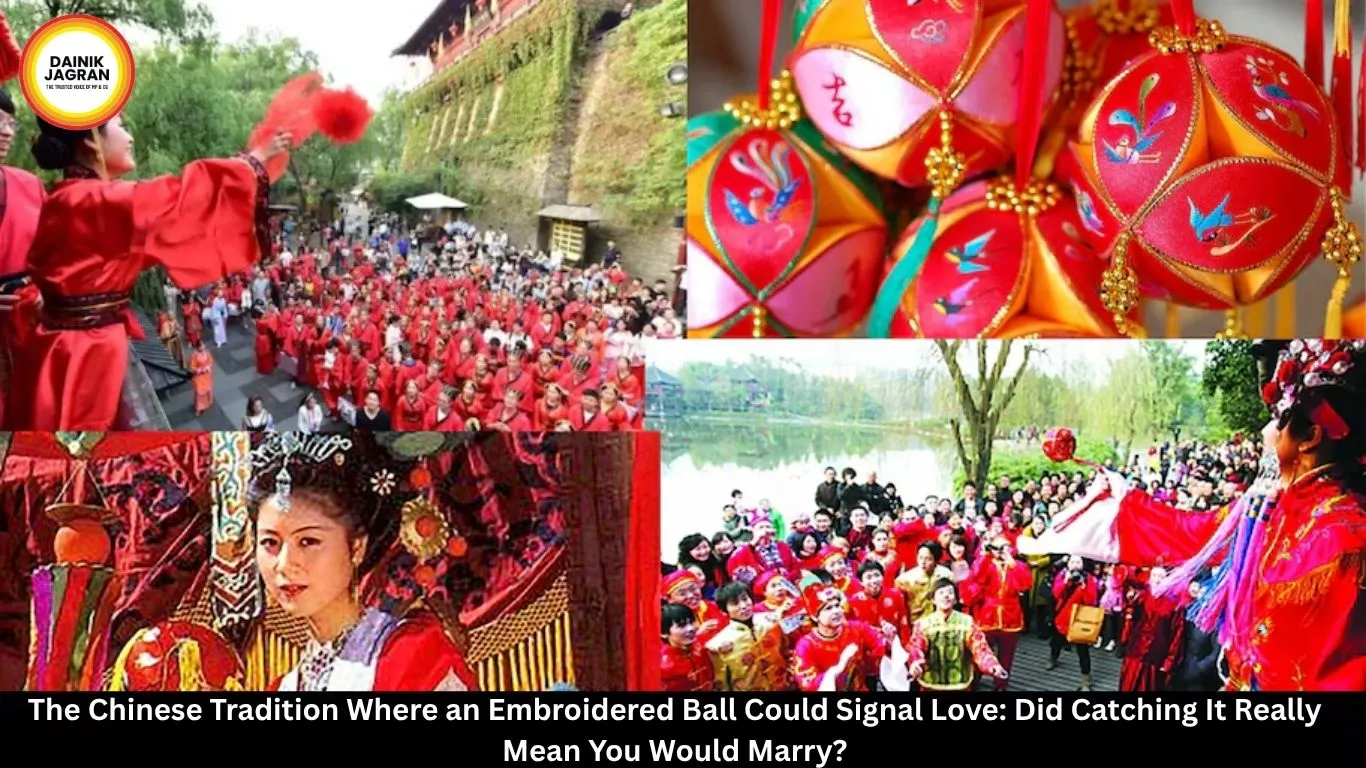
The custom is associated mainly with the Zhuang community of southern China, particularly the Guangxi region, where the embroidered ball, known as “Xiu Qiu,” traditionally served as a symbol of affection and romantic interest.
A Traditional Symbol of Love
According to historical accounts cited by the South China Morning Post, young men and women in Zhuang communities traditionally gathered during cultural celebrations involving folk songs, dances and social activities.
If a young woman liked a particular man, she could throw an embroidered ball in his direction as a way of expressing her feelings. In some cases, the man could return the ball, which could also be interpreted as a sign of interest.
This means the tradition was not simply a random marriage lottery in which an unknown man became a woman's husband merely by catching the ball.
Linked to a Traditional Festival
The custom has been associated with the third day of the third month of the lunar calendar, an important traditional occasion among the Zhuang people.
The festival provided an opportunity for young men and women to meet, participate in traditional activities and communicate their romantic preferences.
Folk songs and performances formed an important part of these gatherings. The embroidered ball became another way for young people to communicate their feelings in a society where family and social considerations often played a major role in marriage arrangements.
How Were the Balls Made?
The embroidered balls were considerably different from modern toy balls.
They were traditionally handmade using pieces of cloth stitched together and filled with materials such as seeds or rice husks to give them shape. The exterior was decorated with colourful embroidery featuring flowers, birds and other traditional designs.
Bright colours, ribbons and tassels were also commonly used.
Because the balls required considerable craftsmanship, they were not merely romantic objects. They also reflected the artistic skills and cultural traditions of the women who made them.
How Movies Made the Story More Dramatic
The popular image of a woman standing on a balcony and throwing a ball to determine her future husband has been reinforced by Chinese literature, folklore and period television dramas.
Stories involving embroidered balls have appeared in Chinese cultural narratives, where the object became associated with romance, marriage and fate.
Television and films subsequently made the tradition more dramatic, helping create the now-familiar image of a woman throwing a ball and allowing fate to determine her husband.
That cinematic version, however, should not be treated as a universal description of historical marriage customs in China.
Marriage Was More Complicated
Historical marriages in China were generally influenced by families, social status, economic circumstances and community relationships. Individual romantic choice was only one factor in many cases.
Against that background, an embroidered ball could provide a symbolic way for a young woman to communicate her personal preference.
The gesture could therefore represent a woman's interest in a particular man without automatically deciding the marriage.
The Tradition Still Has Cultural Significance
Modern Chinese society has changed significantly, and catching an embroidered ball is obviously not a formal method of choosing a spouse today.
However, the tradition remains part of the cultural heritage associated with the Zhuang community. Embroidered balls continue to appear at cultural events and festivals, helping preserve traditional craftsmanship and introduce younger generations to the community's history.
So, Did the Person Who Caught the Ball Become the Husband?
Not necessarily.
The idea that a woman simply threw a ball from a balcony and was required to marry whoever happened to catch it is largely an oversimplified, cinematic version of the tradition.
Historically, the embroidered ball was more closely connected with love, attraction and expressing a romantic preference. A woman could deliberately throw the ball toward a young man she liked, turning the gesture into a traditional form of communication.
So, while the viral story makes for a memorable romantic scene, the real tradition was less about random fate and more about love, choice, craftsmanship and cultural expression.

The Chinese Tradition Where an Embroidered Ball Could Signal Love: Did Catching It Really Mean You Would Marry?
Digital desk
The custom is associated mainly with the Zhuang community of southern China, particularly the Guangxi region, where the embroidered ball, known as “Xiu Qiu,” traditionally served as a symbol of affection and romantic interest.
A Traditional Symbol of Love
According to historical accounts cited by the South China Morning Post, young men and women in Zhuang communities traditionally gathered during cultural celebrations involving folk songs, dances and social activities.
If a young woman liked a particular man, she could throw an embroidered ball in his direction as a way of expressing her feelings. In some cases, the man could return the ball, which could also be interpreted as a sign of interest.
This means the tradition was not simply a random marriage lottery in which an unknown man became a woman's husband merely by catching the ball.
Linked to a Traditional Festival
The custom has been associated with the third day of the third month of the lunar calendar, an important traditional occasion among the Zhuang people.
The festival provided an opportunity for young men and women to meet, participate in traditional activities and communicate their romantic preferences.
Folk songs and performances formed an important part of these gatherings. The embroidered ball became another way for young people to communicate their feelings in a society where family and social considerations often played a major role in marriage arrangements.
How Were the Balls Made?
The embroidered balls were considerably different from modern toy balls.
They were traditionally handmade using pieces of cloth stitched together and filled with materials such as seeds or rice husks to give them shape. The exterior was decorated with colourful embroidery featuring flowers, birds and other traditional designs.
Bright colours, ribbons and tassels were also commonly used.
Because the balls required considerable craftsmanship, they were not merely romantic objects. They also reflected the artistic skills and cultural traditions of the women who made them.
How Movies Made the Story More Dramatic
The popular image of a woman standing on a balcony and throwing a ball to determine her future husband has been reinforced by Chinese literature, folklore and period television dramas.
Stories involving embroidered balls have appeared in Chinese cultural narratives, where the object became associated with romance, marriage and fate.
Television and films subsequently made the tradition more dramatic, helping create the now-familiar image of a woman throwing a ball and allowing fate to determine her husband.
That cinematic version, however, should not be treated as a universal description of historical marriage customs in China.
Marriage Was More Complicated
Historical marriages in China were generally influenced by families, social status, economic circumstances and community relationships. Individual romantic choice was only one factor in many cases.
Against that background, an embroidered ball could provide a symbolic way for a young woman to communicate her personal preference.
The gesture could therefore represent a woman's interest in a particular man without automatically deciding the marriage.
The Tradition Still Has Cultural Significance
Modern Chinese society has changed significantly, and catching an embroidered ball is obviously not a formal method of choosing a spouse today.
However, the tradition remains part of the cultural heritage associated with the Zhuang community. Embroidered balls continue to appear at cultural events and festivals, helping preserve traditional craftsmanship and introduce younger generations to the community's history.
So, Did the Person Who Caught the Ball Become the Husband?
Not necessarily.
The idea that a woman simply threw a ball from a balcony and was required to marry whoever happened to catch it is largely an oversimplified, cinematic version of the tradition.
Historically, the embroidered ball was more closely connected with love, attraction and expressing a romantic preference. A woman could deliberately throw the ball toward a young man she liked, turning the gesture into a traditional form of communication.
So, while the viral story makes for a memorable romantic scene, the real tradition was less about random fate and more about love, choice, craftsmanship and cultural expression.

Recommended For You
--------
🚨 Beat the News Rush – Join Now!
Get breaking alerts, hot exclusives, and game-changing stories instantly on your phone. No delays, no fluff – just the edge you need. ⚡
Tap to join:
🟢 WhatsApp Channel: Dainik Jagran MP CG
Crave more?
🅕 Facebook: Dainik Jagran MP CG English
🅧 Twitter (X): Dainik Jagran MP CG
🅘 Instagram: Dainik Jagran MP CG
Share the fire – keep your crew ahead! 🗞️🔥