


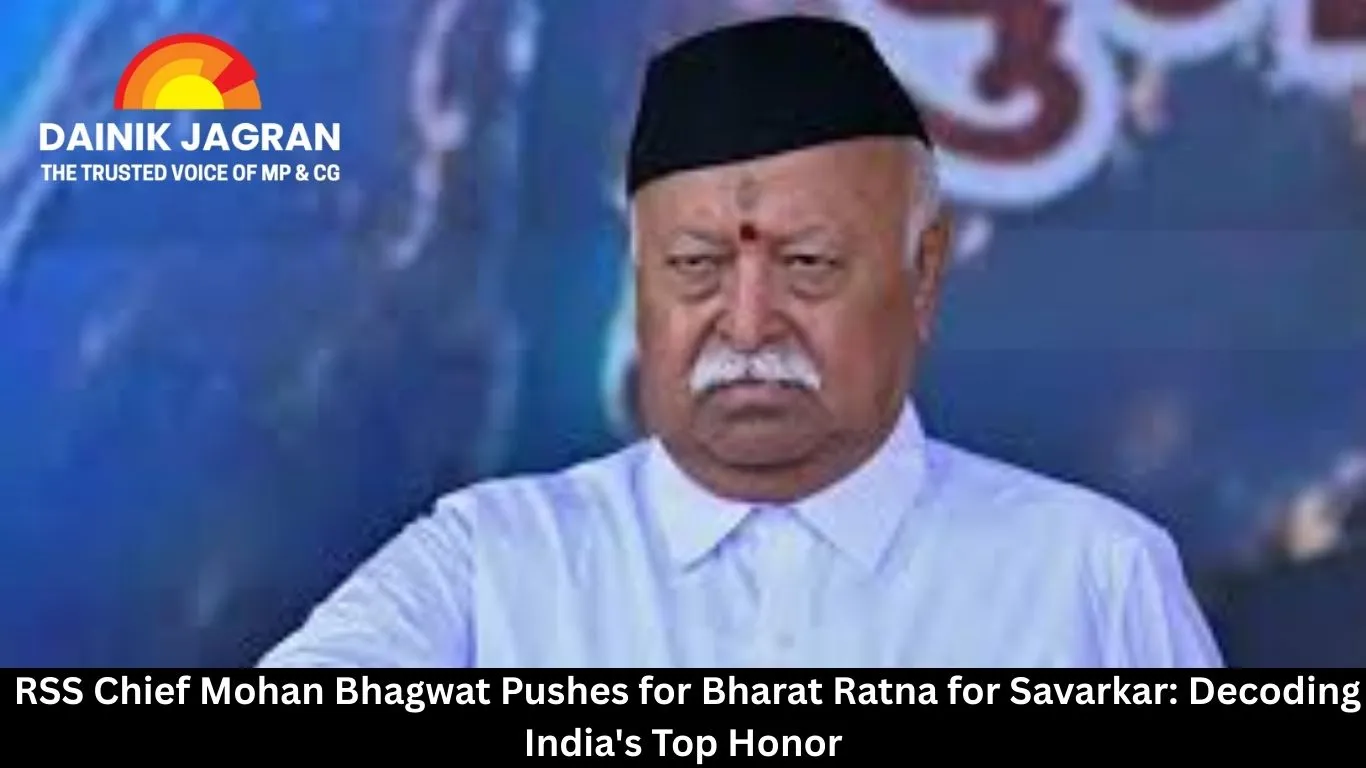
RSS Chief Mohan Bhagwat Pushes for Bharat Ratna for Savarkar: Decoding India's Top Honor
Digital Desk
In a stirring appeal at an RSS event in Mumbai on February 9, 2026, RSS Chief Mohan Bhagwat advocated for Bharat Ratna for Savarkar, India's highest civilian award. "If Swatantra Veer Savarkar is awarded the Bharat Ratna, the prestige of the honour will only increase," Bhagwat stated, emphasizing Savarkar's enduring influence on millions. This call reignites debates on national honors amid ongoing political tensions between ideological groups like RSS and opposition parties.
As India grapples with cultural identity in a polarized era, Bhagwat's push for Bharat Ratna for Savarkar underscores Hindutva's role in modern discourse. With elections looming and heritage discussions heating up, this timely demand prompts reflection on who deserves recognition for shaping the nation.
Who Was Veer Savarkar?
Vinayak Damodar Savarkar (1883–1966), known as Veer Savarkar, was a pivotal freedom fighter from Maharashtra. Born into a Chitpavan Brahmin family, he championed armed resistance against British rule, enduring harsh imprisonment in the Andaman Cellular Jail.
Savarkar later led the Hindu Mahasabha and coined "Hindutva," envisioning India as a Hindu nation. A prolific writer, he authored books like Hindutva: Who Is a Hindu? His legacy divides opinions: admirers praise his nationalism, while critics, including Congress leaders, decry his mercy petitions and ideology.
Historian Vikram Sampath notes Savarkar's non-vegetarian habits and pragmatic views on cow protection, seeing it as a cultural symbol rather than sacred. Savarkar clashed with Gandhi on non-violence, citing the Bhagavad Gita to justify force in duty.
Savarkar's Ties to RSS: Fact vs. Myth
Contrary to popular belief, Veer Savarkar wasn't an RSS member or founder. The RSS, established in 1925 by K.B. Hedgewar, drew indirect inspiration from Savarkar's 1923 book on Hindutva. His brother Ganesh was an early associate, but tensions arose under M.S. Golwalkar.
Sampath highlights Savarkar's quip mocking RSS workers' lives as routine-bound. Despite differences, Bhagwat's endorsement bridges this gap, signaling RSS's evolving narrative on nationalist icons.
Controversies in Bharat Ratna History
The Bharat Ratna for Savarkar isn't the first debated award. Past recipients sparked outcry:
- K. Kamaraj (1976): Posthumous honor criticized as election ploy.
- M.G. Ramachandran (1988): Accused of vote-bank politics.
- B.R. Ambedkar (1990): Seen as Dalit outreach.
- Subhas Chandra Bose (1992): Family rejection over unconfirmed death.
- Sachin Tendulkar (2013): Timing questioned amid his Rajya Sabha role.
These cases show awards often fuel political storms, as with potential Bharat Ratna for Savarkar.
Bharat Ratna Criteria: Who Decides?
Instituted in 1954, the Bharat Ratna recognizes exceptional service in any field. Eligibility is open to all, with no formal nominations needed. The Prime Minister recommends to the President, limited to three annually.
Recipients get a certificate, medallion, and perks like state guest status, diplomatic passport, free Air India executive travel, and 7A precedence ranking.
Bhagwat quipped he'd urge committee members if possible, but decisions rest with top leadership.
Why This Matters Now: Takeaways for Readers
In 2026's cultural climate, Mohan Bhagwat's call for Bharat Ratna for Savarkar amplifies Hindutva debates. It challenges readers to assess historical figures beyond partisanship. Expert Sampath urges nuanced views: "Savarkar's ideas shaped India, but context is key."
Practical takeaway: Engage in civic discourse—read Savarkar's works, attend heritage events, or petition leaders on awards. As India evolves, such honors reflect our collective memory. Will Savarkar join the ranks? The debate continues, enriching national dialogue.
.jpg)

.jpg)




