


Maharashtra Deputy CM Ajit Pawar Killed in Baramati Plane Crash: Investigation Underway, Political Future in Question
Digital Desk
Maharashtra Deputy CM Ajit Pawar Killed in Baramati Plane Crash: Investigation Underway, Political Future in Question
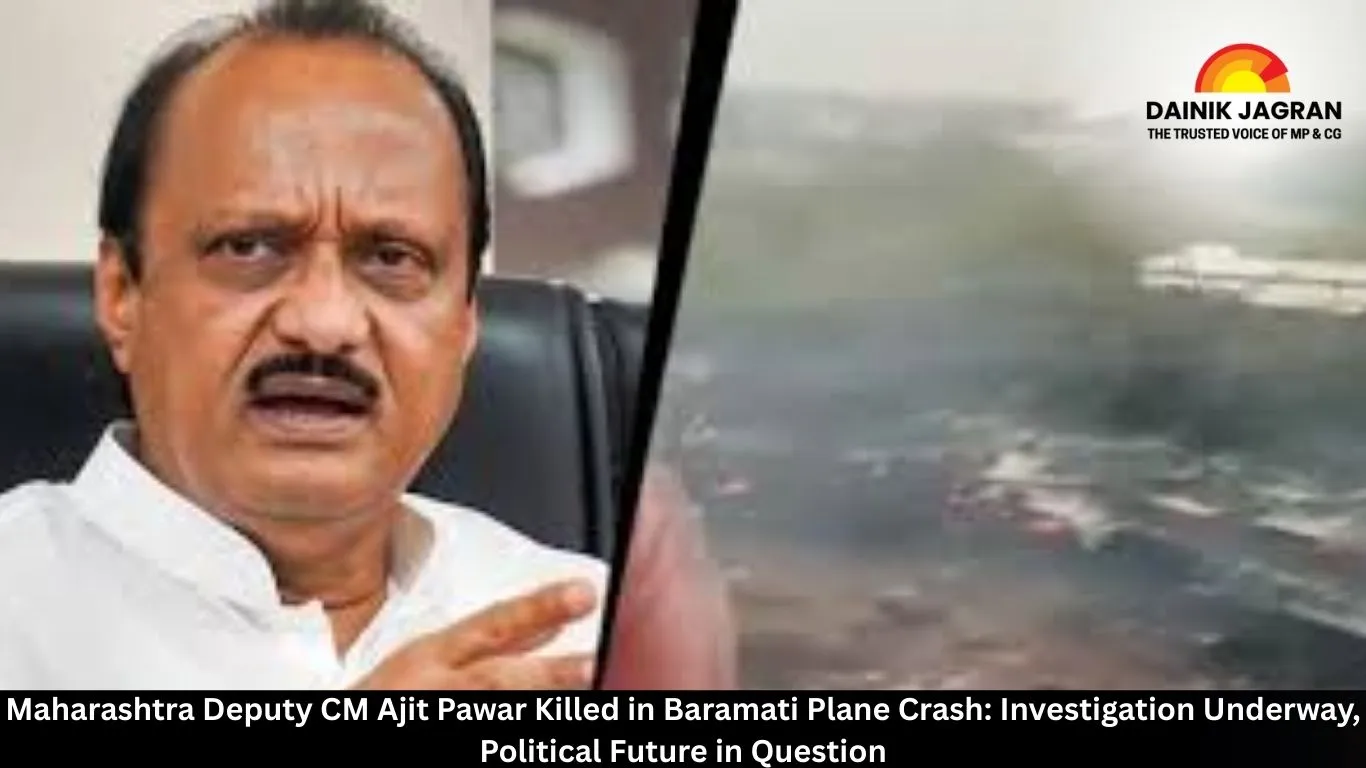
In a tragic incident that has sent shockwaves across Maharashtra and national politics, Deputy Chief Minister Ajit Pawar was killed in a plane crash near Baramati on Wednesday morning. The crash also claimed the lives of four others, including two crew members and Pawar’s staff. The aircraft, a Learjet 45, was traveling from Mumbai to Baramati when it crashed during landing, erupting into flames shortly after impact.
Prime Minister Narendra Modi led the nation in mourning, expressing his condolences on social media. He described Pawar as a “grassroots leader” with a deep connection to the people and a passion for empowering the poor. The sudden loss has not only left a void in Maharashtra’s political landscape but also raised urgent questions about aviation safety and coalition stability.
Investigation Underway: What Caused the Crash?
The Directorate General of Civil Aviation (DGCA) has launched a formal investigation into the Baramati plane crash. Early reports suggest the aircraft veered off the runway during landing, crashing into the grassy side area known as the “soldier” zone. Despite clear weather conditions at the time, the plane burst into flames immediately upon impact, leaving no survivors.
Officials are examining multiple factors, including:
· Possible mechanical or technical failure
· Flight data and voice recordings from the black box
· Pilot communication and landing procedures
· Maintenance history of the Learjet 45 aircraft
While speculation points to a critical phase failure during landing—a common cause in aviation accidents—the DGCA has urged patience, noting that a detailed report may take weeks or months.
Political Ramifications: A Major Blow to NCP and Maharashtra Government
Ajit Pawar was not only a seasoned administrator but also a key figure in the Nationalist Congress Party (NCP). His influence extended across Maharashtra, particularly in the Baramati region, a Pawar family stronghold. The crash comes at a politically sensitive time, with local elections underway in parts of the state.
Pawar’s death creates an immediate vacuum in the state’s ruling Mahayuti coalition, which includes the BJP, Shiv Sena, and NCP. As Deputy Chief Minister, he handled critical portfolios like finance and planning, and his absence may challenge the stability of the government.
The NCP, already fractured after a split between Ajit Pawar and his uncle Sharad Pawar last year, now faces an uncertain future. The party’s symbol and legacy remain contentious, and Pawar’s death could trigger a fresh struggle for leadership within its ranks.
A Legacy Cut Short: Who Was Ajit Pawar?
Born in 1959, Ajit Pawar was one of Maharashtra’s most experienced politicians. He served as Deputy Chief Minister across multiple terms and was known for his sharp administrative acumen, particularly in state finance. He presented Maharashtra’s budget multiple times and was considered a master strategist in coalition politics.
Beyond politics, Pawar was widely recognized for his development work in rural Maharashtra, especially in water management and agricultural projects. His close ties with grassroots workers made him a formidable force in state politics for decades.
Questions Linger: Safety, Succession, and Stability
As rescue teams recover the remains and investigators piece together the wreckage, larger questions loom. Aviation safety in India’s regional travel network is back under scrutiny, especially involving private charters like the one involved in this crash.
Politically, all eyes are on the Mahayuti coalition. While Chief Minister Eknath Shinde and Deputy CM Devendra Fadnavis have assured continuity, the loss of a leader of Pawar’s stature is undeniable. The coming days will likely see hurried negotiations, portfolio reshuffles, and behind-the-scenes maneuvering to fill the gap.
For now, Maharashtra mourns. Condolences have poured in from across party lines, reflecting Pawar’s widespread respect. But as the smoke clears, the hard questions—about safety, succession, and stability—will demand answers.
Opinion: The Ajit Pawar Tragedy – A Political Shockwave That Will Reshape Maharashtra
The untimely death of Ajit Pawar is more than a personal tragedy—it is a political earthquake whose aftershocks will be felt across Maharashtra for years to come. In one fiery moment, the state lost not just a deputy chief minister, but a master negotiator, a seasoned administrator, and the de facto guardian of the NCP’s dwindling unity.
Pawar’s career was a lesson in realpolitik. He could switch allies, navigate coalitions, and hold budgets together with a cool, calculative demeanor. In a state where politics is often driven by emotion, he was a strategist. That is why his absence creates a vacuum no one in the ruling coalition can easily fill.
The Mahayuti government, already a patchwork of conflicting interests, has lost its key balancing force. Pawar was the bridge between the BJP’s centralizing impulses and the regional aspirations of his NCP faction. Without him, the coalition may drift into instability, especially with local elections ongoing and a fractured opposition looking for openings.
Then there is the NCP itself. Last year’s split between uncle Sharad and nephew Ajit was dramatic, but it was Ajit who walked away with the party symbol and a sizable cadre. His death leaves his faction leaderless and could prompt a return to the Sharad Pawar camp—or trigger a new splintering. Either way, the NCP as we knew it may be gone for good.
But beyond the political calculus, there is a human story here. A leader who, for all his shrewdness, remained deeply connected to his Baramati roots. A man who believed in development, not just rhetoric. That legacy deserves recognition, even from his critics.
In the end, this crash is a grim reminder of how fragile power really is. One moment, you are a deputy chief minister en route to an election meeting; the next, you are a headline. As Maharashtra picks up the pieces, it must also ask: in the rush for power, are we forgetting the values of service? Ajit Pawar, for all his contradictions, never did.




.jpg)




