


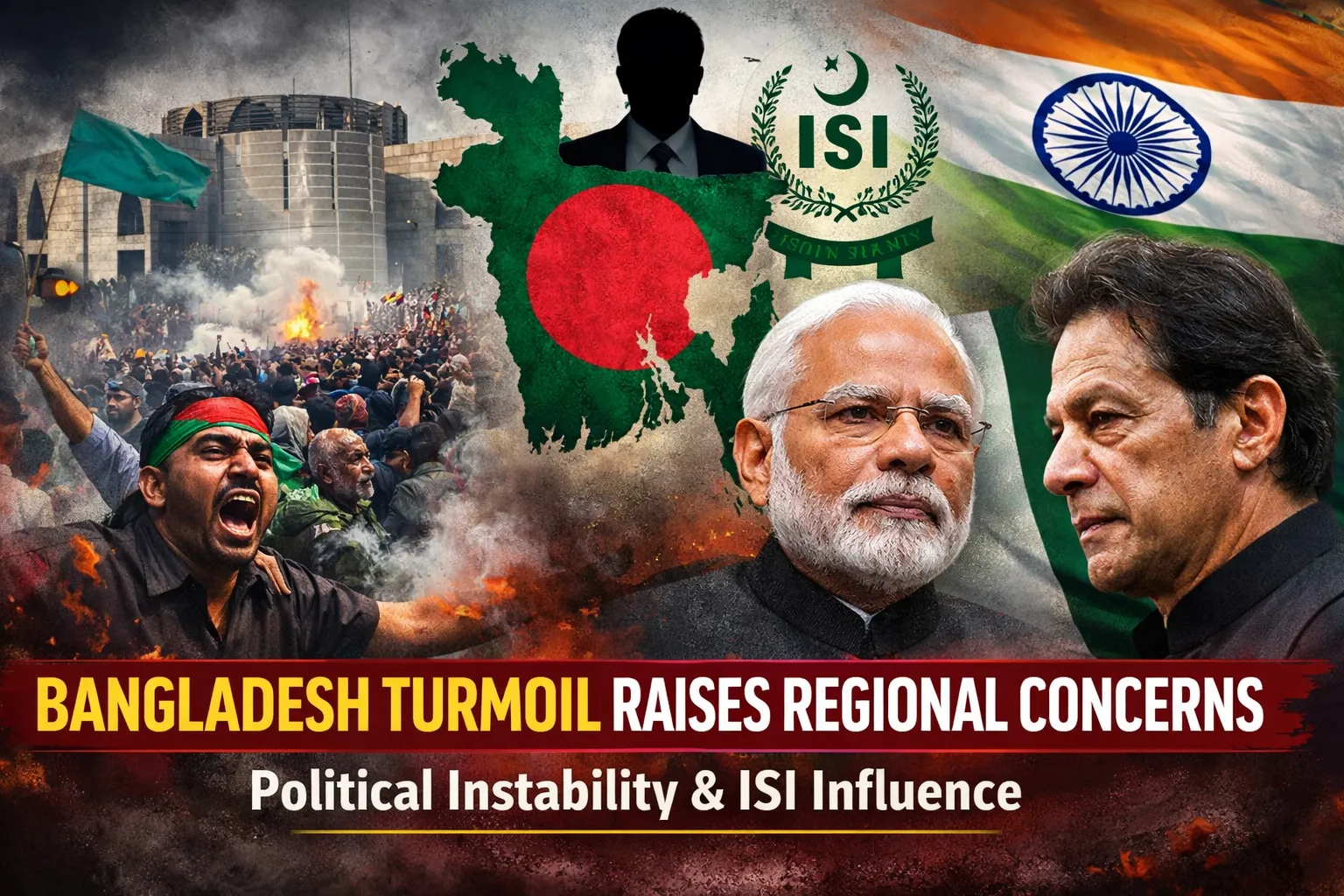
Bangladesh Turmoil Rekindles Regional Strategic Concerns Amid Alleged ISI Influence
Digital Desk
The recent crisis began after the collapse of Sheikh Hasina’s government in 2024, triggered by widespread protests over economic distress and governance issues. An interim administration under Muhammad Yunus assumed power, promising reforms. However, lingering questions about legitimacy, administrative control, and fiscal management have exposed structural weaknesses in Bangladesh’s institutions, raising concerns about long-term stability.
Security sources allege that the turmoil has been exacerbated by proxy activity linked to Pakistan’s Inter-Services Intelligence (ISI). Referred to in intelligence circles as the “Dhaka Cell,” this network is said to operate under diplomatic cover, fund activities through narcotics and counterfeit currency, and strengthen Islamist-aligned political forces, notably Jamaat-e-Islami. The alleged involvement of foreign actors has prompted New Delhi to monitor developments closely, given the potential impact on bilateral ties and regional security.
The situation is further complicated by pressure on Bangladesh’s independent media. Leading outlets such as Prothom Alo and The Daily Star reportedly face intimidation, while online campaigns accuse journalists and civil society members of acting as “Indian agents.” Analysts suggest these narratives may be designed to strain India-Bangladesh relations while extending Pakistan’s strategic reach in Dhaka.
Since independence, Dhaka has remained the country’s political, economic, and cultural hub, hosting universities, media institutions, and civil society organizations that largely upheld a secular democratic ethos. Yet, persistent tensions over governance, identity, and political power have periodically undermined stability. Observers caution that the current unrest is not a sudden breakdown, but a gradual erosion of institutional resilience with the potential to shift South Asia’s geopolitical equilibrium.
Experts note that while domestic unrest is the immediate concern, the convergence of political instability, alleged ISI activity, and shrinking democratic space signals a slow but significant destabilization of regional balance. They warn that monitoring, diplomatic engagement, and strategic preparedness will be critical for India and other neighboring states.
.jpg)




