


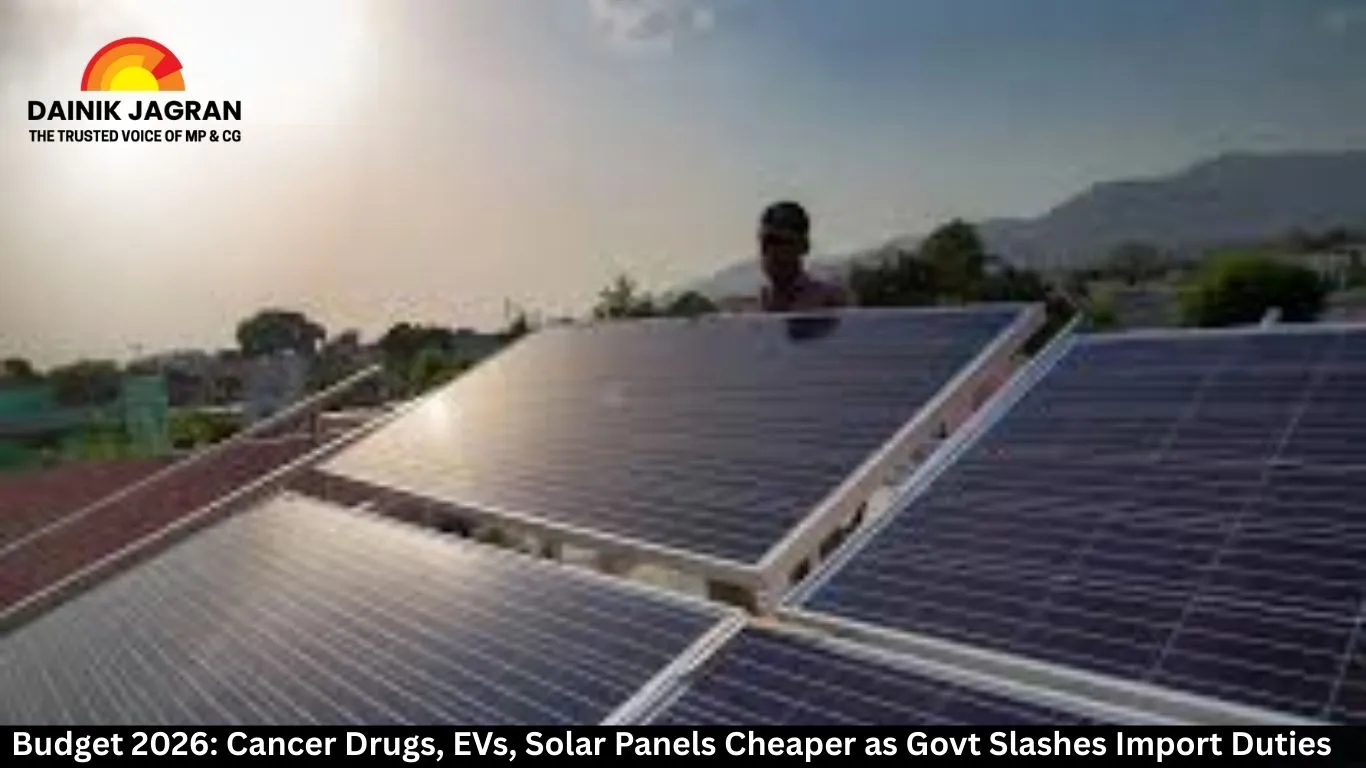
Budget 2026: Cancer Drugs, EVs, Solar Panels Cheaper as Govt Slashes Import Duties
Digital Desk
Budget 2026 Delivers Major Duty Cuts: Lifesaving Drugs, Green Tech, and Personal Imports to Get Cheaper
In a move aimed at providing significant relief to households and boosting key industries, the government has announced sweeping cuts to import duties in the latest Union Budget. The changes, effective soon, will make several essential and high-demand goods—from lifesaving cancer medicines to electric vehicle batteries—more affordable for Indian consumers.
The budget focuses heavily on reducing the cost of critical healthcare, promoting domestic manufacturing in electronics and green energy, and simplifying tax structures for personal imports and exports.
Healthcare Relief: Critical Cancer, Rare Disease Drugs Get Duty-Free Status
In a major decision, basic customs duty has been removed on 17 drugs used in cancer treatment. This move is expected to substantially reduce the financial burden on families dependent on expensive imported medicines. Additionally, medicines and special foods required for treating 7 rare diseases have also been granted tax-free import status. This policy shift directly addresses the soaring cost of specialized healthcare in the country.
Green Energy Push: EV Batteries and Solar Panels to See Price Drop
Aligning with India’s energy transition goals, the budget offers incentives for green technology manufacturing. The scope of tax exemptions on machinery for producing lithium-ion batteries has been expanded. Now, raw materials for battery energy storage systems will also be duty-free. Simultaneously, the duty on ‘sodium antimonate’, a key component in manufacturing solar glass, has been scrapped. These steps are likely to reduce the production cost of EV batteries and solar panels, making electric vehicles and solar power more accessible.
Boosting ‘Make in India’ & Exports: Electronics, Footwear, Textiles Get a Lift
To strengthen domestic manufacturing, the budget has reduced duties on specific components used in making microwave ovens, which could lead to cheaper prices. For export-oriented sectors like marine products, leather, and textiles, several measures have been introduced. The duty-free input limit for seafood exports has been raised, and tax exemptions extended to leather and synthetic shoe exports. The period for preparing export goods has also been doubled, providing flexibility to manufacturers.
Travel and Personal Imports: Lighter Tax Burden for Citizens
There’s good news for air travelers and those who order goods from abroad. To promote civil aviation, customs duty on parts for aircraft manufacturing and maintenance has been removed, which could eventually influence operational costs. For individuals, the tax rate on imported goods for personal use has been halved from 20% to 10%. Procedures for baggage clearance have been simplified, and the free allowance limit increased, easing the process for international travelers.
A Key Clarification: GST Unchanged by Budget
It’s crucial to note that the budget does not alter GST slabs, as any change requires a separate GST Council decision. The current two-tier GST structure (5% and 18%) implemented in September 2025 remains unaffected. The budget adjustments are specifically to customs duties on imports.
When Will Prices Actually Drop?
Experts caution that the price changes will not be immediate. “The duty cuts apply to new stock, not existing inventory. The trickle-down effect to consumers may take weeks or months, and final pricing remains at the discretion of companies,” explains a market analyst. While the intent is to reduce prices, global market fluctuations and corporate pricing strategies will ultimately determine the on-ground impact.
Conclusion: A Budget Focused on Affordability and Manufacturing
This year’s customs duty revisions signal a clear push towards making critical healthcare and sustainable technology more affordable while bolstering India’s manufacturing and export capabilities. For the common citizen, the promise of cheaper medical treatment, green energy solutions, and personal imports marks a forward-looking, consumer-centric approach in the budget’s fiscal planning.
.jpg)




