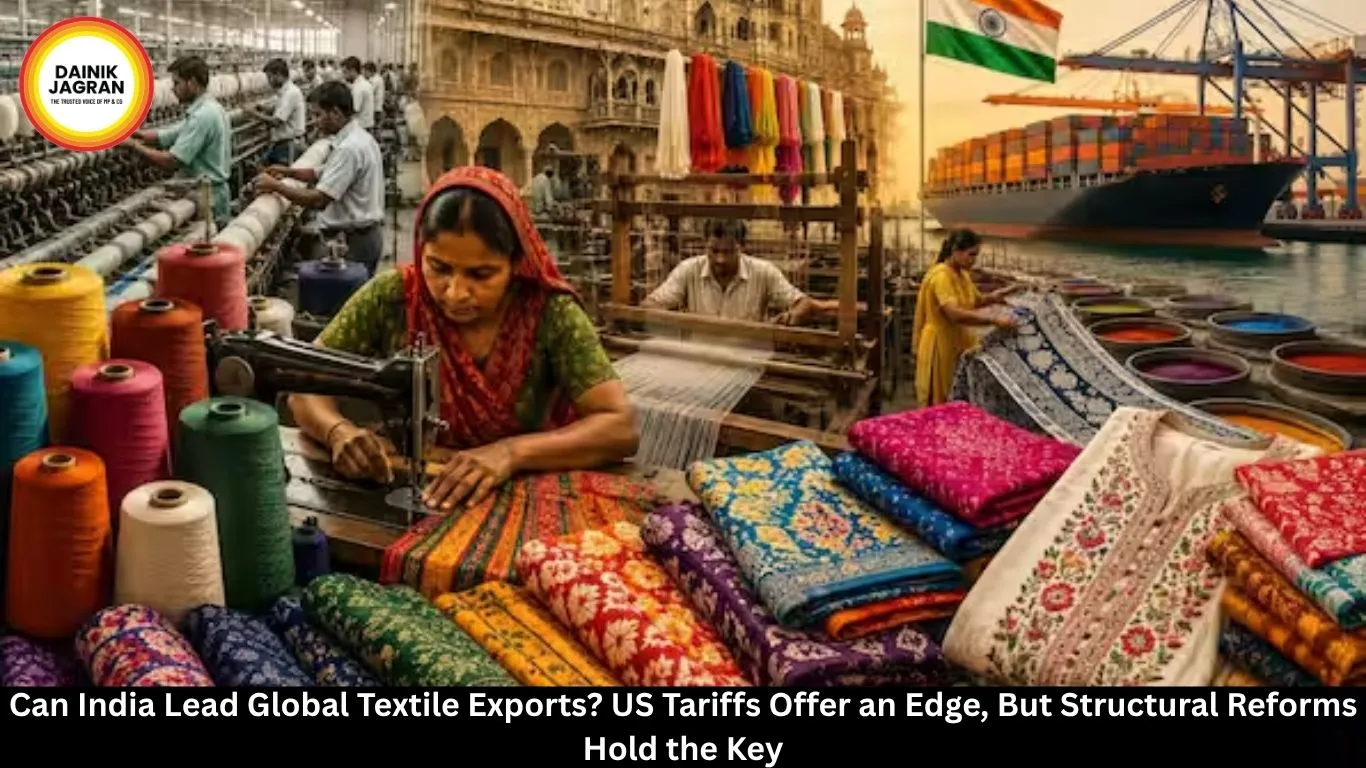
Can India Lead Global Textile Exports? US Tariff Advantage Offers Opportunity, Experts Say
Digital Desk
India gains a pricing edge after revised US textile tariffs, but experts say structural reforms, synthetic textiles, integrated manufacturing and global compliance will determine long-term export success.
India's textile and apparel industry has received a potential boost after the United States announced a revised tariff structure that places Indian exports under a 10% duty while key competitor Vietnam faces a 12.5% tariff. The change has sparked optimism among exporters, who see a rare pricing advantage in one of the world's largest apparel markets. However, industry leaders and trade experts caution that tariff benefits alone will not be enough for India to emerge as a global textile export leader.
For years, Vietnam has steadily expanded its dominance in global apparel exports through strong manufacturing ecosystems, integrated supply chains and multiple free trade agreements (FTAs). India's comparatively lower US tariff is expected to improve its competitiveness, but experts believe global sourcing decisions depend on much more than a marginal duty difference.
India Gains a Pricing Advantage
The latest US tariff revision places India in the lowest tariff bracket alongside Bangladesh, Indonesia, Cambodia and Malaysia. According to industry representatives, this gives Indian exporters a relatively level playing field against several Asian competitors while placing them in a better position than Vietnam and China.
However, concerns remain over the possible introduction of tariff-rate quotas (TRQs) for countries such as Bangladesh, Cambodia, Indonesia and Malaysia. If implemented, these quotas could allow specified export volumes to enter the US at even lower tariff rates, reducing India's current advantage.
Industry experts note that while the revised tariff structure is encouraging, it should be viewed as an opportunity to strengthen India's position rather than as a guaranteed shift in global sourcing patterns.
Vietnam's Manufacturing Strength Remains Intact
Despite the tariff differential, Vietnam continues to enjoy significant structural advantages. It is the world's second-largest apparel exporter after China and serves as a major manufacturing base for leading international brands including Nike, Adidas, Puma, Gap, Under Armour and Lululemon.
Vietnam's strength lies in its integrated industrial clusters, efficient logistics, extensive free trade agreements and strong presence in synthetic and performance textiles. Experts believe these long-established supply chains cannot be relocated simply because of a 2.5 percentage-point tariff difference.
Existing investments are expected to remain in Vietnam, although future investments could increasingly consider India if the country addresses long-standing manufacturing challenges.
Structural Issues Continue to Hold India Back
Despite having one of the world's most comprehensive textile value chains—from cotton cultivation to garment manufacturing—India has struggled to match the export growth achieved by Vietnam and Bangladesh.
Former policymakers point out that India's production ecosystem remains highly fragmented. Cotton production, spinning, weaving, processing and garment manufacturing are spread across different regions, resulting in higher logistics costs, longer delivery timelines and lower manufacturing efficiency.
To address these challenges, the government has launched the PM MITRA Mega Textile Parks initiative, which aims to establish integrated textile manufacturing hubs where the complete value chain operates within a single ecosystem.
Industry experts believe these integrated parks could significantly improve productivity, reduce transportation costs and enhance India's competitiveness in global markets.
Shift Towards Synthetic Textiles Needed
Trade analysts argue that India's export strategy has remained heavily dependent on cotton products while global demand has increasingly shifted towards synthetic fabrics, sportswear and performance textiles.
Today, nearly two-thirds of global garment trade consists of synthetic and blended fabrics. In contrast, nearly two-thirds of India's apparel exports continue to be cotton-based.
Countries like Vietnam and Bangladesh have successfully capitalised on this shift by importing synthetic raw materials and focusing on value-added garment manufacturing. Experts believe India must significantly expand its presence in man-made fibre (MMF) products and technical textiles if it wants to increase its share in global apparel exports.
Compliance Matters More Than Tariffs
Industry leaders emphasise that international buyers increasingly prioritise product quality, timely deliveries, sustainability and regulatory compliance over marginal price differences.
Global brands now assess manufacturers based on environmental standards, green certifications, worker welfare, water consumption, childcare facilities and overall sustainability practices before awarding sourcing contracts.
Experts say Indian manufacturers must invest in cleaner production technologies, internationally recognised certifications and modern factory infrastructure to compete effectively in developed markets.
Europe May Offer Greater Opportunities
While the US tariff revision has generated attention, many exporters believe India's recently concluded trade agreement with the United Kingdom and the proposed India-European Union Free Trade Agreement could create even larger opportunities.
European markets currently impose duties of around 10-12% on apparel imports. Duty reductions under future trade agreements could significantly improve India's competitiveness in Europe and attract fresh investment into the textile sector.
Industry representatives say European buyers have already begun exploring sourcing opportunities in India, although long-term gains will depend on the industry's ability to consistently meet global quality and sustainability standards.
Outlook
The revised US tariff structure provides India with a valuable short-term competitive advantage over some of its major rivals. However, experts agree that sustained export growth will depend less on tariff concessions and more on comprehensive structural reforms.
Expanding integrated textile parks, strengthening synthetic fibre production, improving logistics, adopting global sustainability standards and enhancing manufacturing efficiency will determine whether India can convert its current opportunity into long-term leadership in global textile exports.
--------
๐จ Beat the News Rush โ Join Now!
Get breaking alerts, hot exclusives, and game-changing stories instantly on your phone. No delays, no fluff โ just the edge you need. โก
Tap to join:ย
๐ข WhatsApp Channel: Dainik Jagran MP CG
Crave more?
๐ Facebook: Dainik Jagran MP CG English
๐ ง Twitter (X): Dainik Jagran MP CG
๐ Instagram: Dainik Jagran MP CG
Share the fire โ keep your crew ahead! ๐๏ธ๐ฅ
Can India Lead Global Textile Exports? US Tariff Advantage Offers Opportunity, Experts Say
Digital Desk
India's textile and apparel industry has received a potential boost after the United States announced a revised tariff structure that places Indian exports under a 10% duty while key competitor Vietnam faces a 12.5% tariff. The change has sparked optimism among exporters, who see a rare pricing advantage in one of the world's largest apparel markets. However, industry leaders and trade experts caution that tariff benefits alone will not be enough for India to emerge as a global textile export leader.
For years, Vietnam has steadily expanded its dominance in global apparel exports through strong manufacturing ecosystems, integrated supply chains and multiple free trade agreements (FTAs). India's comparatively lower US tariff is expected to improve its competitiveness, but experts believe global sourcing decisions depend on much more than a marginal duty difference.
India Gains a Pricing Advantage
The latest US tariff revision places India in the lowest tariff bracket alongside Bangladesh, Indonesia, Cambodia and Malaysia. According to industry representatives, this gives Indian exporters a relatively level playing field against several Asian competitors while placing them in a better position than Vietnam and China.
However, concerns remain over the possible introduction of tariff-rate quotas (TRQs) for countries such as Bangladesh, Cambodia, Indonesia and Malaysia. If implemented, these quotas could allow specified export volumes to enter the US at even lower tariff rates, reducing India's current advantage.
Industry experts note that while the revised tariff structure is encouraging, it should be viewed as an opportunity to strengthen India's position rather than as a guaranteed shift in global sourcing patterns.
Vietnam's Manufacturing Strength Remains Intact
Despite the tariff differential, Vietnam continues to enjoy significant structural advantages. It is the world's second-largest apparel exporter after China and serves as a major manufacturing base for leading international brands including Nike, Adidas, Puma, Gap, Under Armour and Lululemon.
Vietnam's strength lies in its integrated industrial clusters, efficient logistics, extensive free trade agreements and strong presence in synthetic and performance textiles. Experts believe these long-established supply chains cannot be relocated simply because of a 2.5 percentage-point tariff difference.
Existing investments are expected to remain in Vietnam, although future investments could increasingly consider India if the country addresses long-standing manufacturing challenges.
Structural Issues Continue to Hold India Back
Despite having one of the world's most comprehensive textile value chains—from cotton cultivation to garment manufacturing—India has struggled to match the export growth achieved by Vietnam and Bangladesh.
Former policymakers point out that India's production ecosystem remains highly fragmented. Cotton production, spinning, weaving, processing and garment manufacturing are spread across different regions, resulting in higher logistics costs, longer delivery timelines and lower manufacturing efficiency.
To address these challenges, the government has launched the PM MITRA Mega Textile Parks initiative, which aims to establish integrated textile manufacturing hubs where the complete value chain operates within a single ecosystem.
Industry experts believe these integrated parks could significantly improve productivity, reduce transportation costs and enhance India's competitiveness in global markets.
Shift Towards Synthetic Textiles Needed
Trade analysts argue that India's export strategy has remained heavily dependent on cotton products while global demand has increasingly shifted towards synthetic fabrics, sportswear and performance textiles.
Today, nearly two-thirds of global garment trade consists of synthetic and blended fabrics. In contrast, nearly two-thirds of India's apparel exports continue to be cotton-based.
Countries like Vietnam and Bangladesh have successfully capitalised on this shift by importing synthetic raw materials and focusing on value-added garment manufacturing. Experts believe India must significantly expand its presence in man-made fibre (MMF) products and technical textiles if it wants to increase its share in global apparel exports.
Compliance Matters More Than Tariffs
Industry leaders emphasise that international buyers increasingly prioritise product quality, timely deliveries, sustainability and regulatory compliance over marginal price differences.
Global brands now assess manufacturers based on environmental standards, green certifications, worker welfare, water consumption, childcare facilities and overall sustainability practices before awarding sourcing contracts.
Experts say Indian manufacturers must invest in cleaner production technologies, internationally recognised certifications and modern factory infrastructure to compete effectively in developed markets.
Europe May Offer Greater Opportunities
While the US tariff revision has generated attention, many exporters believe India's recently concluded trade agreement with the United Kingdom and the proposed India-European Union Free Trade Agreement could create even larger opportunities.
European markets currently impose duties of around 10-12% on apparel imports. Duty reductions under future trade agreements could significantly improve India's competitiveness in Europe and attract fresh investment into the textile sector.
Industry representatives say European buyers have already begun exploring sourcing opportunities in India, although long-term gains will depend on the industry's ability to consistently meet global quality and sustainability standards.
Outlook
The revised US tariff structure provides India with a valuable short-term competitive advantage over some of its major rivals. However, experts agree that sustained export growth will depend less on tariff concessions and more on comprehensive structural reforms.
Expanding integrated textile parks, strengthening synthetic fibre production, improving logistics, adopting global sustainability standards and enhancing manufacturing efficiency will determine whether India can convert its current opportunity into long-term leadership in global textile exports.