


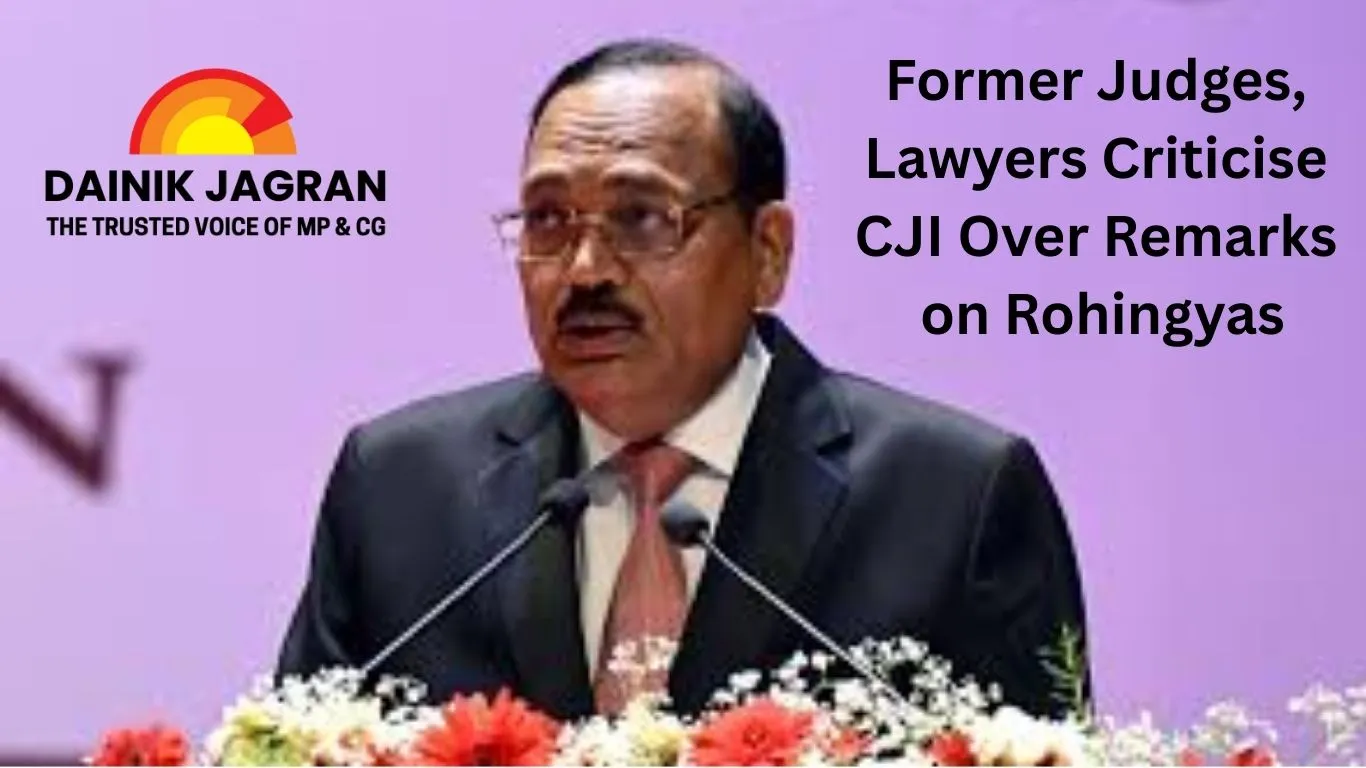
Former Judges, Lawyers Criticise CJI Over Remarks on Rohingyas
Digital Desk
The bench, comprising CJI Surya Kant and Justice Joymalya Bagchi, was hearing a habeas corpus petition when it questioned whether individuals who enter India illegally should be given a “red carpet welcome,” noting that India’s citizens themselves face poverty and deprivation.
In their letter, the former judges and legal experts described the comments as inhumane and inconsistent with constitutional values. The Rohingya, they noted, are among the most persecuted minorities globally and are entitled to protection under Article 21 of the Indian Constitution. The letter emphasised that the words of the CJI carry far-reaching implications, influencing not only public perception but also the functioning of the High Courts, lower judiciary, and government authorities.
“The CJI is not merely a legal officer but the custodian of rights of the marginalized. Such remarks could weaken the moral credibility of the judiciary,” the letter stated.
Background to the case highlights that Rohingyas, an ethnic minority from Myanmar, face longstanding persecution and have been denied citizenship in their home country. Many have fled to neighboring countries, including India, seeking refuge. The International Court of Justice has classified Myanmar’s actions against them as ethnic cleansing and genocide.
In the court proceedings, Solicitor General Tushar Mehta argued that the petition was filed by an activist, not directly affected individuals, questioning their legal standing. The court has now divided all related petitions into three groups, with separate hearings scheduled, the next being on December 16.
During previous hearings, the Supreme Court clarified that Rohingyas deemed foreigners under Indian law may be sent back, while the UNHCR identity card would not confer legal status. Activists have also raised concerns about the disappearance of some Rohingyas after Delhi Police actions in May 2025, citing the need for lawful procedures for their protection.
This development has reignited the debate on India’s obligations toward refugees and the judiciary’s role in balancing humanitarian concerns with legal frameworks.


.jpg)




