


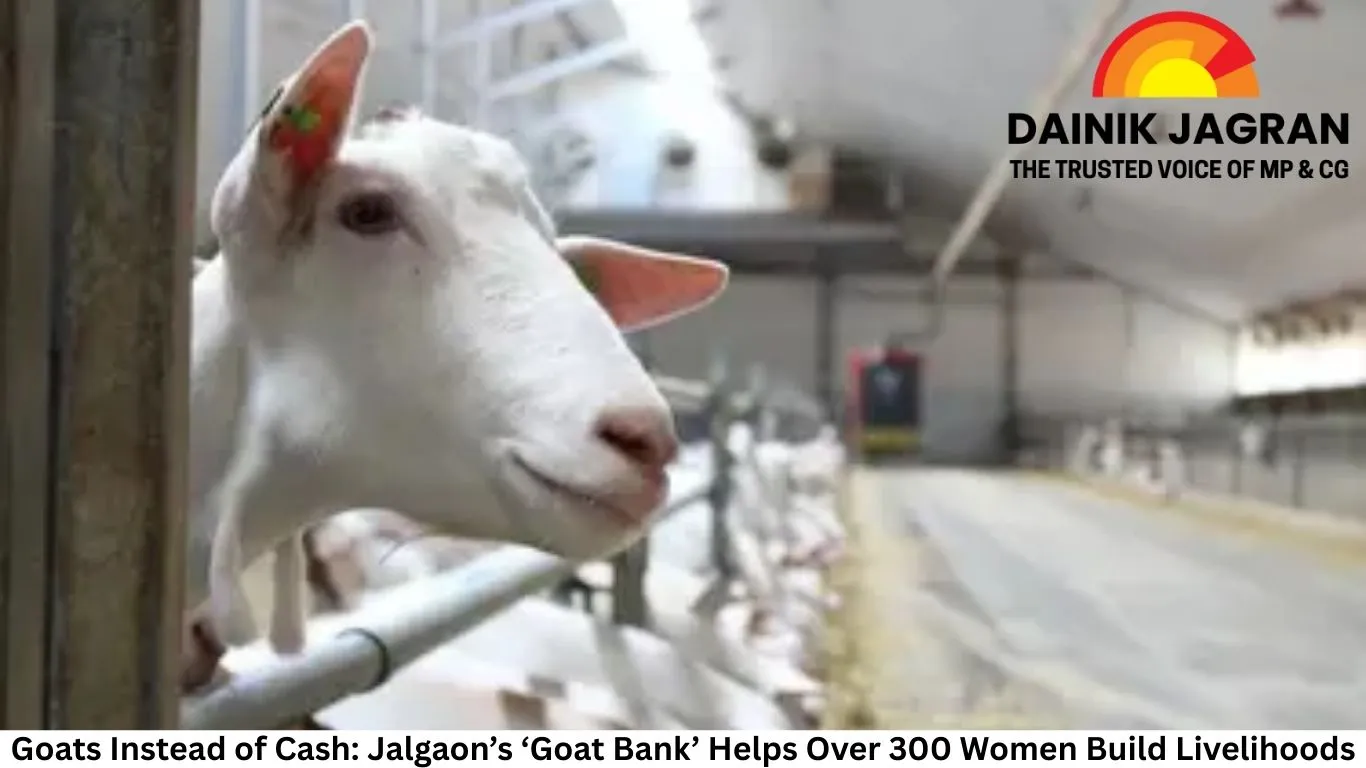
Goats Instead of Cash: Jalgaon’s ‘Goat Bank’ Helps Over 300 Women Build Livelihoods
Digital Desk
The project is run by the Pune-based Seva Sahyog Foundation and is aimed at poor, widowed, abandoned, and landless women who lack access to conventional credit. Over the past few years, more than 300 women have become self-reliant through this model, officials associated with the programme said.
Under the system, women first undergo basic training in animal husbandry and goat farming. After completing the training, each participant is given a fully grown, often pregnant goat at no cost. The only condition is that after six to nine months, when the goat gives birth and the kid grows, the beneficiary must return one kid to the bank as a form of deposit.
That returned kid is then raised and passed on to another woman joining the programme, creating a cycle of support and expansion without monetary transactions. Organisers say this system ensures sustainability while allowing more families to benefit over time.
According to Seva Sahyog Foundation, a healthy goat typically produces three to four kids in a year. After returning one kid to the bank, women are free to sell or raise the remaining goats. Many participants earn up to ₹30,000 annually, a significant income boost in rural areas with limited employment options.
“More than 300 women have joined this initiative. The biggest change is that women are now confident and capable of managing their own livelihoods,” said Gunwant Sonawane of Seva Sahyog Foundation. “They are not dependent on external aid anymore.”
Beneficiaries say the project has given them both income and dignity. “Because of the Goat Bank, I found a steady source of employment,” said Vaishali Rathod, a resident of Sundernagar in Chalisgaon. “I am earning well and now help other women in the area understand this business.”
The women associated with the project have also formed a producer collective, the Girna Parisar Mahila Pashupalak Utpadak Company, to collectively manage sales and strengthen market access.
With rising interest from nearby regions, organisers say the model could be replicated elsewhere as a low-risk, community-driven approach to rural employment and women’s empowerment.
.jpg)




