


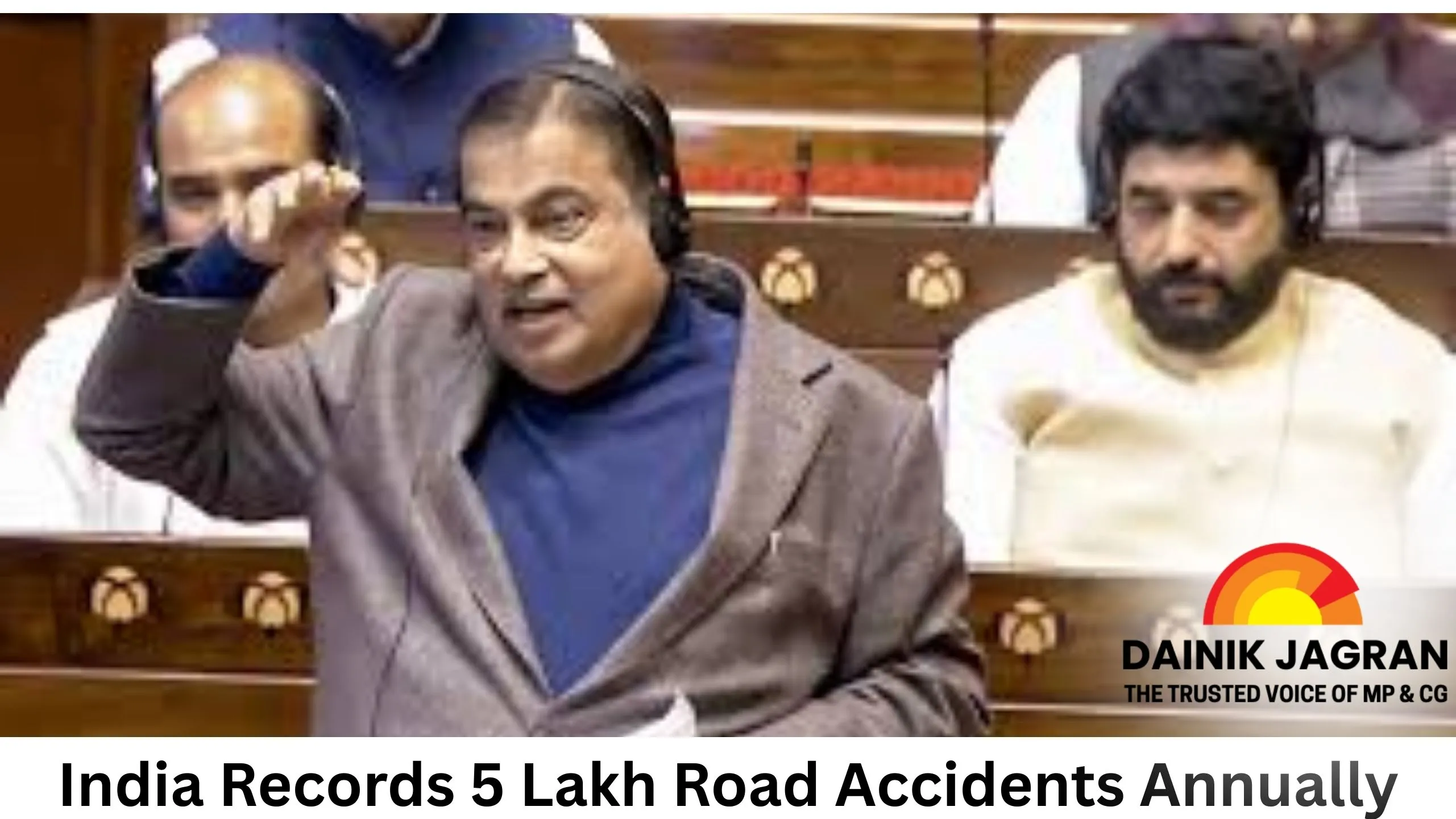
India Records 5 Lakh Road Accidents Annually, Youth Most at Risk; Centre Plans 10-Minute Ambulance Response
Digital Desk
Replying to a question from Congress MP Pramod Tiwari, Gadkari acknowledged that despite better highways, stricter traffic laws and enforcement measures, fatalities have not declined as expected. “We have improved infrastructure and legislation, but we have not been fully successful in saving lives,” he said.
To address post-accident fatalities, the minister said the Centre is working on a “10-Minute Ambulance” scheme under which modern ambulances will be deployed in coordination with state governments. The objective is to ensure that emergency medical services reach accident sites within ten minutes. Citing an Indian Institute of Management study, Gadkari said timely medical intervention could save up to 50,000 lives annually.
The minister also flagged concerns over delays in road infrastructure projects. He informed the House that 574 national highway projects sanctioned over the past five years are running behind schedule, involving a total investment of around ₹3.60 lakh crore. Of these, 300 projects are delayed by less than a year, 253 by one to three years, and 21 by over three years. Additionally, 133 projects worth about ₹1 lakh crore are stalled due to land acquisition and forest clearance issues.
On tolling reforms, Gadkari said a satellite-based toll collection system will be rolled out nationwide by 2026. Using satellite technology, artificial intelligence, FASTag and number plate recognition, tolls will be deducted without vehicles stopping. The system is expected to save fuel worth ₹1,500 crore annually and generate additional revenue of around ₹6,000 crore.
The government, he said, is pursuing road safety, faster emergency response and technology-driven reforms simultaneously to curb fatalities and improve transport efficiency.




.jpg)




