India Rejects Norway’s Kashmir Remarks, Raises PoJK Terror and Rights Concerns

Digital desk

India Rejects Norway’s Kashmir Remarks, Raises PoJK Terror and Rights Concerns

India rejects Norwegian Foreign Minister Espen Barth Eide’s Kashmir remarks, reiterates Jammu and Kashmir and Ladakh are integral to India and raises concerns over PoJK.


India has rejected remarks on Jammu and Kashmir made by Norwegian Foreign Minister Espen Barth Eide, reiterating that Jammu, Kashmir and Ladakh are an integral and inalienable part of India.

New Delhi also said the international community should focus on developments in Pakistan-occupied Jammu and Kashmir (PoJK), including what India described as human rights concerns and the use of the territory for cross-border terrorism.

MEA Rejects Norway’s Remarks

The response came after Eide discussed regional issues, including Jammu and Kashmir and Afghanistan, during talks with Pakistan Foreign Minister Ishaq Dar in Islamabad on Thursday.

Also Read... Trump, Modi Will Resolve Russia Oil Tariff Row, Says US Adviser Peter Navarro

Dar reportedly briefed the Norwegian minister on what Pakistan describes as the “long-standing unresolved” Kashmir dispute. He also raised India's decision to keep the Indus Waters Treaty (IWT) in abeyance.

Also Read... Surya Grahan 2026: Solar Eclipse Timing Today, Visibility in India

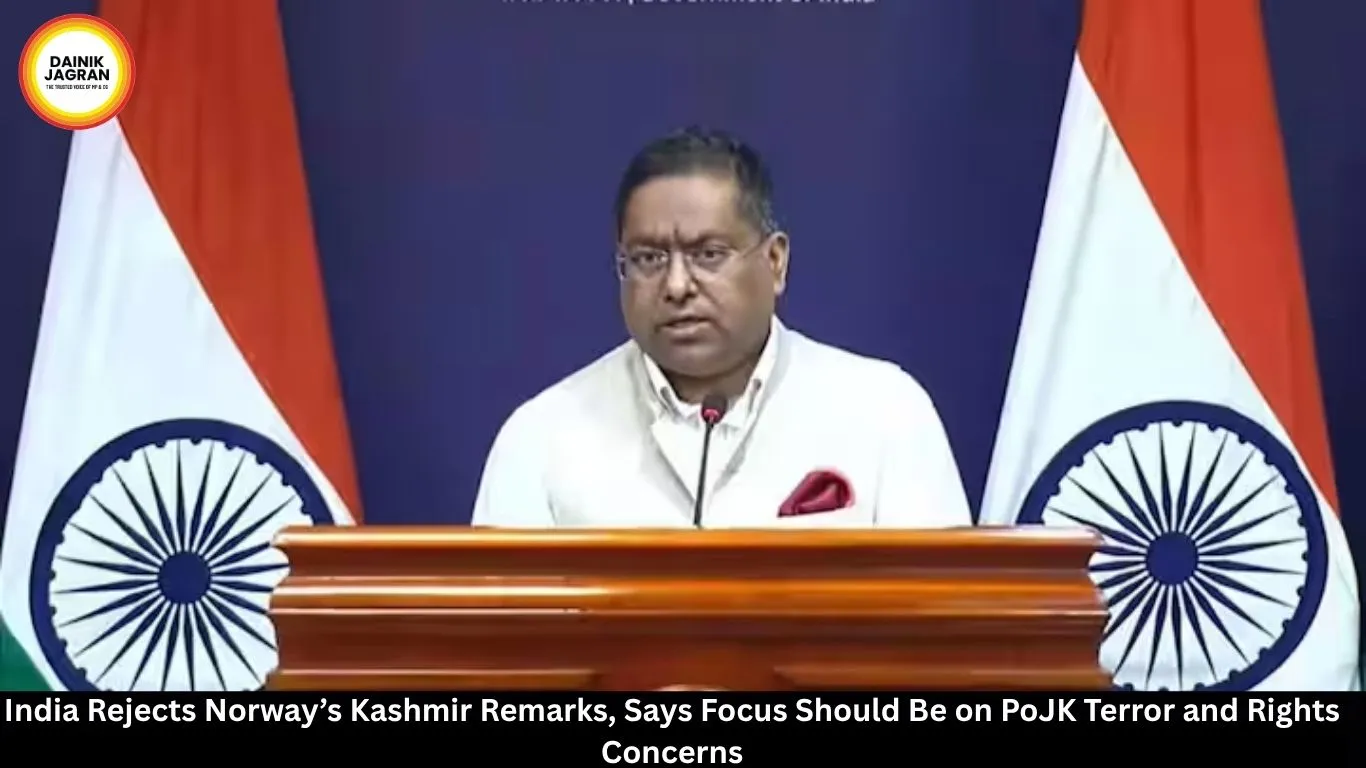
Responding to questions about Eide's remarks during his regular media briefing, Ministry of External Affairs spokesperson Randhir Jaiswal rejected the characterisation of Jammu and Kashmir as a disputed issue in the manner suggested by Pakistan.

Also Read... India-US Trade Deal On Track Despite 100% Russia Tariff Threat: Commerce Secretary

‘Integral Part of India’

Jaiswal said New Delhi's position on the territory remained unchanged.

“Let me say that the whole of Jammu, Kashmir and Ladakh are an integral and inalienable part of India,” he said.

He added that the issue that should concern the international community was the situation in Pakistan-occupied Kashmir.

According to Jaiswal, this includes alleged atrocities in PoJK and the use of the territory for cross-border terrorism.

India Stands by IWT Position

The MEA spokesperson was also asked about recent comments by Pakistan Prime Minister Shehbaz Sharif criticising India's decision to keep the Indus Waters Treaty in abeyance.

Jaiswal said there had been no change in India's position on the treaty.

India placed the IWT in abeyance following the Pahalgam terror attack in April 2025, which killed 26 civilians. New Delhi has maintained that the treaty will remain in abeyance until Pakistan “credibly and irrevocably abjures” its support for cross-border terrorism.

The treaty, signed in 1960, governs the use of the Indus river system by India and Pakistan and has remained an important component of bilateral relations for decades.

Protests Intensify in PoJK

India's latest remarks also come amid reports of growing public unrest in Pakistan-occupied Jammu and Kashmir.

The region has witnessed protests, clashes, communications disruptions and allegations of excessive use of force by security personnel.

The demonstrations initially focused on issues such as electricity tariffs and the rising cost of essential commodities, but the demands have reportedly expanded to include political reforms, greater transparency and stronger democratic representation.

Security Crackdown Allegations

Videos circulating on social media, including material linked to the Joint Awami Action Committee (JAAC), have purportedly shown clashes involving Pakistani security personnel.

Other footage circulating online has reportedly shown women protesters fleeing during a security operation in the Kotli district, accompanied by claims that live ammunition was used. Such material and claims could not be independently verified from the information available.

Large gatherings have also reportedly taken place in several parts of PoJK, with protesters expressing solidarity with the JAAC and raising concerns about alleged violence by Pakistani security forces.

Kashmir Remains a Key Diplomatic Issue

India's response underscores New Delhi's longstanding position that Jammu and Kashmir, including Ladakh, is an integral part of the country.

At the same time, Pakistan continues to raise the Kashmir issue at international forums and describes it as an unresolved dispute.

With India-Pakistan relations already strained over terrorism, the Indus Waters Treaty and developments in PoJK, New Delhi's rejection of the Norwegian foreign minister's remarks is likely to add another diplomatic dimension to the ongoing regional debate.


english.dainikjagranmpcg.com
15 Aug 2026 By Abhishek Joshi

India Rejects Norway’s Kashmir Remarks, Raises PoJK Terror and Rights Concerns

Digital desk

India has rejected remarks on Jammu and Kashmir made by Norwegian Foreign Minister Espen Barth Eide, reiterating that Jammu, Kashmir and Ladakh are an integral and inalienable part of India.

New Delhi also said the international community should focus on developments in Pakistan-occupied Jammu and Kashmir (PoJK), including what India described as human rights concerns and the use of the territory for cross-border terrorism.

MEA Rejects Norway’s Remarks

The response came after Eide discussed regional issues, including Jammu and Kashmir and Afghanistan, during talks with Pakistan Foreign Minister Ishaq Dar in Islamabad on Thursday.

Dar reportedly briefed the Norwegian minister on what Pakistan describes as the “long-standing unresolved” Kashmir dispute. He also raised India's decision to keep the Indus Waters Treaty (IWT) in abeyance.

Responding to questions about Eide's remarks during his regular media briefing, Ministry of External Affairs spokesperson Randhir Jaiswal rejected the characterisation of Jammu and Kashmir as a disputed issue in the manner suggested by Pakistan.

‘Integral Part of India’

Jaiswal said New Delhi's position on the territory remained unchanged.

“Let me say that the whole of Jammu, Kashmir and Ladakh are an integral and inalienable part of India,” he said.

He added that the issue that should concern the international community was the situation in Pakistan-occupied Kashmir.

According to Jaiswal, this includes alleged atrocities in PoJK and the use of the territory for cross-border terrorism.

India Stands by IWT Position

The MEA spokesperson was also asked about recent comments by Pakistan Prime Minister Shehbaz Sharif criticising India's decision to keep the Indus Waters Treaty in abeyance.

Jaiswal said there had been no change in India's position on the treaty.

India placed the IWT in abeyance following the Pahalgam terror attack in April 2025, which killed 26 civilians. New Delhi has maintained that the treaty will remain in abeyance until Pakistan “credibly and irrevocably abjures” its support for cross-border terrorism.

The treaty, signed in 1960, governs the use of the Indus river system by India and Pakistan and has remained an important component of bilateral relations for decades.

Protests Intensify in PoJK

India's latest remarks also come amid reports of growing public unrest in Pakistan-occupied Jammu and Kashmir.

The region has witnessed protests, clashes, communications disruptions and allegations of excessive use of force by security personnel.

The demonstrations initially focused on issues such as electricity tariffs and the rising cost of essential commodities, but the demands have reportedly expanded to include political reforms, greater transparency and stronger democratic representation.

Security Crackdown Allegations

Videos circulating on social media, including material linked to the Joint Awami Action Committee (JAAC), have purportedly shown clashes involving Pakistani security personnel.

Other footage circulating online has reportedly shown women protesters fleeing during a security operation in the Kotli district, accompanied by claims that live ammunition was used. Such material and claims could not be independently verified from the information available.

Large gatherings have also reportedly taken place in several parts of PoJK, with protesters expressing solidarity with the JAAC and raising concerns about alleged violence by Pakistani security forces.

Kashmir Remains a Key Diplomatic Issue

India's response underscores New Delhi's longstanding position that Jammu and Kashmir, including Ladakh, is an integral part of the country.

At the same time, Pakistan continues to raise the Kashmir issue at international forums and describes it as an unresolved dispute.

With India-Pakistan relations already strained over terrorism, the Indus Waters Treaty and developments in PoJK, New Delhi's rejection of the Norwegian foreign minister's remarks is likely to add another diplomatic dimension to the ongoing regional debate.


https://english.dainikjagranmpcg.com/national/india-rejects-norway%E2%80%99s-kashmir-remarks-raises-pojk-terror-and-rights/article-26181

--------

🚨 Beat the News Rush – Join Now!

Get breaking alerts, hot exclusives, and game-changing stories instantly on your phone. No delays, no fluff – just the edge you need. ⚡

Tap to join: 

🟢 WhatsApp Channel: Dainik Jagran MP CG

Crave more?

🅕 Facebook: Dainik Jagran MP CG English

🅧 Twitter (X): Dainik Jagran MP CG

🅘 Instagram: Dainik Jagran MP CG

Share the fire – keep your crew ahead! 🗞️🔥

Trending News