


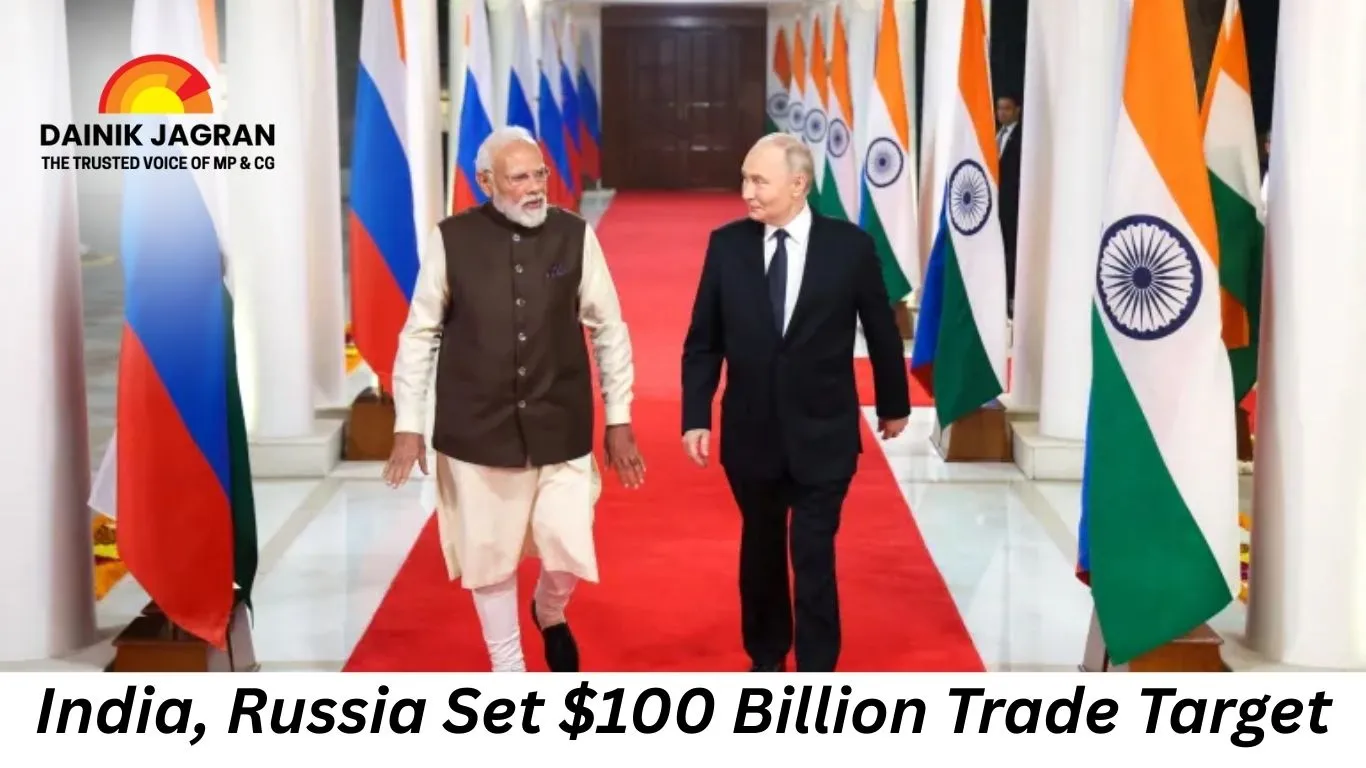
India, Russia Set $100 Billion Trade Target as Leaders Highlight Shift Away from Dollar
Digital Desk
Putin said trade between the two countries had already reached a historic high of $64 billion and noted that 96% of bilateral transactions were now settled in national currencies rather than the US dollar. He said the shift was part of a wider effort to strengthen financial independence and streamline commercial exchanges. “Both countries are creating new logistics and transport routes, including a corridor connecting Belarus to the Indian Ocean,” he said.
While no Free Trade Agreement was signed, Modi confirmed that negotiations were progressing. He said India and Russia had agreed on an Economic Cooperation Programme for 2030, which would guide future investment, technology partnerships and market access. Modi described the longstanding relationship between the two nations as a “pole star” that had remained steady through decades of geopolitical upheaval.
Putin announced that a free trade zone would be created between India and the Eurasian Economic Union, designed to boost market integration and simplify cross-border commerce. Both sides also endorsed continued talks on strengthening energy ties, with the Russian president affirming that Moscow would keep supplying oil to India. “This ensures affordable and clean energy for India,” he said.
The Russian leader also confirmed progress on civil nuclear cooperation, saying Russia was constructing what would become India’s largest nuclear power plant. Three of the six reactors, he said, had already been connected to the grid.
Looking ahead, Putin expressed full support for India as it prepares to assume the BRICS chairmanship next year, promising “all necessary assistance” to New Delhi as the bloc seeks a more influential global role.

.jpg)




