Prime Minister Narendra Modi on Thursday announced that the government would establish fast-track courts to prosecute people accused of leaking examination papers. He promised swift and stringent punishment for anyone who damages the future of students.
In a post on X, Modi said the welfare and future of young people remained the government’s highest priority. He also said he had directed the authorities to take every necessary step for the early disposal of such cases. The announcement marks a major government update amid a widening public debate over the security and credibility of competitive examinations.
Youth Interests Come First
Modi said the government would not spare anyone who played with the future of the country’s youth. His statement followed days of protests in New Delhi and sustained demands for accountability over the latest examination controversy.
The government has presented the proposed courts as part of a wider effort to protect candidates and deter organised networks involved in question paper theft, circulation and sale. Dedicated courts could reduce delays by assigning these cases to judges who handle them on priority instead of placing them in the regular criminal court queue.
Protests Increase Pressure
The announcement came as the Cockroach Janta Party, a youth-led protest movement, continued its agitation in the national capital. Protesters have demanded the resignation of Union Education Minister Dharmendra Pradhan, while opposition parties have pressed the government for a parliamentary debate and stronger action.
Congress leader Rahul Gandhi criticised the Centre’s handling of the issue and repeated the demand for ministerial accountability. The government has said it remains willing to discuss examination reforms in Parliament. The dispute has emerged as a major public interest story and one of the most closely watched developments in Trending News India.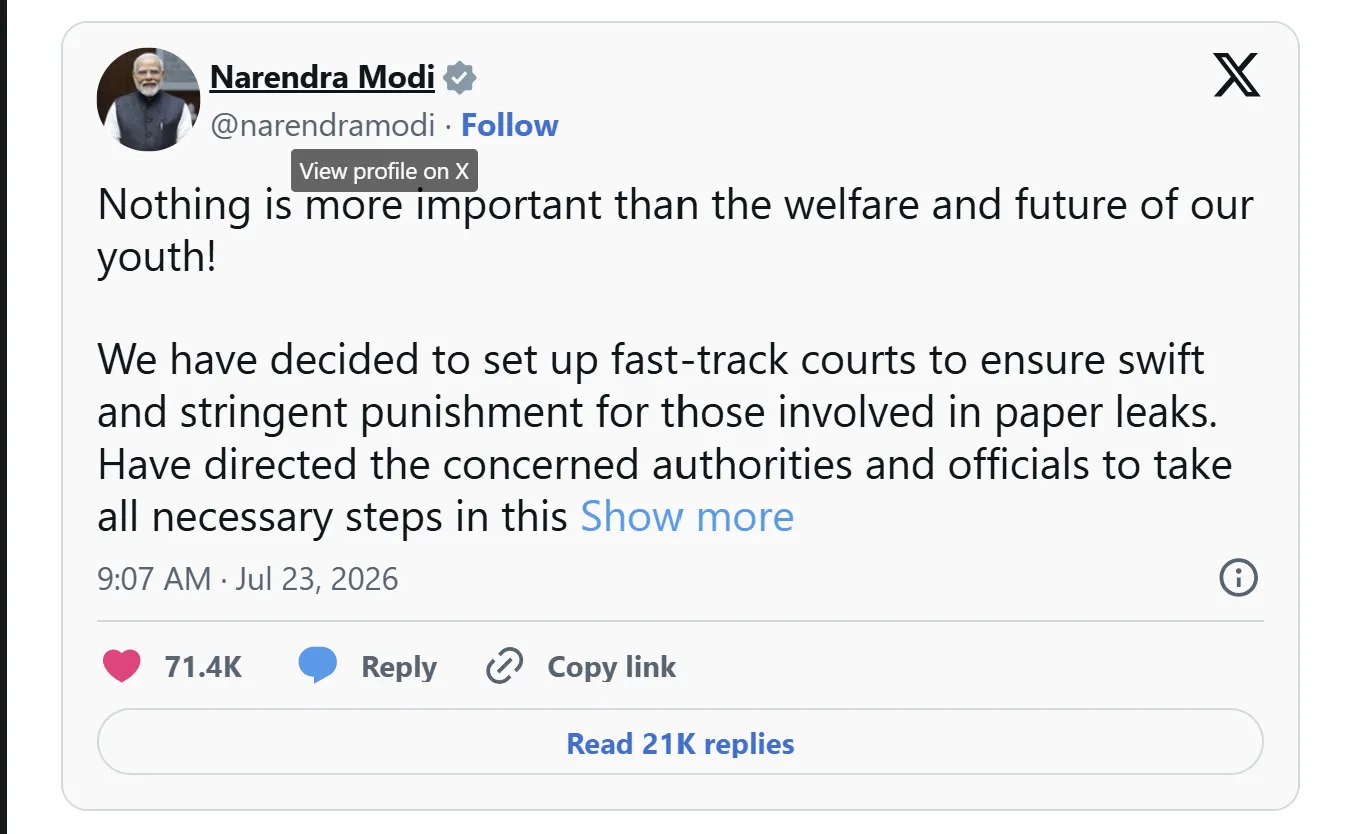
NEET Case Background
The immediate controversy centres on the NEET-UG examination, which determines admission to undergraduate medical courses. Reports said the leak affected nearly two million candidates and prompted authorities to hold a fresh examination.
At an NDA meeting earlier this week, Modi said the government acted immediately after receiving information about the leak. Parliamentary Affairs Minister Kiren Rijiju said investigators had arrested 13 accused and sent them to jail. Authorities also held the re-examination and declared the results on priority to protect students’ academic schedules.
Existing Law Supports Action
India already enforces the Public Examinations (Prevention of Unfair Means) Act, 2024, which took effect on June 21, 2024. The law covers question paper leakage, conspiracy, disruption of examinations and organised cheating. It also empowers designated officers to investigate offences.
The proposed fast-track courts would focus on trial speed and case disposal, while the existing law provides the substantive framework for prosecution. Fast-track courts first took shape nationally after the Eleventh Finance Commission recommended their creation. The Centre subsequently funded 1,734 courts to clear long-pending sessions cases and cases involving undertrial prisoners.
Implementation Will Decide Impact
The announcement’s effectiveness will depend on how quickly the Centre, states and High Courts establish the courts, appoint judges and provide prosecutors, staff and digital evidence support. India’s constitutional framework gives states and High Courts a central role in setting up and operating such courts.
The government must also decide whether to create a nationwide scheme or ask states to designate existing courts for paper leak cases. Clear jurisdiction, strict timelines and coordination between police, examination agencies and prosecutors will determine whether the measure produces faster trials and convictions.
What Happens Next
The Centre’s next steps will include operational details covering the number of courts, funding, territorial jurisdiction and the categories of examinations that will fall under the mechanism. Opposition parties and protesting groups are likely to continue seeking political accountability alongside judicial action.
For students and families following the latest news today, the central question is whether the plan can deliver timely justice and prevent repeated disruption of competitive examinations. The government’s next notification on paper leak cases will remain a key India news update for education policy and examination reform.

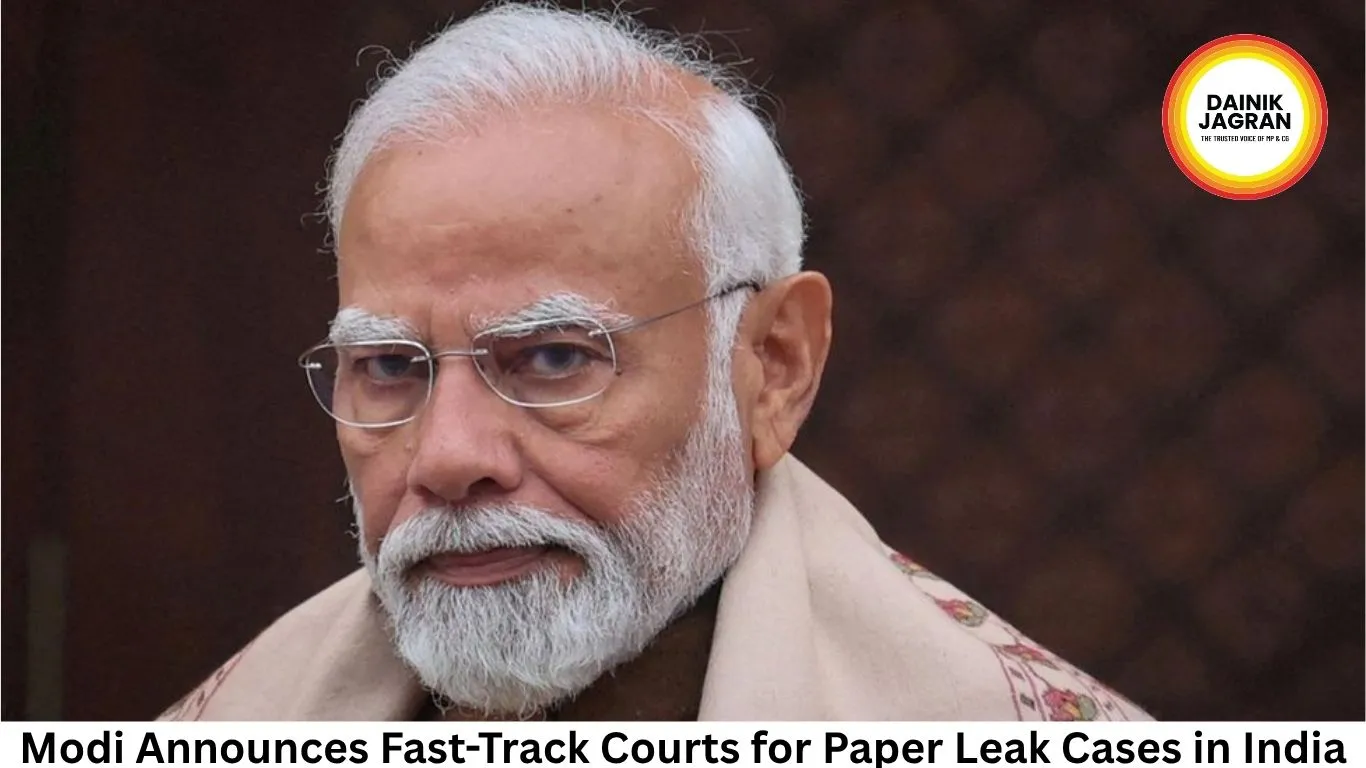
Modi Announces Fast-Track Courts for Paper Leak Cases in India
Digital Desk
Prime Minister Narendra Modi on Thursday announced that the government would establish fast-track courts to prosecute people accused of leaking examination papers. He promised swift and stringent punishment for anyone who damages the future of students.
In a post on X, Modi said the welfare and future of young people remained the government’s highest priority. He also said he had directed the authorities to take every necessary step for the early disposal of such cases. The announcement marks a major government update amid a widening public debate over the security and credibility of competitive examinations.
Youth Interests Come First
Modi said the government would not spare anyone who played with the future of the country’s youth. His statement followed days of protests in New Delhi and sustained demands for accountability over the latest examination controversy.
The government has presented the proposed courts as part of a wider effort to protect candidates and deter organised networks involved in question paper theft, circulation and sale. Dedicated courts could reduce delays by assigning these cases to judges who handle them on priority instead of placing them in the regular criminal court queue.
Protests Increase Pressure
The announcement came as the Cockroach Janta Party, a youth-led protest movement, continued its agitation in the national capital. Protesters have demanded the resignation of Union Education Minister Dharmendra Pradhan, while opposition parties have pressed the government for a parliamentary debate and stronger action.
Congress leader Rahul Gandhi criticised the Centre’s handling of the issue and repeated the demand for ministerial accountability. The government has said it remains willing to discuss examination reforms in Parliament. The dispute has emerged as a major public interest story and one of the most closely watched developments in Trending News India.
NEET Case Background
The immediate controversy centres on the NEET-UG examination, which determines admission to undergraduate medical courses. Reports said the leak affected nearly two million candidates and prompted authorities to hold a fresh examination.
At an NDA meeting earlier this week, Modi said the government acted immediately after receiving information about the leak. Parliamentary Affairs Minister Kiren Rijiju said investigators had arrested 13 accused and sent them to jail. Authorities also held the re-examination and declared the results on priority to protect students’ academic schedules.
Existing Law Supports Action
India already enforces the Public Examinations (Prevention of Unfair Means) Act, 2024, which took effect on June 21, 2024. The law covers question paper leakage, conspiracy, disruption of examinations and organised cheating. It also empowers designated officers to investigate offences.
The proposed fast-track courts would focus on trial speed and case disposal, while the existing law provides the substantive framework for prosecution. Fast-track courts first took shape nationally after the Eleventh Finance Commission recommended their creation. The Centre subsequently funded 1,734 courts to clear long-pending sessions cases and cases involving undertrial prisoners.
Implementation Will Decide Impact
The announcement’s effectiveness will depend on how quickly the Centre, states and High Courts establish the courts, appoint judges and provide prosecutors, staff and digital evidence support. India’s constitutional framework gives states and High Courts a central role in setting up and operating such courts.
The government must also decide whether to create a nationwide scheme or ask states to designate existing courts for paper leak cases. Clear jurisdiction, strict timelines and coordination between police, examination agencies and prosecutors will determine whether the measure produces faster trials and convictions.
What Happens Next
The Centre’s next steps will include operational details covering the number of courts, funding, territorial jurisdiction and the categories of examinations that will fall under the mechanism. Opposition parties and protesting groups are likely to continue seeking political accountability alongside judicial action.
For students and families following the latest news today, the central question is whether the plan can deliver timely justice and prevent repeated disruption of competitive examinations. The government’s next notification on paper leak cases will remain a key India news update for education policy and examination reform.