Sabarimala case hearing Day 7: SC on reform powers

Digital Desk

Sabarimala case hearing Day 7: SC on reform powers

 Sabarimala case hearing Day 7 sees Supreme Court stress state power to reform social evils while debating religious freedom and women’s entry.


Sabarimala case hearing Day 7: SC backs state reform powers

In the Sabarimala case hearing Day 7, the Supreme Court underscored the state’s authority to address social evils while examining religious freedom and women’s entry issues.

Hearing enters Day 7

New Delhi: The Supreme Court of India on Wednesday continued the seventh day of hearings in the Sabarimala case, with a nine-judge Constitution bench deliberating key constitutional questions on religious freedom and social reform.

Senior Advocate Gopal Subramanium resumed arguments, focusing on the scope of Articles 25 and 26 and the balance between individual rights and denominational autonomy.

Court on state role

During the proceedings, the Chief Justice observed that the state represents the will of the people and holds the authority to intervene when society seeks to eliminate social evils.

The bench indicated that constitutional principles could allow such intervention, especially when practices appear to conflict with fundamental rights.

Debate on religious practice

A central issue remains whether temple customs constitute essential religious practices. Subramanium argued that courts must carefully assess such claims to ensure that superstition or external elements do not gain protection as religious rights.

He said any law interfering with religion must pass a strict scrutiny test and demonstrate a clear objective linked to social reform.

Key constitutional questions

The bench examined what qualifies as “social reform” and “social welfare” under the Constitution. Justice Bagchi raised concerns about the limits of legislative power in religious matters and whether general laws can directly interfere in such domains.

The court also discussed the meaning of “management” under Article 26, including whether internal debates within a religious sect fall within its scope.

Arguments by petitioners

Subramanium emphasised that freedom of religion under Article 25 includes belief, practice, and propagation. He noted that no two individuals practise religion identically, underscoring the personal nature of faith.

He further argued that while institutions function collectively, individual freedoms remain protected, and differing opinions within a sect are part of constitutional guarantees.

Background of dispute

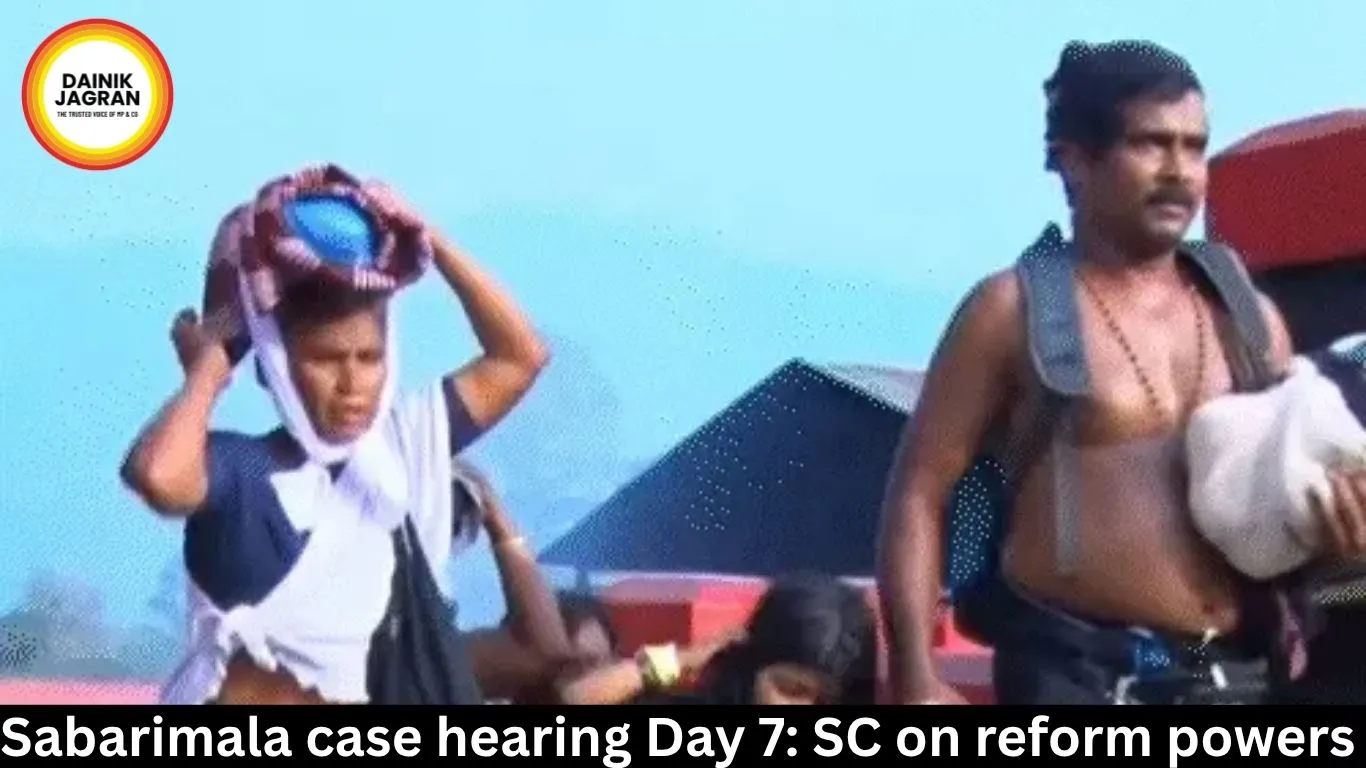
The Sabarimala issue stems from a long-standing restriction on women aged 10–50 entering the Sabarimala Temple, dedicated to Lord Ayyappa, considered a “naishtika brahmachari”.

In 1991, the Kerala High Court upheld the restriction. However, in 2018, the Supreme Court of India struck it down, allowing entry to women of all ages. The verdict triggered widespread protests and multiple review petitions.

Temple authorities and some devotees continue to oppose the entry, citing religious tradition and the deity’s nature.

Earlier hearing highlights

In the previous hearings, the court questioned whether touching an idol could be considered defilement and whether constitutional protections should extend to devotees barred based on birth or lineage.

The Centre had earlier argued that courts should refrain from interfering in religious practices, pointing to similar restrictions in other temples.

What lies ahead

The nine-judge bench is currently addressing seven broader constitutional questions, including the extent of judicial review in matters of religion and the interpretation of essential religious practices.

A verdict is expected soon, which could have far-reaching implications for religious freedoms and gender equality across India. Legal observers say the ruling may redefine how courts approach conflicts between faith and fundamental rights.

As the Sabarimala case hearing Day 7 concludes, the focus remains on how the Constitution will reconcile individual rights with religious traditions in one of the country’s most closely watched public interest cases.

 

--------

🚨 Beat the News Rush – Join Now!

Get breaking alerts, hot exclusives, and game-changing stories instantly on your phone. No delays, no fluff – just the edge you need. ⚡

Tap to join: 

🟢 WhatsApp Channel: Dainik Jagran MP CG

Crave more?

🅕 Facebook: Dainik Jagran MP CG English

🅧 Twitter (X): Dainik Jagran MP CG

🅘 Instagram: Dainik Jagran MP CG

Share the fire – keep your crew ahead! 🗞️🔥

english.dainikjagranmpcg.com
22 Apr 2026 By Abhishek Joshi

Sabarimala case hearing Day 7: SC on reform powers

Digital Desk

Sabarimala case hearing Day 7: SC backs state reform powers

In the Sabarimala case hearing Day 7, the Supreme Court underscored the state’s authority to address social evils while examining religious freedom and women’s entry issues.

Hearing enters Day 7

New Delhi: The Supreme Court of India on Wednesday continued the seventh day of hearings in the Sabarimala case, with a nine-judge Constitution bench deliberating key constitutional questions on religious freedom and social reform.

Senior Advocate Gopal Subramanium resumed arguments, focusing on the scope of Articles 25 and 26 and the balance between individual rights and denominational autonomy.

Court on state role

During the proceedings, the Chief Justice observed that the state represents the will of the people and holds the authority to intervene when society seeks to eliminate social evils.

The bench indicated that constitutional principles could allow such intervention, especially when practices appear to conflict with fundamental rights.

Debate on religious practice

A central issue remains whether temple customs constitute essential religious practices. Subramanium argued that courts must carefully assess such claims to ensure that superstition or external elements do not gain protection as religious rights.

He said any law interfering with religion must pass a strict scrutiny test and demonstrate a clear objective linked to social reform.

Key constitutional questions

The bench examined what qualifies as “social reform” and “social welfare” under the Constitution. Justice Bagchi raised concerns about the limits of legislative power in religious matters and whether general laws can directly interfere in such domains.

The court also discussed the meaning of “management” under Article 26, including whether internal debates within a religious sect fall within its scope.

Arguments by petitioners

Subramanium emphasised that freedom of religion under Article 25 includes belief, practice, and propagation. He noted that no two individuals practise religion identically, underscoring the personal nature of faith.

He further argued that while institutions function collectively, individual freedoms remain protected, and differing opinions within a sect are part of constitutional guarantees.

Background of dispute

The Sabarimala issue stems from a long-standing restriction on women aged 10–50 entering the Sabarimala Temple, dedicated to Lord Ayyappa, considered a “naishtika brahmachari”.

In 1991, the Kerala High Court upheld the restriction. However, in 2018, the Supreme Court of India struck it down, allowing entry to women of all ages. The verdict triggered widespread protests and multiple review petitions.

Temple authorities and some devotees continue to oppose the entry, citing religious tradition and the deity’s nature.

Earlier hearing highlights

In the previous hearings, the court questioned whether touching an idol could be considered defilement and whether constitutional protections should extend to devotees barred based on birth or lineage.

The Centre had earlier argued that courts should refrain from interfering in religious practices, pointing to similar restrictions in other temples.

What lies ahead

The nine-judge bench is currently addressing seven broader constitutional questions, including the extent of judicial review in matters of religion and the interpretation of essential religious practices.

A verdict is expected soon, which could have far-reaching implications for religious freedoms and gender equality across India. Legal observers say the ruling may redefine how courts approach conflicts between faith and fundamental rights.

As the Sabarimala case hearing Day 7 concludes, the focus remains on how the Constitution will reconcile individual rights with religious traditions in one of the country’s most closely watched public interest cases.

 

https://english.dainikjagranmpcg.com/special-news/sabarimala-case-hearing-day-7-sc-on-reform-powers/article-17217

Latest News