

SIR Backfire: How BJP's Voter Roll Move Is Helping TMC in Bengal
Digital Desk
TMC's Sagarika Ghose says BJP's SIR voter roll exercise has wiped out local anti-incumbency in West Bengal — handing Mamata Banerjee a major electoral advantage ahead of April polls.
SIR Backfire: How BJP's Voter Roll Exercise Is Handing TMC a Ready-Made Election Narrative in Bengal
With West Bengal voting in two phases on April 23 and 29, TMC's star campaigners argue the BJP's Special Intensive Revision exercise has drowned out local anti-incumbency — and handed Mamata Banerjee her most powerful electoral weapon yet.
The Election BJP Thought It Could Win
Going into the 2026 West Bengal Assembly elections, the BJP had a reasonable case to make. The TMC had been in power for three consecutive terms. Anti-incumbency was real, visible, and documented — particularly at the local level. The RG Kar rape-murder of a trainee doctor had shaken public confidence in the Mamata Banerjee government. And the BJP, riding 18 Lok Sabha seats in 2019 and a strengthened organisational footprint across the state, believed this was finally its moment to break through Bengal's political fortress.
Then came SIR.
What is SIR — And Why It Has Exploded
The Special Intensive Revision of electoral rolls — commonly referred to as SIR — was an Election Commission exercise to update voter lists ahead of the polls. On paper, it was administrative housekeeping. In practice, it became one of the most politically combustible developments in West Bengal in recent memory.
The exercise triggered widespread deletions of voter names — deletions that fell disproportionately in minority-dominated areas, according to the TMC. More damaging still, it cast citizenship doubts on a strikingly diverse cross-section of people. Nobel laureate Amartya Sen, a former state chief secretary, a serving state cabinet minister, and India women's cricket team player Richa Ghosh — none of them Bengali infiltrators by any stretch — all found their voter credentials questioned or flagged under the process. The optics were catastrophic for the BJP.
Mamata Banerjee moved quickly and decisively. She reframed the entire election — not as a referendum on her government's performance, but as a battle between Bengal's identity and what she described as Delhi's aggression against it.
Sagarika Ghose: Anti-Incumbency Has Been Completely Obscured
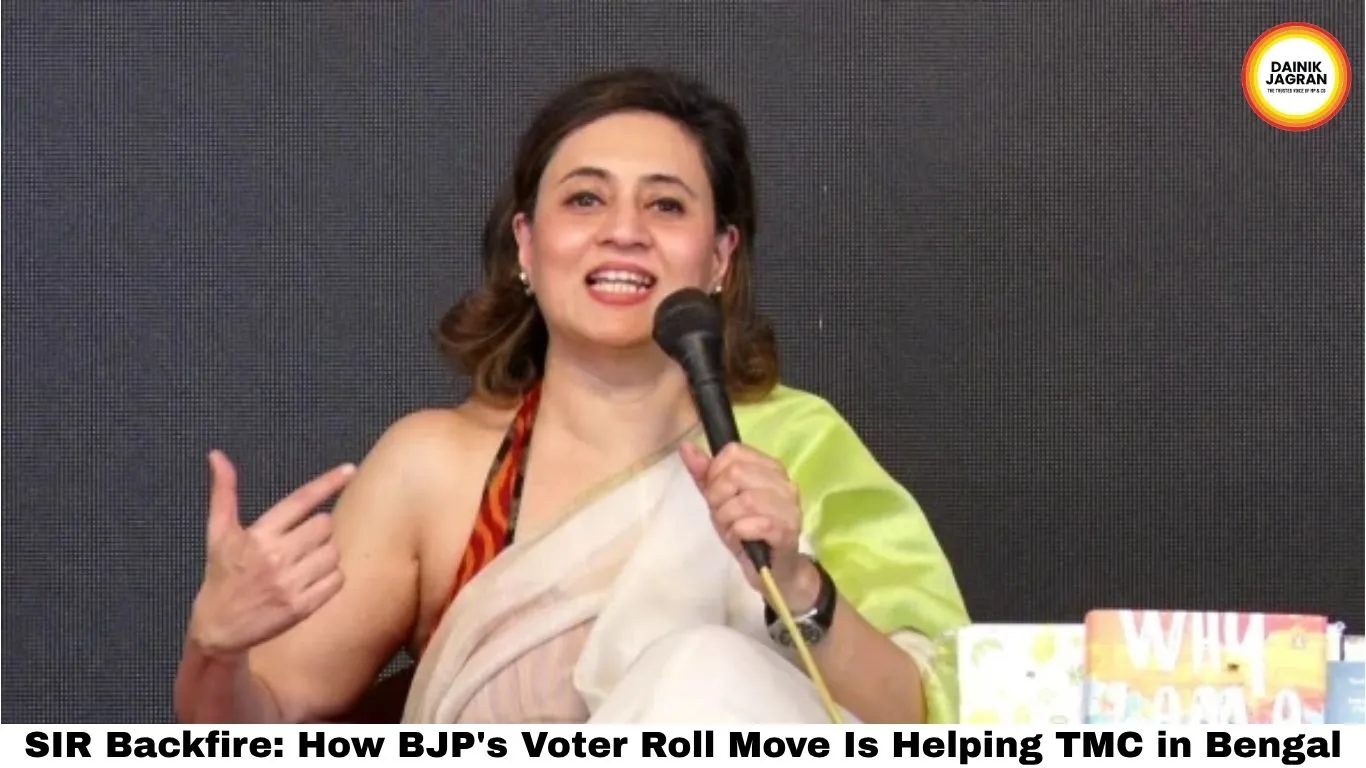
TMC Rajya Sabha MP and star campaigner Sagarika Ghose articulated the party's read of the political situation with unusual candour. She acknowledged that some anti-incumbency existed — but argued it was localised and limited to individual leaders rather than directed at Mamata Banerjee as Chief Minister.
"After three terms, some amount of anti-incumbency at the local level is natural. But there is no such sentiment against her as a Chief Minister," she said, describing Banerjee as a 24x7 politician with an unmatched ground connect. "She is a leader who has gone largely unappreciated in the media."
On the SIR exercise, she was direct. "The BJP's agenda was to use the SIR process to defeat Mamata Banerjee and capture West Bengal by any means possible, since she has been continuously defeating the saffron party for the last 15 years. The exercise has now turned on its head, handing TMC a distinct advantage. If there was any local-level anti-incumbency brewing at all, that has been completely obscured by the SIR exercise. It was a gross mistake that the BJP committed. Let them delete as many names as they want. We will still win."
TMC's Counter-Incumbency Play: 74 MLAs Dropped
The TMC's response to local anti-incumbency has not been merely rhetorical. In its candidate list of 291 names declared on March 17, Chief Minister Mamata Banerjee dropped 74 sitting MLAs — nearly a third of the party's entire legislative strength. It is an unusually bold and clinically calculated counter-incumbency move — acknowledging the problem by replacing the faces voters were most frustrated with, while retaining control of the overall slate.
The list also reflects the growing influence of TMC national general secretary Abhishek Banerjee. Around 130 candidates are under 50 years of age — a visible generational shift. The diversity architecture is equally deliberate: 47 Muslim candidates, 78 from Scheduled Castes, 17 from Scheduled Tribes, and over 30 percent women candidates — a combination designed to shore up minority, marginalised, and women voters who form the backbone of TMC's support coalition.
The Disinformation Challenge
Sagarika Ghose also flagged what she called one of the TMC's most difficult challenges in this election — the scale of what she described as organised misinformation about West Bengal. "During my days as a journalist, I had little idea about the extent of disinformation that gets spread about West Bengal. The architecture of lies and disinformation about the state is huge and is coming round the clock. This is a formidable challenge for us to counter," she said.
She also pointed to what she characterised as targeting of Bengali-speaking migrants in other states — people labelled as Bangladeshis, their identity as Indians and Bengalis challenged — as a further mobilising issue that has deepened emotional bonds between voters and the TMC's Bengal-identity narrative.
Mamata on Voter Rights — Eid Address Turns Political
Mamata Banerjee used her Eid address at Kolkata's Red Road on Saturday to escalate her language on SIR. She accused the Centre of attempting to interfere with voting rights and warned that the TMC would resist any attempt to dilute democratic participation in the state. With the Election Commission's first supplementary voter list scheduled for release on March 23, political tensions are expected to rise further in the coming days.
The BJP's Dilemma
The BJP's position heading into this election is more complicated than its public posture suggests. While it remains the principal challenger, several analysts note that the party has not been able to fully capitalise on genuine anti-TMC sentiment. The change of state president — from Dilip Ghosh, who helped deliver 18 Lok Sabha seats in 2019, to Samik Bhattacharya — has been questioned within party circles. Internal candidate dissatisfaction has led to protests in multiple constituencies. And the SIR exercise, whatever its administrative rationale, has allowed Mamata Banerjee to occupy the emotionally dominant political ground.
For a party that arrived in Bengal as a new phenomenon and rode that novelty to its best-ever state performance, the challenge in 2026 is that the novelty is gone. The BJP is now the established challenger — and established challengers need sharper narratives than the one SIR has left them with.
What May 4 Will Decide
Polling takes place in two phases — April 23 and April 29 — with counting on May 4. All 294 Assembly seats are at stake. Opinion surveys still place Mamata Banerjee ahead — but the margin of TMC dominance is narrower than in 2021. The SIR controversy has energised TMC's base. Whether it has done enough to overcome the weight of 15 years in power — and the accumulated grievances that come with it — is the question Bengal's voters will answer on the first day of May.
SIR Backfire: How BJP's Voter Roll Move Is Helping TMC in Bengal
Digital Desk
SIR Backfire: How BJP's Voter Roll Exercise Is Handing TMC a Ready-Made Election Narrative in Bengal
With West Bengal voting in two phases on April 23 and 29, TMC's star campaigners argue the BJP's Special Intensive Revision exercise has drowned out local anti-incumbency — and handed Mamata Banerjee her most powerful electoral weapon yet.
The Election BJP Thought It Could Win
Going into the 2026 West Bengal Assembly elections, the BJP had a reasonable case to make. The TMC had been in power for three consecutive terms. Anti-incumbency was real, visible, and documented — particularly at the local level. The RG Kar rape-murder of a trainee doctor had shaken public confidence in the Mamata Banerjee government. And the BJP, riding 18 Lok Sabha seats in 2019 and a strengthened organisational footprint across the state, believed this was finally its moment to break through Bengal's political fortress.
Then came SIR.
What is SIR — And Why It Has Exploded
The Special Intensive Revision of electoral rolls — commonly referred to as SIR — was an Election Commission exercise to update voter lists ahead of the polls. On paper, it was administrative housekeeping. In practice, it became one of the most politically combustible developments in West Bengal in recent memory.
The exercise triggered widespread deletions of voter names — deletions that fell disproportionately in minority-dominated areas, according to the TMC. More damaging still, it cast citizenship doubts on a strikingly diverse cross-section of people. Nobel laureate Amartya Sen, a former state chief secretary, a serving state cabinet minister, and India women's cricket team player Richa Ghosh — none of them Bengali infiltrators by any stretch — all found their voter credentials questioned or flagged under the process. The optics were catastrophic for the BJP.
Mamata Banerjee moved quickly and decisively. She reframed the entire election — not as a referendum on her government's performance, but as a battle between Bengal's identity and what she described as Delhi's aggression against it.
Sagarika Ghose: Anti-Incumbency Has Been Completely Obscured
TMC Rajya Sabha MP and star campaigner Sagarika Ghose articulated the party's read of the political situation with unusual candour. She acknowledged that some anti-incumbency existed — but argued it was localised and limited to individual leaders rather than directed at Mamata Banerjee as Chief Minister.
"After three terms, some amount of anti-incumbency at the local level is natural. But there is no such sentiment against her as a Chief Minister," she said, describing Banerjee as a 24x7 politician with an unmatched ground connect. "She is a leader who has gone largely unappreciated in the media."
On the SIR exercise, she was direct. "The BJP's agenda was to use the SIR process to defeat Mamata Banerjee and capture West Bengal by any means possible, since she has been continuously defeating the saffron party for the last 15 years. The exercise has now turned on its head, handing TMC a distinct advantage. If there was any local-level anti-incumbency brewing at all, that has been completely obscured by the SIR exercise. It was a gross mistake that the BJP committed. Let them delete as many names as they want. We will still win."
TMC's Counter-Incumbency Play: 74 MLAs Dropped
The TMC's response to local anti-incumbency has not been merely rhetorical. In its candidate list of 291 names declared on March 17, Chief Minister Mamata Banerjee dropped 74 sitting MLAs — nearly a third of the party's entire legislative strength. It is an unusually bold and clinically calculated counter-incumbency move — acknowledging the problem by replacing the faces voters were most frustrated with, while retaining control of the overall slate.
The list also reflects the growing influence of TMC national general secretary Abhishek Banerjee. Around 130 candidates are under 50 years of age — a visible generational shift. The diversity architecture is equally deliberate: 47 Muslim candidates, 78 from Scheduled Castes, 17 from Scheduled Tribes, and over 30 percent women candidates — a combination designed to shore up minority, marginalised, and women voters who form the backbone of TMC's support coalition.
The Disinformation Challenge
Sagarika Ghose also flagged what she called one of the TMC's most difficult challenges in this election — the scale of what she described as organised misinformation about West Bengal. "During my days as a journalist, I had little idea about the extent of disinformation that gets spread about West Bengal. The architecture of lies and disinformation about the state is huge and is coming round the clock. This is a formidable challenge for us to counter," she said.
She also pointed to what she characterised as targeting of Bengali-speaking migrants in other states — people labelled as Bangladeshis, their identity as Indians and Bengalis challenged — as a further mobilising issue that has deepened emotional bonds between voters and the TMC's Bengal-identity narrative.
Mamata on Voter Rights — Eid Address Turns Political
Mamata Banerjee used her Eid address at Kolkata's Red Road on Saturday to escalate her language on SIR. She accused the Centre of attempting to interfere with voting rights and warned that the TMC would resist any attempt to dilute democratic participation in the state. With the Election Commission's first supplementary voter list scheduled for release on March 23, political tensions are expected to rise further in the coming days.
The BJP's Dilemma
The BJP's position heading into this election is more complicated than its public posture suggests. While it remains the principal challenger, several analysts note that the party has not been able to fully capitalise on genuine anti-TMC sentiment. The change of state president — from Dilip Ghosh, who helped deliver 18 Lok Sabha seats in 2019, to Samik Bhattacharya — has been questioned within party circles. Internal candidate dissatisfaction has led to protests in multiple constituencies. And the SIR exercise, whatever its administrative rationale, has allowed Mamata Banerjee to occupy the emotionally dominant political ground.
For a party that arrived in Bengal as a new phenomenon and rode that novelty to its best-ever state performance, the challenge in 2026 is that the novelty is gone. The BJP is now the established challenger — and established challengers need sharper narratives than the one SIR has left them with.
What May 4 Will Decide
Polling takes place in two phases — April 23 and April 29 — with counting on May 4. All 294 Assembly seats are at stake. Opinion surveys still place Mamata Banerjee ahead — but the margin of TMC dominance is narrower than in 2021. The SIR controversy has energised TMC's base. Whether it has done enough to overcome the weight of 15 years in power — and the accumulated grievances that come with it — is the question Bengal's voters will answer on the first day of May.


