

Addressing the Air Force Commanders’ Conclave in New Delhi, Singh stressed the need for constant readiness amid an evolving security environment. He described the Indian Air Force as a technologically advanced and strategically confident force capable of delivering effective responses across the spectrum of conflict.
Senior defence leadership, including Chief of Defence Staff General Anil Chauhan, Air Chief Marshal A.P. Singh and top Air Force commanders, attended the conclave.
Referring to Operation Sindoor, Singh said the episode demonstrated India’s preparedness and the credibility of its air defence systems. He noted that when Pakistan attempted to target Indian installations, daily life continued uninterrupted, reflecting strong public confidence in the armed forces. “Public restraint in such situations shows trust in the nation’s capability and readiness,” he said.
The Defence Minister highlighted the growing strategic role of air power in modern warfare, citing recent conflicts such as the Russia-Ukraine war, the Israel-Hamas conflict, the Balakot air strike and Operation Sindoor. Air power, he said, has moved beyond tactical use to become a decisive strategic instrument due to its speed, surprise and precision.
Singh said the Sudarshan Chakra, announced by Prime Minister Narendra Modi on Independence Day, is being developed to meet future requirements. The system aims to create a layered air defence network by integrating sensors, weapons platforms and command-and-control systems for faster and more coordinated responses to aerial threats.
Emphasising self-reliance, Singh underlined the importance of indigenous technology and innovation, pointing to cyber warfare, artificial intelligence, drones, satellite surveillance and space-based capabilities as key components of future conflicts.
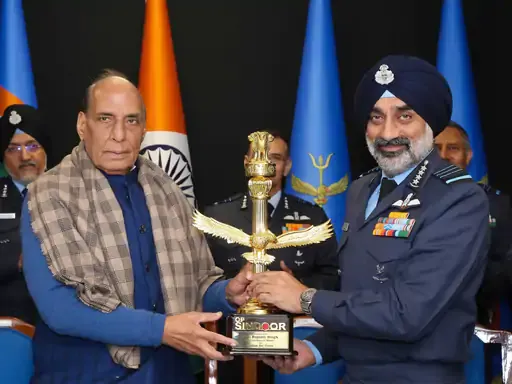
He also called for stronger jointness among the Army, Navy and Air Force, describing Operation Sindoor as a model of tri-services coordination. Enhanced synergy, he said, would be crucial to addressing emerging security challenges in the years ahead.

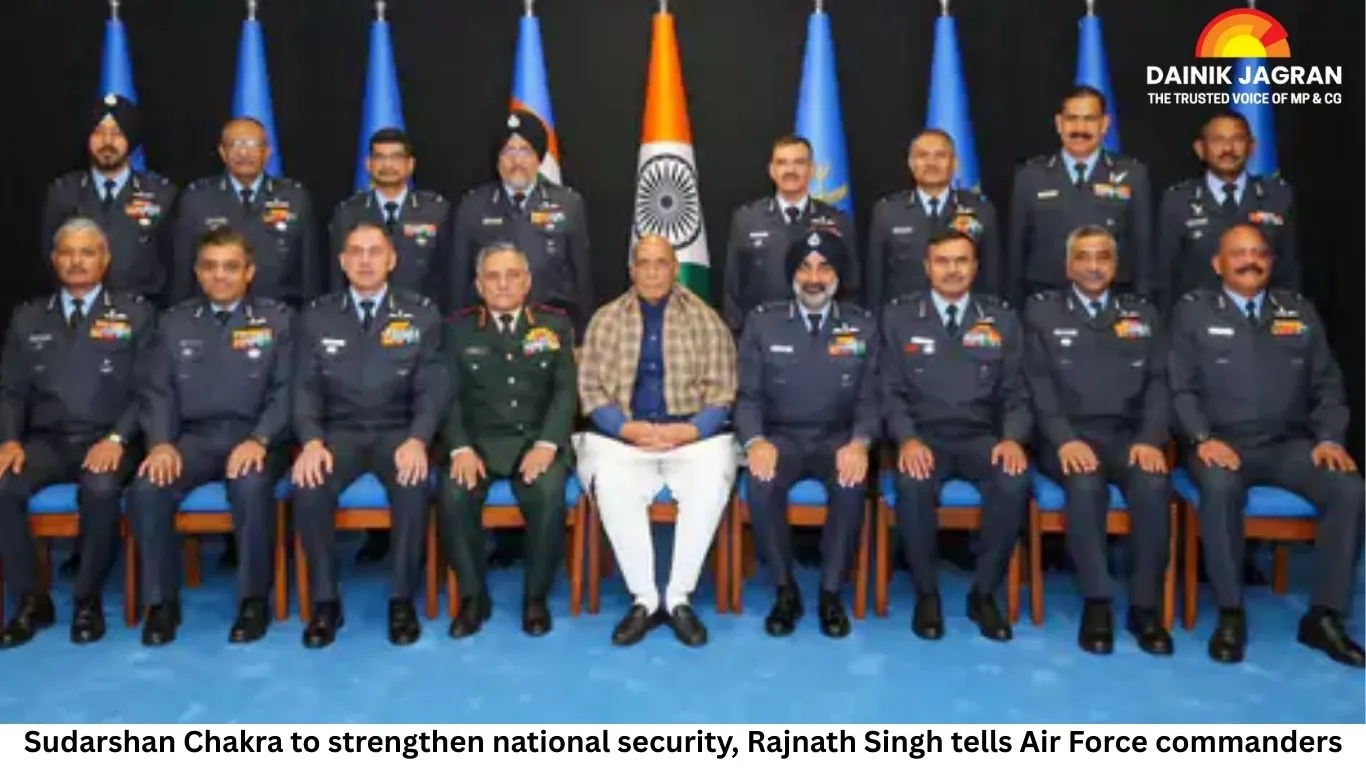
Sudarshan Chakra to strengthen national security, Rajnath Singh tells Air Force commanders
Digital Desk
Addressing the Air Force Commanders’ Conclave in New Delhi, Singh stressed the need for constant readiness amid an evolving security environment. He described the Indian Air Force as a technologically advanced and strategically confident force capable of delivering effective responses across the spectrum of conflict.
Senior defence leadership, including Chief of Defence Staff General Anil Chauhan, Air Chief Marshal A.P. Singh and top Air Force commanders, attended the conclave.
Referring to Operation Sindoor, Singh said the episode demonstrated India’s preparedness and the credibility of its air defence systems. He noted that when Pakistan attempted to target Indian installations, daily life continued uninterrupted, reflecting strong public confidence in the armed forces. “Public restraint in such situations shows trust in the nation’s capability and readiness,” he said.
The Defence Minister highlighted the growing strategic role of air power in modern warfare, citing recent conflicts such as the Russia-Ukraine war, the Israel-Hamas conflict, the Balakot air strike and Operation Sindoor. Air power, he said, has moved beyond tactical use to become a decisive strategic instrument due to its speed, surprise and precision.
Singh said the Sudarshan Chakra, announced by Prime Minister Narendra Modi on Independence Day, is being developed to meet future requirements. The system aims to create a layered air defence network by integrating sensors, weapons platforms and command-and-control systems for faster and more coordinated responses to aerial threats.
Emphasising self-reliance, Singh underlined the importance of indigenous technology and innovation, pointing to cyber warfare, artificial intelligence, drones, satellite surveillance and space-based capabilities as key components of future conflicts.
He also called for stronger jointness among the Army, Navy and Air Force, describing Operation Sindoor as a model of tri-services coordination. Enhanced synergy, he said, would be crucial to addressing emerging security challenges in the years ahead.

.jpg)




