


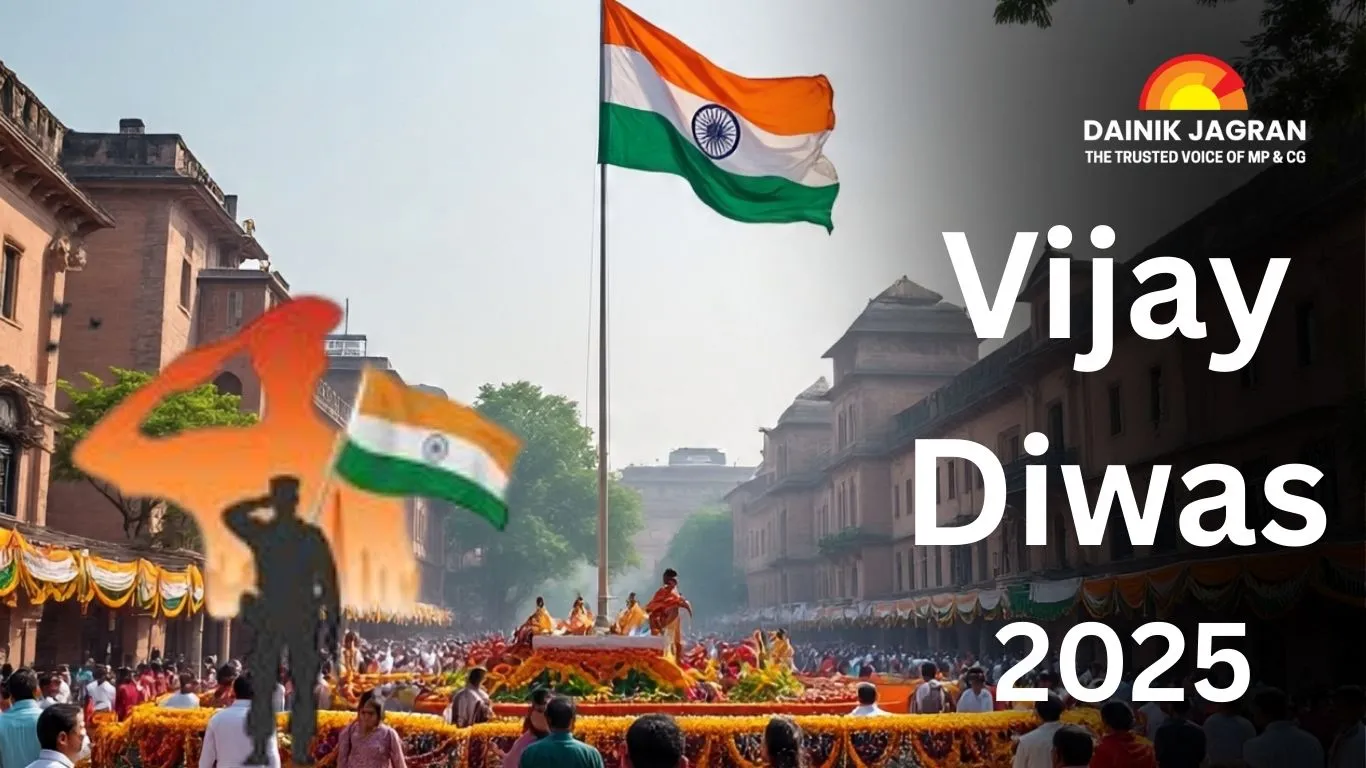
Vijay Diwas Marks 1971 Victory That Redrew South Asia’s Map, Rekindles Debate on Kashmir
Digital Desk
The conflict culminated with the surrender of nearly 93,000 Pakistani soldiers to the Indian Army and the Bangladeshi Mukti Bahini, making it one of the largest military capitulations since World War II. India also gained control of around 13,000 square kilometres of territory, strengthening its strategic position in the region.
The roots of the war lay in deep political, linguistic and economic divisions between East and West Pakistan. Despite being the majority, Bengalis in East Pakistan faced systemic discrimination, economic neglect and political exclusion. Tensions peaked after the Awami League, led by Sheikh Mujibur Rahman, won the 1970 elections but was denied power. Pakistan’s military crackdown, known as Operation Searchlight, triggered a mass uprising and humanitarian crisis, pushing millions of refugees into India.
India’s intervention came after months of instability and growing cross-border pressure. Backed by the Soviet Union, Indian forces launched coordinated military operations on both eastern and western fronts. On December 16, 1971, Pakistani Lieutenant General A.A.K. Niazi signed the instrument of surrender in Dhaka, paving the way for Bangladesh’s independence.
More than five decades later, Vijay Diwas also revives debate over whether India missed an opportunity to secure a permanent settlement on Kashmir. With Pakistan militarily weakened and thousands of prisoners of war in Indian custody, critics argue that stronger terms could have been negotiated.
However, strategic analysts note that global pressures shaped India’s choices. “India opted for a negotiated settlement under intense international scrutiny,” said Rajan Kumar, professor at Jawaharlal Nehru University. “Given the Cold War dynamics and the involvement of major powers, New Delhi acted in what it saw as its best long-term interest.”
As India honours the sacrifices of its armed forces, the legacy of 1971 continues to influence regional geopolitics and strategic discourse.

.jpg)
.jpg)




