A Day of Dual Prayers: Bhojshala Sees Peace Under Supreme Court’s Watchful Eye
For the first time in nearly a decade, the contentious Bhojshala Saraswati Temple-cum-Kamal Maula Mosque complex in Dhar witnessed a significant test of communal harmony and judicial mediation. On Friday, January 23, 2026, the rare coincidence of the Hindu festival Basant Panchami and the Muslim Friday (Jumuah) prayers unfolded under an unprecedented security blanket and a landmark Supreme Court order.
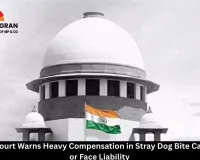
The apex court, stepping in to resolve a procedural gap, issued a clear time-sharing arrangement: Hindu devotees were permitted to worship Goddess Vagdevi (Saraswati) from sunrise to sunset, while the Muslim community was allocated a dedicated two-hour window from 1:00 PM to 3:00 PM for Namaz within a separate area of the compound. This decision, welcomed by leaders from both sides, averted potential friction on a day that has seen tensions flare in the past.
The Supreme Court’s Balancing Act
The legal intervention was swift and decisive. Hearing a petition from the Hindu Front for Justice just a day prior, a Supreme Court bench led by Chief Justice Surya Kant crafted a practical solution. The court recorded the Madhya Pradesh government’s assurance to create exclusive, separate spaces with different entry and exit points for the two communities within the same complex.
A Judicial Appeal for Peace: Beyond the logistics, the bench made a heartfelt appeal, urging "all stakeholders… to observe mutual respect and tolerance and cooperate with the State and district Administration".
Consent-Based Resolution: The order was notable for being based on consent. Additional Solicitor General K.M. Nataraj, representing the state, proposed the separate arrangements, which were accepted by senior advocates for both the Hindu and Muslim sides.
Broader Case Revived: In a parallel but critical move, the Supreme Court also revived the long-pending main title dispute case. It directed the Madhya Pradesh High Court to unseal a sensitive Archaeological Survey of India (ASI) scientific report on the site’s origins and proceed with hearings, while maintaining the status quo at the monument.
An Unprecedented Security Operation
With memories of past clashes during similar calendar overlaps, the administration left nothing to chance. The town of Dhar was transformed into a high-security fortress, deploying a multi-layered strategy combining massive manpower with cutting-edge technology.
Sheer Numbers: Over 8,000 police and paramilitary personnel, including units from the Central Reserve Police Force (CRPF) and its Rapid Action Force (RAF), were deployed across the district.
AI and Tech Surveillance: The operation stood out for its use of Artificial Intelligence (AI). Authorities employed AI-driven drones for real-time crowd monitoring and had mapped every nook of the town using LiDAR and 3D technology to guide forces.
Comprehensive Measures:
A 300-meter no-fly zone was declared around Bhojshala.
Social media was actively monitored to curb rumors.
A temporary jail was set up at a local college as a precaution.
Prohibitory orders banned public gatherings and the storage of potential projectiles like construction materials.
The Heart of a Centuries-Old Dispute
The intense preparations underscore the deep-seated historical controversy surrounding the 11th-century ASI-protected monument.
Hindu Claim: The Hindu community venerates the site as the original temple of Goddess Saraswati (Vagdevi), believed to have been built by the legendary Paramara king Bhoj. They cite Sanskrit inscriptions and temple architecture as evidence.
Muslim Claim: The Muslim community regards it as the Kamal Maula Mosque, asserting that Namaz has been offered there continuously for over seven centuries.
The ASI Arrangement: Since 2003, an ASI order has managed worship: Hindus pray on Tuesdays and Basant Panchami, while Muslims offer Friday prayers. However, the order did not specify procedures for when the two coincide, creating an annual ambiguity that the Supreme Court addressed.
A Peaceful Precedent and the Road Ahead
By late afternoon, reports confirmed that prayers had concluded peacefully under the massive security umbrella. Community leaders expressed satisfaction with the day's arrangements. Gopal Sharma of the Bhojshala Utsav Samiti stated the Hindu side accepted the court's decision, while Julfikar Pathan of the Muslim committee said they would hold Namaz in an "organized and secure manner".
The peaceful conduct of this sensitive day sets a crucial precedent. However, it is a temporary administrative fix to a permanent legal question. The path forward now shifts to the Madhya Pradesh High Court, which will examine the sealed ASI report that may contain findings on the site's historical character. The Supreme Court has mandated that this report be shared with both parties, opening a new chapter of evidentiary hearings in one of India's most watched heritage disputes.
For now, the successful management of Basant Panchami 2026 at Bhojshala demonstrates that with judicious court oversight, proactive administration, and community cooperation, even the most polarized disputes can find a moment of peaceful coexistence.