Supreme Court Says Peaceful Protest Is Constitutional Right, Questions Police Action During Student Protest

Digital Desk

Supreme Court Says Peaceful Protest Is Constitutional Right, Questions Police Action During Student Protest

The Supreme Court observed that peaceful protest is constitutionally protected and questioned police action against students protesting paper leaks, while calling for uniform national guidelines on handling demonstrations.

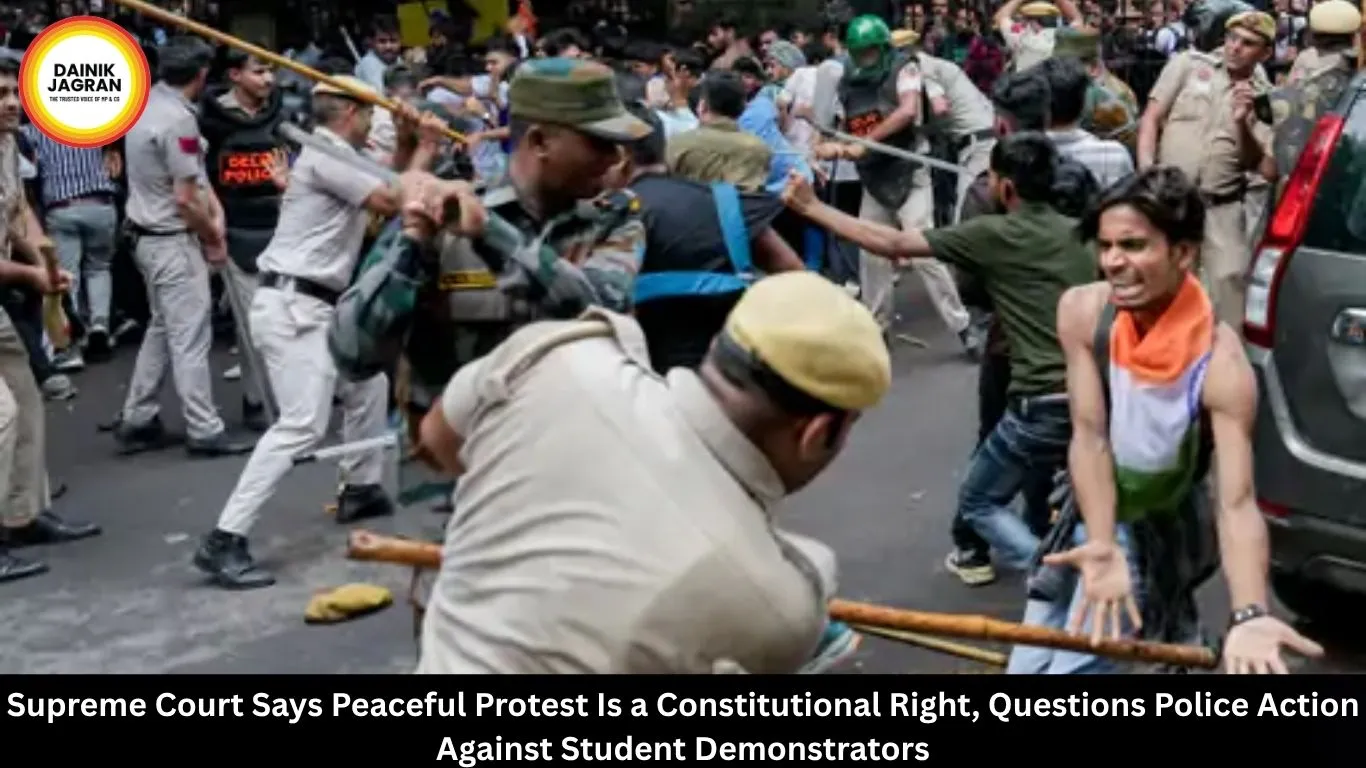
The Supreme Court on Monday observed that peaceful protest is a constitutionally protected right and said the police cannot resort to a lathicharge merely because people are demonstrating. The remarks came while hearing a batch of petitions alleging excessive police force against students protesting examination paper leaks during the Parliament march held on July 20.

A Bench comprising Chief Justice of India Surya Kant, Justice Joymalya Bagchi, and Justice V. Mohan said allegations of police excess should be independently examined. The court also stressed the need for uniform national guidelines governing police action during public demonstrations, observing that discipline is essential in a democracy but peaceful protests must remain protected.

The observations assume significance as the Centre prepares to push the Public Examinations (Prevention of Unfair Means) Amendment Bill, 2026 in Parliament, a legislation aimed at strengthening anti-paper leak laws following the nationwide NEET controversy.

Court Questions Police Response

During the hearing, the Bench underlined that agitation alone cannot justify the use of force by law enforcement agencies.

The judges noted that every allegation of excessive police action deserves impartial scrutiny and suggested that uniform operating procedures should be evolved for handling demonstrations across the country. According to the court, maintaining public order and protecting citizens' constitutional rights must go hand in hand.

Parliament March Turned Violent

The petitions relate to the July 20 Parliament march organised by the Cockroach Janta Party (CJP) over the alleged NEET paper leak.

The protest began at Jantar Mantar and later moved towards Parliament, with demonstrators marching through Parliament Street, Janpath Crossing, Kartavya Path and Vijay Chowk.

According to reports, clashes erupted after some protesters allegedly breached police barricades and attempted to move towards Parliament. Police responded with tear gas and lathicharge, while incidents of stone-pelting were also reported. More than 100 people, including police personnel and protesters, were reportedly injured during the violence.

The protest site was cleared by evening, although demonstrators returned later that night to resume their agitation.

Matter Reached Supreme Court Multiple Times

The issue has come before the Supreme Court on several occasions over the past two months.

In May, a petition sought a CBI investigation into those associated with the Cockroach Janta Party. The court declined urgent listing, observing there was no immediate emergency.

After the July 20 protest, another petition sought an inquiry into the alleged police assault on demonstrators. At that stage, the Bench declined immediate intervention, stating that it was not relying on video clips placed before it.

A fresh plea was later filed seeking restraint on police action against students participating in protests. The court agreed to hear the matter through the regular listing process.

During Monday's proceedings, the Chief Justice also clarified that reports claiming the court had earlier refused to hear petitions on the issue were inaccurate. He said no formal writ petition had been before the Bench at that stage.

Delhi High Court Also Hearing Case

Separate petitions challenging the police action are also pending before the Delhi High Court.

The High Court has already sought responses from the Union government and Delhi Police while directing authorities to preserve CCTV footage, videography and all records related to the July 20 protest.

Background

The student-led agitation over alleged examination paper leaks continued for 36 days before ending on July 25 following the resignation of former Union Education Minister Dharmendra Pradhan.

Pradhan resigned amid mounting pressure over the NEET paper leak controversy, saying recent developments had deeply saddened him.

Social activist Sonam Wangchuk, who had been observing a hunger strike alongside protesting students, also ended his fast after receiving assurances from the government regarding examination reforms.

The Supreme Court's observations now place fresh focus on balancing citizens' right to peaceful protest with the state's responsibility to maintain law and order, even as Parliament prepares to debate tougher legislation against examination malpractices.
 

--------

๐Ÿšจ Beat the News Rush โ€“ Join Now!

Get breaking alerts, hot exclusives, and game-changing stories instantly on your phone. No delays, no fluff โ€“ just the edge you need. โšก

Tap to join:ย 

๐ŸŸข WhatsApp Channel: Dainik Jagran MP CG

Crave more?

๐Ÿ…• Facebook: Dainik Jagran MP CG English

๐Ÿ…ง Twitter (X): Dainik Jagran MP CG

๐Ÿ…˜ Instagram: Dainik Jagran MP CG

Share the fire โ€“ keep your crew ahead! ๐Ÿ—ž๏ธ๐Ÿ”ฅ

english.dainikjagranmpcg.com
27 Jul 2026 By Abhishek Joshi

Supreme Court Says Peaceful Protest Is Constitutional Right, Questions Police Action During Student Protest

Digital Desk

The Supreme Court on Monday observed that peaceful protest is a constitutionally protected right and said the police cannot resort to a lathicharge merely because people are demonstrating. The remarks came while hearing a batch of petitions alleging excessive police force against students protesting examination paper leaks during the Parliament march held on July 20.

A Bench comprising Chief Justice of India Surya Kant, Justice Joymalya Bagchi, and Justice V. Mohan said allegations of police excess should be independently examined. The court also stressed the need for uniform national guidelines governing police action during public demonstrations, observing that discipline is essential in a democracy but peaceful protests must remain protected.

The observations assume significance as the Centre prepares to push the Public Examinations (Prevention of Unfair Means) Amendment Bill, 2026 in Parliament, a legislation aimed at strengthening anti-paper leak laws following the nationwide NEET controversy.

Court Questions Police Response

During the hearing, the Bench underlined that agitation alone cannot justify the use of force by law enforcement agencies.

The judges noted that every allegation of excessive police action deserves impartial scrutiny and suggested that uniform operating procedures should be evolved for handling demonstrations across the country. According to the court, maintaining public order and protecting citizens' constitutional rights must go hand in hand.

Parliament March Turned Violent

The petitions relate to the July 20 Parliament march organised by the Cockroach Janta Party (CJP) over the alleged NEET paper leak.

The protest began at Jantar Mantar and later moved towards Parliament, with demonstrators marching through Parliament Street, Janpath Crossing, Kartavya Path and Vijay Chowk.

According to reports, clashes erupted after some protesters allegedly breached police barricades and attempted to move towards Parliament. Police responded with tear gas and lathicharge, while incidents of stone-pelting were also reported. More than 100 people, including police personnel and protesters, were reportedly injured during the violence.

The protest site was cleared by evening, although demonstrators returned later that night to resume their agitation.

Matter Reached Supreme Court Multiple Times

The issue has come before the Supreme Court on several occasions over the past two months.

In May, a petition sought a CBI investigation into those associated with the Cockroach Janta Party. The court declined urgent listing, observing there was no immediate emergency.

After the July 20 protest, another petition sought an inquiry into the alleged police assault on demonstrators. At that stage, the Bench declined immediate intervention, stating that it was not relying on video clips placed before it.

A fresh plea was later filed seeking restraint on police action against students participating in protests. The court agreed to hear the matter through the regular listing process.

During Monday's proceedings, the Chief Justice also clarified that reports claiming the court had earlier refused to hear petitions on the issue were inaccurate. He said no formal writ petition had been before the Bench at that stage.

Delhi High Court Also Hearing Case

Separate petitions challenging the police action are also pending before the Delhi High Court.

The High Court has already sought responses from the Union government and Delhi Police while directing authorities to preserve CCTV footage, videography and all records related to the July 20 protest.

Background

The student-led agitation over alleged examination paper leaks continued for 36 days before ending on July 25 following the resignation of former Union Education Minister Dharmendra Pradhan.

Pradhan resigned amid mounting pressure over the NEET paper leak controversy, saying recent developments had deeply saddened him.

Social activist Sonam Wangchuk, who had been observing a hunger strike alongside protesting students, also ended his fast after receiving assurances from the government regarding examination reforms.

The Supreme Court's observations now place fresh focus on balancing citizens' right to peaceful protest with the state's responsibility to maintain law and order, even as Parliament prepares to debate tougher legislation against examination malpractices.
 

https://english.dainikjagranmpcg.com/national/supreme-court-says-peaceful-protest-is-constitutional-right-questions-police/article-23812

Trending News