
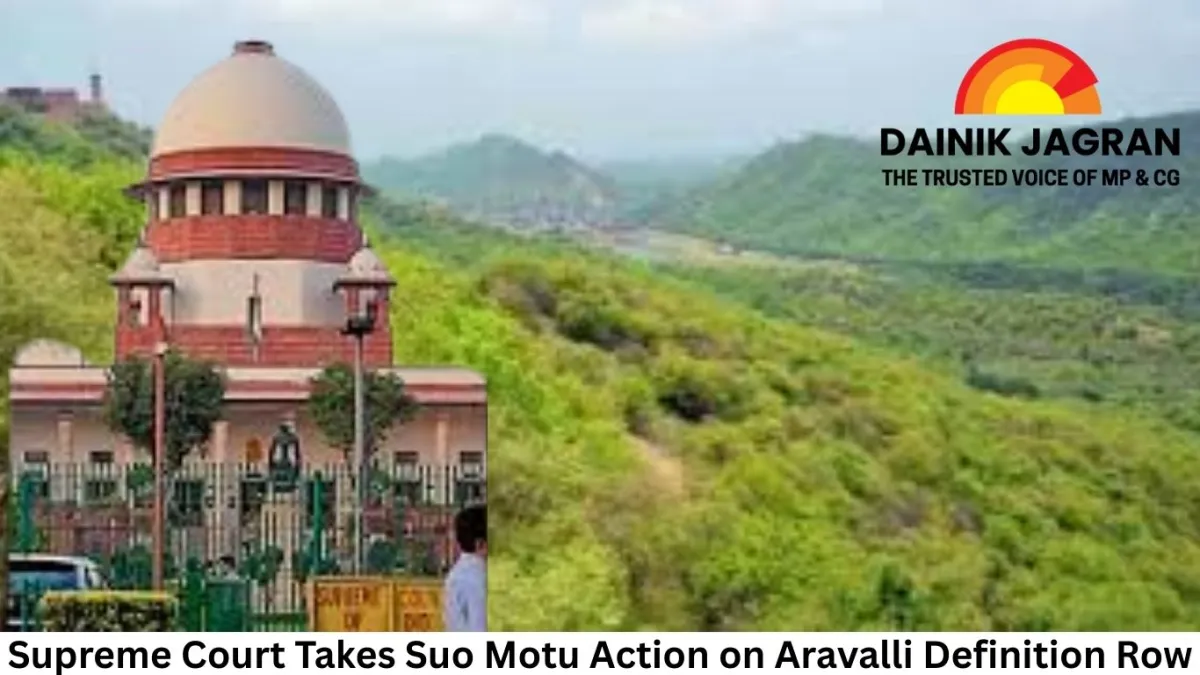

Supreme Court Takes Suo Motu Action on Aravalli Definition Row
Digital Desk
A three-judge vacation bench led by Chief Justice Surya Kant, including Justices JK Maheshwari and Augustine George Masih, will hear the matter on Monday, December 29.
The move follows intense backlash against the court's November 20 order, which adopted a uniform definition proposed by a Ministry of Environment committee: only landforms rising 100 metres or more above local relief qualify as Aravalli hills, with clusters within 500 metres forming ranges.
Critics, including environmentalists and opposition leaders, argue this excludes over 90% of mapped hillocks, potentially exposing lower ridges—vital for groundwater recharge and biodiversity—to mining and development.
Protests have erupted in Rajasthan, Haryana, and Delhi-NCR, with activists calling it an "ecological disaster."
The November ruling also froze new mining leases until a sustainable mining plan is prepared and banned activity in core protected zones, except for strategic minerals.
Responding to the uproar, the Centre on December 24 directed states to enforce a complete ban on fresh leases across the entire Aravalli landscape and tasked experts with identifying additional no-mining zones.
A separate petition by retired Haryana forest officer RP Balwan challenging the definition remains pending.
The Aravallis, one of the world's oldest ranges, act as a barrier against Thar desert expansion and support critical aquifers.
Monday's hearing could clarify protections or modify the framework, with implications for conservation in this fragile ecosystem.




.jpg)




