UPI Charges Explained: What Lok Sabha's New Bill Means for Users and Digital Payments

Digital desk

UPI Charges Explained: What Lok Sabha's New Bill Means for Users and Digital Payments

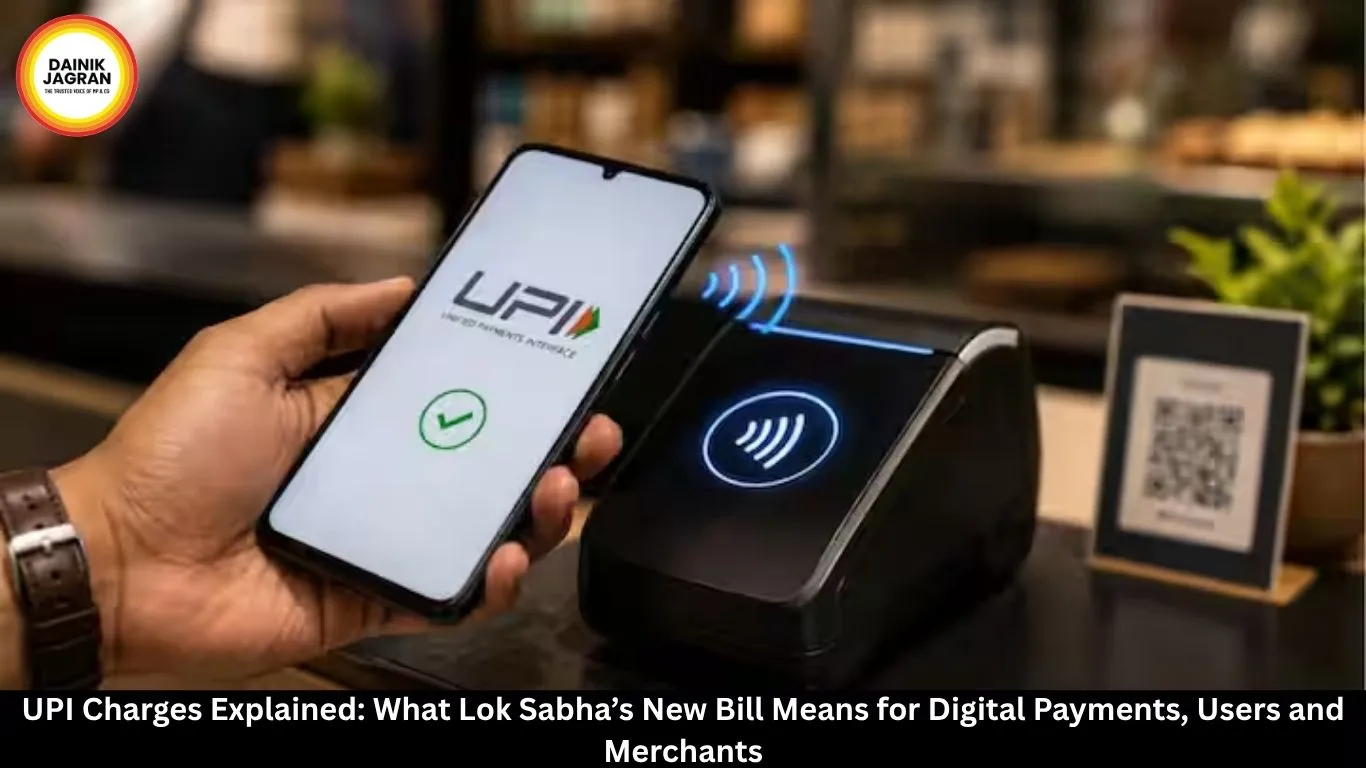
Lok Sabha has passed a Bill allowing the government to introduce charges on UPI and other digital payments in the future. Here's what it means for users, merchants and India's digital payment ecosystem.

The Lok Sabha has passed the Taxation and Other Laws (Amendment) Bill, 2026, paving the way for the government to introduce charges on certain digital payment modes, including the Unified Payments Interface (UPI), in the future. However, the amendment does not impose any immediate fee on UPI transactions.

The legislative change gives the Centre the authority to notify specific electronic payment systems where transaction charges may be levied at a later stage. Any decision on the nature, rate and applicability of such charges will require a separate government notification.

No Immediate Charges on UPI

The biggest takeaway for consumers is that UPI transactions remain free for now. The amendment only creates a legal framework that allows the government to introduce charges in the future if considered necessary.

Also Read... August 2026 Rule Changes: Commercial LPG Cheaper, Tatkal Token System, CKYC 2.0, RBI MPC & Credit Card Rules

Users can continue making UPI payments without paying any transaction fee, while the existing payment experience remains unchanged.

Also Read... India Business News Today: Dabur Products Halted, Meta Summoned, UPI MDR Proposal Returns

What Has Changed in the Law?

The amendment revises provisions of the Payment and Settlement Systems Act, 2007, removing the earlier legal restriction that prevented banks and payment service providers from charging a Merchant Discount Rate (MDR) on specified electronic payment modes.

Also Read... Parliament Monsoon Session: Opposition Protests Force Adjournment

Previously, Section 10A of the Act barred banks and payment operators from levying charges on electronic payment modes prescribed under Section 269SU of the Income Tax Act.

With the revised law, the government now has the flexibility to notify one or more digital payment modes where charges could be introduced in the future.

Who Could Pay the Charges?

Industry discussions have largely centred on the Merchant Discount Rate (MDR), a fee that merchants pay to banks and payment companies for processing digital transactions.

Experts believe that if charges are introduced, they are more likely to apply to merchant transactions rather than routine person-to-person UPI transfers.

However, the government has not announced any framework specifying who would bear the cost or what the charges could be.

Why Is the Change Being Considered?

UPI has become one of the world's largest real-time payment networks, handling billions of transactions every month. While the platform has significantly expanded digital payments and financial inclusion, banks and fintech companies have argued that maintaining the infrastructure involves substantial expenditure.

Payment service providers continue to invest heavily in cybersecurity, fraud prevention, technology upgrades and transaction processing systems. Industry stakeholders have repeatedly called for a sustainable revenue model to support the growing digital payments ecosystem.

Reserve Bank of India Governor Sanjay Malhotra has also recently observed that maintaining payment infrastructure requires continued investment and that a long-term funding mechanism would eventually be necessary.

Will Everyday Users Be Affected?

At present, there is no indication that ordinary UPI users making daily peer-to-peer transactions will be charged.

The government will decide in the future whether any category of digital payments should attract fees and, if so, under what conditions.

UPI's rapid success has largely been driven by its simple, free-to-use model. Analysts believe any future charging mechanism is likely to be carefully designed to avoid discouraging digital payment adoption, particularly among small merchants and individual consumers.

For now, the amendment primarily gives policymakers the flexibility to design a sustainable funding model for India's rapidly expanding digital payments infrastructure without immediately changing how consumers use UPI.


english.dainikjagranmpcg.com
07 Aug 2026 By Abhishek Joshi

UPI Charges Explained: What Lok Sabha's New Bill Means for Users and Digital Payments

Digital desk

The Lok Sabha has passed the Taxation and Other Laws (Amendment) Bill, 2026, paving the way for the government to introduce charges on certain digital payment modes, including the Unified Payments Interface (UPI), in the future. However, the amendment does not impose any immediate fee on UPI transactions.

The legislative change gives the Centre the authority to notify specific electronic payment systems where transaction charges may be levied at a later stage. Any decision on the nature, rate and applicability of such charges will require a separate government notification.

No Immediate Charges on UPI

The biggest takeaway for consumers is that UPI transactions remain free for now. The amendment only creates a legal framework that allows the government to introduce charges in the future if considered necessary.

Users can continue making UPI payments without paying any transaction fee, while the existing payment experience remains unchanged.

What Has Changed in the Law?

The amendment revises provisions of the Payment and Settlement Systems Act, 2007, removing the earlier legal restriction that prevented banks and payment service providers from charging a Merchant Discount Rate (MDR) on specified electronic payment modes.

Previously, Section 10A of the Act barred banks and payment operators from levying charges on electronic payment modes prescribed under Section 269SU of the Income Tax Act.

With the revised law, the government now has the flexibility to notify one or more digital payment modes where charges could be introduced in the future.

Who Could Pay the Charges?

Industry discussions have largely centred on the Merchant Discount Rate (MDR), a fee that merchants pay to banks and payment companies for processing digital transactions.

Experts believe that if charges are introduced, they are more likely to apply to merchant transactions rather than routine person-to-person UPI transfers.

However, the government has not announced any framework specifying who would bear the cost or what the charges could be.

Why Is the Change Being Considered?

UPI has become one of the world's largest real-time payment networks, handling billions of transactions every month. While the platform has significantly expanded digital payments and financial inclusion, banks and fintech companies have argued that maintaining the infrastructure involves substantial expenditure.

Payment service providers continue to invest heavily in cybersecurity, fraud prevention, technology upgrades and transaction processing systems. Industry stakeholders have repeatedly called for a sustainable revenue model to support the growing digital payments ecosystem.

Reserve Bank of India Governor Sanjay Malhotra has also recently observed that maintaining payment infrastructure requires continued investment and that a long-term funding mechanism would eventually be necessary.

Will Everyday Users Be Affected?

At present, there is no indication that ordinary UPI users making daily peer-to-peer transactions will be charged.

The government will decide in the future whether any category of digital payments should attract fees and, if so, under what conditions.

UPI's rapid success has largely been driven by its simple, free-to-use model. Analysts believe any future charging mechanism is likely to be carefully designed to avoid discouraging digital payment adoption, particularly among small merchants and individual consumers.

For now, the amendment primarily gives policymakers the flexibility to design a sustainable funding model for India's rapidly expanding digital payments infrastructure without immediately changing how consumers use UPI.


https://english.dainikjagranmpcg.com/national/upi-charges-explained-what-lok-sabhas-new-bill-means-for/article-25147

--------

🚨 Beat the News Rush – Join Now!

Get breaking alerts, hot exclusives, and game-changing stories instantly on your phone. No delays, no fluff – just the edge you need. ⚡

Tap to join: 

🟢 WhatsApp Channel: Dainik Jagran MP CG

Crave more?

🅕 Facebook: Dainik Jagran MP CG English

🅧 Twitter (X): Dainik Jagran MP CG

🅘 Instagram: Dainik Jagran MP CG

Share the fire – keep your crew ahead! 🗞️🔥

Trending News